
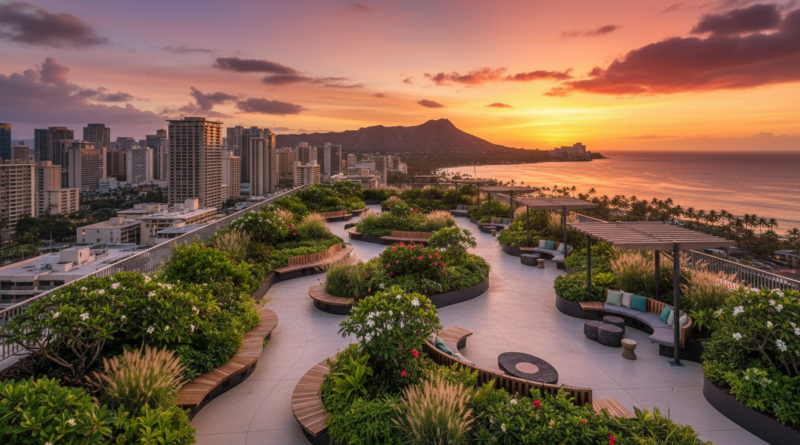
Ala Moana Center Unveils $50M Rooftop Garden and Community Space Opening Fall 2026
Ala Moana Center is transforming its rooftop into a 4.5-acre community oasis featuring native Hawaiian plants, local food vendors, and event spaces in what developers say will be the largest open-air addition to a U.S. shopping center in more than a decade.
The $50 million project, set to open in fall 2026, will convert the mall’s previously unused rooftop into “Lānai Ala Moana” — a community gathering space that aims to blend retail with cultural programming and environmental sustainability.
The rooftop garden will showcase more than 200 species of native Hawaiian plants, including koa, māmane, and pili grass, creating what project managers describe as an “urban forest” above the bustling retail floors. Winding pathways will connect multiple zones, from quiet meditation areas overlooking the Ala Wai Canal to performance spaces designed for hula and live music.
“We’re not just adding square footage — we’re creating a space that honors Hawaiian culture while serving our community’s needs,” said Maria Santos, Ala Moana Center’s general manager. “This is about giving back to the people who make our center successful every day.”
Local Vendors Take Center Stage
Twenty permanent food stalls will feature locally-owned businesses, with priority given to Native Hawaiian entrepreneurs and family-owned operations that have struggled to afford traditional mall rents. The vendor selection process, managed in partnership with the Native Hawaiian Chamber of Commerce, begins this spring.
The food court will emphasize farm-to-table dining, with vendors required to source at least 30% of ingredients from Hawaii-based suppliers. Plans include everything from traditional Hawaiian plate lunch vendors to contemporary fusion concepts celebrating the islands’ diverse culinary traditions.
A central marketplace will rotate monthly, showcasing local artisans, jewelry makers, and clothing designers. Unlike traditional mall kiosks, these spaces will be offered at subsidized rates to support small business growth.
Community Programming and Events
The space includes a 2,000-seat amphitheater designed to host everything from keiki hula performances to visiting mainland acts. A separate pavilion will accommodate farmers markets, cultural festivals, and educational workshops.
Free programming will include weekly sunset yoga sessions, monthly full-moon storytelling nights featuring Hawaiian legends, and seasonal celebrations of traditional holidays like Makahiki. The center has committed to keeping 60% of events free to the public.
Children’s areas will feature interactive gardens where keiki can learn about native plants and traditional Hawaiian agriculture methods. Educational partnerships with local schools will bring field trips focusing on environmental science and cultural preservation.
Sustainability and Environmental Impact
The rooftop’s design emphasizes water conservation and renewable energy. Rainwater collection systems will irrigate the gardens, while solar panels integrated into shade structures will generate enough electricity to power the space’s lighting and sound systems.
Native plant choices were made in consultation with the Lyon Arboretum and Bishop Museum, ensuring the garden supports local ecosystems while requiring minimal maintenance. The project aims for LEED Gold certification, setting new standards for sustainable retail development in Hawaii.
Parking concerns — long a challenge for Ala Moana visitors — will be addressed through 300 additional spaces in a new structure connecting to the rooftop via pedestrian bridges.
Economic Impact on Waikiki and Beyond
Tourism officials predict the rooftop garden will extend average visitor stays in Honolulu, particularly benefiting nearby Waikiki hotels whose guests frequently shop at Ala Moana. The Hawaii Tourism Authority estimates the attraction could generate an additional $25 million in annual visitor spending.
Construction will begin this summer, with local contractors handling 80% of the work. Project managers expect to create 150 permanent jobs once the space opens, from landscaping positions to event coordination roles.
The announcement comes as mainland shopping centers struggle with declining foot traffic, but Ala Moana has bucked national trends thanks to its unique position serving both locals and tourists. The rooftop project represents the center’s largest expansion since its 2008 renovation.
For Honolulu residents, Lānai Ala Moana promises to become the city’s newest gathering place — a space where shopping intersects with culture, sustainability meets commerce, and community takes root four stories above the bustling Keeaumoku corridor.