
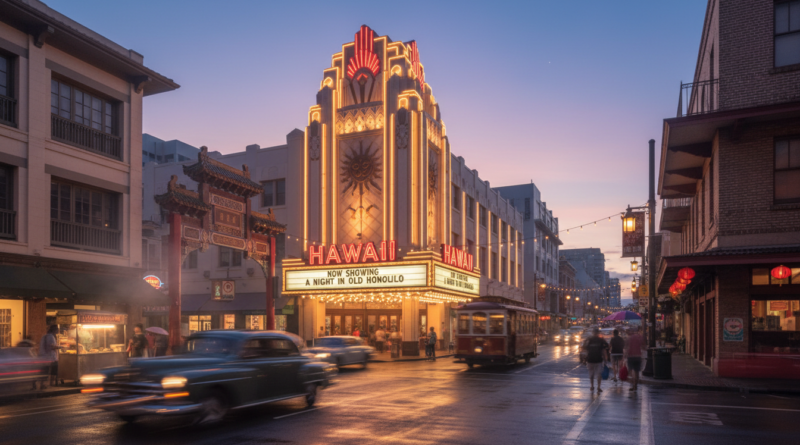
Hawaii Theatre Announces $12M Restoration to Reopen Grand Ballroom Closed Since 1984
The Hawaii Theatre Center has announced a $12 million restoration project to reopen its legendary Grand Ballroom, a magnificent space that has remained sealed and largely forgotten since 1984. The ambitious undertaking will restore the ballroom’s original 1922 art deco splendor while creating Honolulu’s most significant new performance venue in decades.
Located on the second floor of the iconic Bethel Street theater, the Grand Ballroom once served as the crown jewel of Honolulu’s entertainment scene during the 1920s and 1930s. The 4,000-square-foot space hosted everything from debutante balls to jazz performances, but structural concerns and changing entertainment patterns led to its closure four decades ago.
“This ballroom represents a missing piece of Honolulu’s cultural heritage,” said Hawaii Theatre Center Executive Director Sarah Martinez. “When we reopen these doors, we’re not just restoring a room — we’re bringing back a vital part of downtown’s artistic soul.”
The restoration will preserve and rebuild the ballroom’s distinctive features, including its soaring 18-foot coffered ceilings, original terrazzo floors, and elaborate plasterwork details. Crews will also restore the room’s signature crystal chandeliers and recreate the hand-painted murals that once adorned the walls, using archival photographs and paint analysis to ensure historical accuracy.
Modern Infrastructure Meets Historic Charm
While maintaining the ballroom’s 1920s aesthetic, the project will incorporate modern performance infrastructure. Plans include state-of-the-art lighting and sound systems, climate control to protect both performers and historic elements, and accessibility improvements to meet current ADA standards.
The restored venue will accommodate up to 300 guests for seated performances or 450 for standing events. This flexibility positions the ballroom to host intimate concerts, theatrical productions, wedding receptions, and corporate events — diversifying both the theater’s programming and revenue streams.
The project represents the latest chapter in the Hawaii Theatre’s remarkable resurrection story. Built in 1922 as a vaudeville and movie palace, the neoclassical building fell into severe disrepair by the 1980s before a community-driven restoration effort saved it from demolition in the 1990s.
Chinatown Arts Renaissance
The Grand Ballroom’s reopening comes at a pivotal moment for Chinatown’s evolving arts district. The neighborhood has experienced a cultural renaissance in recent years, with new galleries, artist studios, and performance spaces joining established institutions like the Arts at Marks Garage and The ARTS at Marks building.
“Having another premier performance venue in Chinatown creates opportunities for collaboration and cross-pollination between different arts organizations,” said longtime Chinatown gallery owner James Liu. “It’s going to strengthen the entire district’s reputation as Honolulu’s creative hub.”
The ballroom restoration also supports Mayor Rick Blangiardi’s downtown revitalization efforts, which emphasize cultural programming and arts-based economic development. The project aligns with broader plans to increase foot traffic and nightlife options in the area, helping to activate downtown streets beyond typical business hours.
Funding for the restoration combines private donations, corporate sponsorships, and a significant grant from the city’s Community Development Block Grant program. The Hawaii Theatre Center has already raised $8.5 million of the required funds, with the remaining $3.5 million expected from a capital campaign launching next month.
Architectural Significance
Architecture historians consider the Hawaii Theatre one of Oahu’s most significant examples of neoclassical design, and the Grand Ballroom exemplifies the sophisticated craftsmanship of the era. The space features rare koa wood paneling and locally quarried stone elements that reflect Hawaii’s unique architectural identity during the territorial period.
“This ballroom showcases techniques and materials that are virtually impossible to replicate today,” said University of Hawaii architecture professor Dr. Patricia Wong. “Every detail tells a story about Honolulu’s cultural aspirations during the 1920s.”
Construction crews will begin work this fall, with completion targeted for late 2025. The theater will remain operational during renovation, though some programming may be temporarily relocated to accommodate construction logistics.
The restored Grand Ballroom promises to fill a crucial gap in Honolulu’s performance venue landscape, offering an intimate alternative to larger spaces like the Blaisdell Concert Hall while providing more sophisticated amenities than smaller community theaters. For Chinatown and downtown Honolulu, the project represents both a celebration of the past and an investment in the neighborhood’s artistic future.