
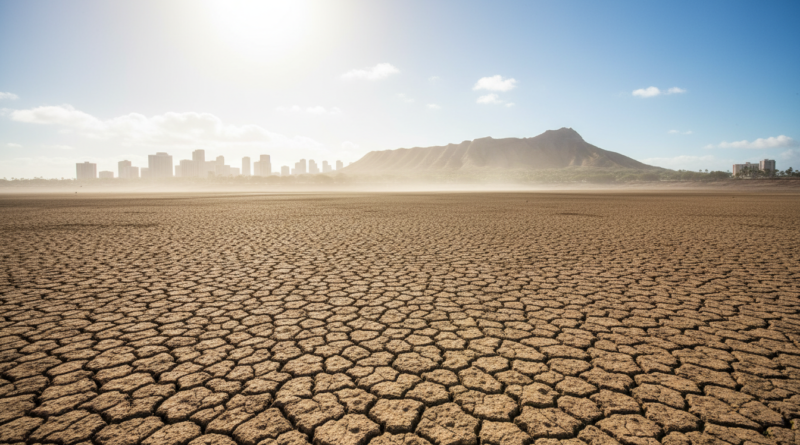
Oahu Water Authority Reports Record Low Reservoir Levels Amid Drought Concerns
The Oahu Water Authority announced Wednesday that several major reservoirs across the island have dropped to their lowest levels in over a decade, prompting officials to implement voluntary water conservation measures as drought conditions persist into the traditionally wet winter months.
The Wahiawa Reservoir, which supplies water to central Oahu communities including Mililani and Pearl City, has fallen to just 42% capacity — the lowest December level recorded since 2012. Meanwhile, the Nuuanu Reservoir systems serving urban Honolulu have dropped to 38% capacity, well below the 65% average for this time of year.
“We’re seeing unprecedented low water levels for December, when we should be seeing our reservoirs replenishing from winter rains,” said Jennifer Tanaka, spokesperson for the Oahu Water Authority. “The ongoing drought conditions are putting significant strain on our island’s water supply system.”
The National Weather Service reports that Oahu has received only 60% of its normal rainfall over the past six months, with some areas on the leeward side recording less than half their typical precipitation. The drought has been particularly severe in the Ko’olau Mountains, where much of Oahu’s freshwater originates before flowing into the island’s reservoir system.
Conservation Measures Take Effect
Starting immediately, the Water Authority is asking residents and businesses to reduce water usage by 15% through simple conservation practices. The voluntary measures include limiting lawn watering to early morning or evening hours, taking shorter showers, and fixing leaky faucets promptly.
The authority stopped short of implementing mandatory restrictions but warned that stricter measures could follow if conditions don’t improve. Similar drought conditions in 2019 led to mandatory water rationing that affected agricultural operations across the island.
Swimming pools and car washes have been asked to voluntarily reduce their water consumption, while hotels in Waikiki — major water users — are being encouraged to implement towel and linen reuse programs more aggressively.
Impact on Local Communities
The water shortage is already affecting some residential areas, particularly on the North Shore and in West Oahu, where residents report lower water pressure during peak usage hours. The Waianae Coast, historically vulnerable to water supply issues, may face the most significant impacts if conditions worsen.
Local farmers are feeling the pinch as well. The drought has forced some agricultural operations in the central plains to rely more heavily on expensive imported water, driving up production costs for locally grown produce.
“We’re already seeing some farmers having to make tough decisions about what crops to prioritize,” Tanaka explained. “The agricultural sector is particularly vulnerable because they can’t easily reduce their water needs like residential users can.”
The Hawaii Department of Agriculture estimates that prolonged drought conditions could reduce local food production by up to 20%, potentially affecting prices at farmers markets and grocery stores across the island.
Weather Outlook and Long-term Solutions
Meteorologists with the National Weather Service say La Niña conditions in the Pacific are contributing to the extended dry period, with below-normal rainfall expected to continue through at least February. While some rain is forecast for the coming weeks, it’s unlikely to be enough to significantly replenish reservoir levels.
The Water Authority is accelerating plans for alternative water sources, including expanded groundwater wells and potential desalination facilities. However, these projects are years away from completion and won’t address the immediate shortage.
Climate change projections suggest that Hawaii will experience more frequent and severe droughts in the coming decades, making water security an increasingly critical issue for the state’s most populated island.
The authority plans to reassess the situation in two weeks and will consider implementing mandatory conservation measures if reservoir levels continue to decline. Residents can track current water levels and conservation tips through the Oahu Water Authority’s website and social media channels.
For Honolulu residents, this drought serves as a stark reminder of the island’s vulnerability to climate variability and the importance of treating water as the precious resource it is in the middle of the Pacific Ocean.
