
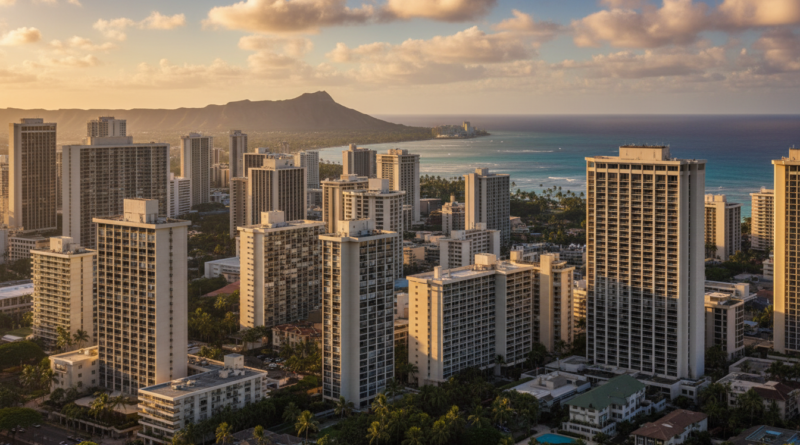
Hawaii Legislature Debates Mandatory Seismic Retrofitting for Older Waikiki Towers
Honolulu lawmakers are weighing new legislation that would require seismic upgrades for dozens of aging high-rise buildings in Waikiki, a move that could cost property owners millions while potentially saving lives in a major earthquake.
House Bill 2847, introduced this week, would mandate that buildings constructed before 1975 undergo comprehensive seismic assessments within three years. Those found to be seismically vulnerable would have an additional seven years to complete retrofitting work or face steep fines.
The proposal targets roughly 180 buildings across Oahu, with the heaviest concentration in Waikiki’s resort corridor. Many of these structures were built during the tourism boom of the 1960s and early 1970s, before modern earthquake-resistant building codes took effect.
“We’re talking about buildings that house tens of thousands of residents and visitors every night,” said Rep. Sylvia Luke, who chairs the House Finance Committee and co-sponsored the bill. “The question isn’t whether we’ll have a significant earthquake in Hawaii — it’s when.”
The legislation follows growing concern among seismologists about Oahu’s earthquake preparedness. While Hawaii doesn’t sit on major fault lines like California, the islands face seismic risks from volcanic activity and tectonic movement along the Pacific Plate.
Tourism Industry Pushes Back
The proposal has drawn immediate opposition from the Hawaii Hotel and Lodging Association, which argues the retrofit requirements could financially devastate smaller properties. Many older Waikiki hotels operate on thin margins and lack the capital reserves for major structural improvements.
“We’re looking at costs that could range from $500,000 to $5 million per building, depending on the scope of work needed,” said HHLA President Mufi Hannemann. “Some of our members simply won’t survive that kind of financial hit.”
The bill includes provisions for low-interest state loans and tax credits to help offset retrofit costs, but industry representatives say the incentives aren’t sufficient for the scale of work required.
Waikiki’s iconic older hotels, including several along Kalakaua Avenue, would likely need significant structural reinforcement. Engineering studies suggest many buildings from that era lack adequate connections between floors and walls, making them vulnerable to collapse during strong ground shaking.
Learning from Mainland Disasters
Supporters point to recent earthquakes in California and Turkey as evidence that older buildings pose the greatest risk during seismic events. Los Angeles implemented similar mandatory retrofit requirements after the 1994 Northridge earthquake, which killed 57 people and caused $20 billion in damage.
State geologist Dr. Janet Babb testified in favor of the Hawaii proposal, noting that Oahu experiences dozens of small earthquakes each year. While most go unnoticed by residents, they demonstrate ongoing seismic activity that could produce a more damaging event.
“We’ve been fortunate that recent larger earthquakes, like the 6.9 magnitude quake in 2018, were centered on the Big Island,” Babb said. “But geological evidence shows Oahu has experienced significant seismic activity throughout its history.”
The 2018 earthquake, while centered near Kilauea volcano, still caused minor damage on Oahu and reminded residents of the islands’ seismic vulnerability.
Condo Owners Face Uncertainty
The legislation would also affect thousands of condominium owners in older buildings throughout urban Honolulu. Many of these properties, particularly in areas like Makiki and Keeaumoku, were built as affordable housing options but now house middle-class residents who could struggle with special assessments for retrofit work.
The Hawaii Association of Realtors has requested amendments to provide additional financial assistance for residential buildings and extend compliance timelines for properties that can demonstrate financial hardship.
Some property managers estimate that retrofit costs for a typical 20-story condo building could result in special assessments of $15,000 to $30,000 per unit, spread over several years.
Next Steps in the Process
The bill will face its first committee hearing next week in the House Housing Committee, where lawmakers will hear testimony from building owners, engineers, and emergency management officials.
Similar legislation failed to advance in previous sessions due to industry opposition and concerns about implementation costs. However, supporters believe growing awareness of seismic risks and recent natural disasters worldwide have shifted public opinion toward supporting preventive measures.
For Honolulu residents and the millions of visitors who stay in Waikiki each year, the debate represents a critical decision about balancing economic impacts against public safety. The outcome could reshape the skyline of Hawaii’s most famous neighborhood while potentially determining how well the islands weather their next major earthquake.