
Honolulu School District Overhauls Lunch Program With Locally Sourced Ingredients
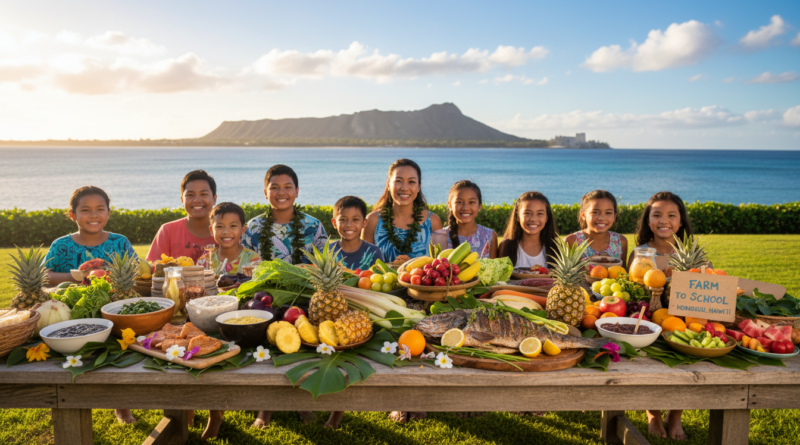
The Honolulu School District is serving up a fresh approach to cafeteria meals this fall, launching an ambitious farm-to-school program that prioritizes locally grown ingredients and Native Hawaiian food traditions.
Starting Monday, all 256 district schools will begin incorporating locally sourced produce, proteins, and grains into their daily meal offerings. The overhaul affects breakfast and lunch programs serving approximately 180,000 students across Oahu.
The initiative partners with more than 40 local farms, from North Shore vegetable growers to Windward Oahu cattle ranches. Students can expect to see everything from Kahuku corn and Waimanalo greens to grass-fed beef from Kunia on their lunch trays.
“This isn’t just about nutrition — it’s about connecting our keiki to the land and honoring the agricultural traditions that sustained Hawaii for centuries,” said Dr. Keiko Tanaka, the district’s new director of food services. “We’re teaching students that healthy, delicious food doesn’t have to travel 2,400 miles to reach their plate.”
Cultural Connection Through Food
The program goes beyond simply swapping mainland suppliers for local ones. Menu planners worked closely with Native Hawaiian cultural practitioners to develop recipes featuring traditional ingredients like breadfruit, sweet potato, and native fish preparations.
Poi will make regular appearances on lunch menus, prepared fresh at the district’s central kitchen in Kalihi. Students will also encounter dishes like lau lau made with locally raised pork and kalua-style preparations using traditional cooking methods.
“Food is culture, and culture is identity,” said Mahina Lorenzo, a Native Hawaiian educator who consulted on the menu development. “When our children eat the foods their ancestors ate, prepared the way their ancestors prepared them, they’re connecting with something much deeper than just a meal.”
Economic Impact for Local Farmers
The district estimates it will spend $12 million annually on local ingredients, representing a significant boost to Hawaii’s agricultural sector. Small-scale farmers who previously struggled to find consistent buyers for their crops now have guaranteed purchase agreements with the state’s largest food service operation.
Sunset Ranch in Wahiawa, which grows lettuce and herbs, expects to double its workforce to meet new demand. Owner James Nakamura said the contract provides the stability his farm needs to expand operations and invest in new growing techniques.
The program also includes educational components, with monthly farm field trips and classroom visits from local growers. Students at Mililani High School have already started their own campus garden that will supply herbs to their cafeteria.
Overcoming Logistical Challenges
Transitioning to local sourcing presented significant logistical hurdles for a district spread across an entire island. The central kitchen in Kalihi underwent a $3.2 million renovation to handle increased fresh produce processing and traditional cooking methods.
New delivery routes were established to accommodate smaller farm operations that can’t match the volume or consistency of mainland suppliers. The district also invested in additional storage facilities to manage the shorter shelf life of fresh, local ingredients.
Cost remains a concern, with locally sourced meals running approximately 15% higher than previous menus. However, federal grants and state funding have covered the initial implementation costs, and district officials hope economies of scale will reduce expenses over time.
Student Response
Early taste tests at pilot schools generated enthusiastic responses from students, many of whom had never tried traditional Hawaiian foods or ultra-fresh local produce. At Kaimuki Middle School, participation in the lunch program increased by 23% during the pilot phase.
The program also addresses food security concerns on an island where 85% of food is imported. By developing local supply chains and teaching students about agricultural careers, the district hopes to inspire the next generation of Hawaii farmers.
District officials plan to evaluate the program’s success through student participation rates, academic performance metrics, and feedback from families. If successful, the model could be exported to neighbor island school districts and other states with strong local food movements.
The transformation of Honolulu’s school lunch program represents more than just a menu change — it’s an investment in student health, local economy, and cultural preservation that could reshape how island residents think about food for generations to come.
