New TOD Rules Would Require Developers Near Skyline Stations to Deliver More Community Benefits
Honolulu developers eyeing lucrative density bonuses near future Skyline rail stations would have to deliver significantly more community benefits under new legislation being considered by the City Council.
The proposed measure would require private developers seeking increased building heights and tax incentives in transit-oriented development zones to provide affordable housing units, public open space, pedestrian improvements, and enhanced transit connections. The rules would apply to projects within a half-mile radius of planned Skyline stations from Kalihi to UH Manoa.
Council Chair Tommy Waters introduced the bill last week, arguing that current TOD incentives have generated windfall profits for developers while delivering minimal public benefits to surrounding neighborhoods.
“We’re essentially giving away the farm to private developers without getting adequate returns for our communities,” Waters said during Wednesday’s committee hearing. “This measure ensures that when we allow taller buildings and provide tax breaks, residents see tangible improvements in their daily lives.”
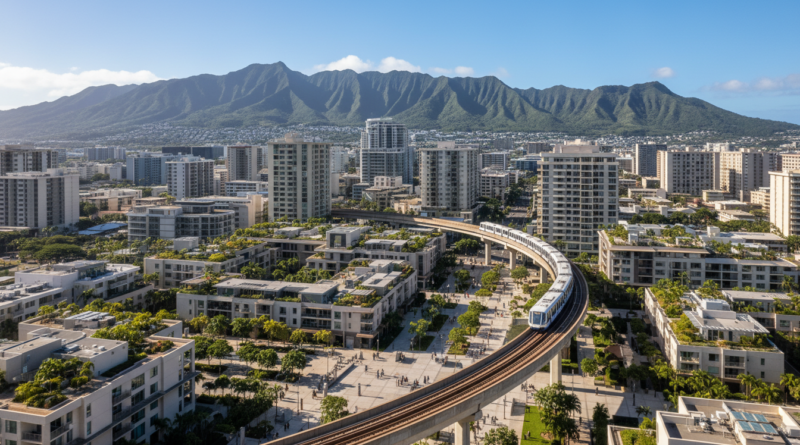
The legislation comes as the city prepares for the next phase of Skyline construction, which will extend the elevated rail system from Middle Street through downtown Honolulu to the University of Hawaii at Manoa campus. Multiple high-rise residential and mixed-use projects are already in planning stages near anticipated station locations in Kalihi-Palama, downtown, and Kakaako.
What Developers Would Need to Provide
Under the proposed rules, developers seeking TOD benefits would choose from a menu of community improvements. Options include dedicating 15% of residential units as affordable housing, creating publicly accessible open spaces equivalent to 10% of their lot area, or contributing to a fund for neighborhood infrastructure upgrades.
The measure also emphasizes walkability and transit access. Developers could fulfill requirements by building covered walkways to nearby bus stops, installing bike-share stations, or constructing pedestrian bridges over busy streets.
Projects in areas lacking adequate parks or recreation facilities would face additional requirements to include community gathering spaces or contribute to nearby park improvements.
Current TOD incentives allow developers to build up to 400 feet tall in some zones — significantly higher than standard zoning limits — while receiving property tax reductions for incorporating transit-friendly design elements.
Industry Concerns About Development Impact
Real estate industry representatives worry the additional requirements could make some projects financially unfeasible, potentially slowing development along the rail corridor just as ridership numbers begin climbing.
The Building Industry Association of Hawaii has not taken an official position on the measure but expressed concerns about layering new requirements onto an already complex approval process.
Several major developers with projects in the pipeline have privately indicated they’re evaluating whether enhanced community benefit requirements would affect their timelines or project scope.
However, affordable housing advocates and neighborhood boards have largely supported the proposal, arguing that current TOD policies have accelerated gentrification without providing adequate community benefits.
The measure includes provisions allowing developers to phase in community benefits over multiple years for larger projects, addressing industry concerns about upfront costs.
Rail Ridership Drives Development Interest
Daily Skyline ridership has exceeded initial projections since the system began full operations between East Kapolei and Middle Street, generating renewed developer interest in rail-adjacent properties.
City planning officials estimate at least a dozen major residential and commercial projects totaling over 3,000 units are in various stages of planning within future TOD zones.
The proposed community benefit requirements would apply to new projects but would not affect developments already in the city’s approval pipeline.
Waters emphasized that the measure aims to balance development incentives with community needs as neighborhoods around rail stations continue evolving.
The legislation will undergo additional committee review before a full Council vote, likely scheduled for next month. If approved, the new requirements would take effect 90 days later, giving developers time to adjust project proposals.
For Honolulu residents, the outcome could determine whether the rail system’s expansion generates inclusive, walkable communities or simply triggers another wave of luxury development that prices out existing residents. The measure represents a critical test of whether the city can harness private development to address broader housing and infrastructure challenges.