
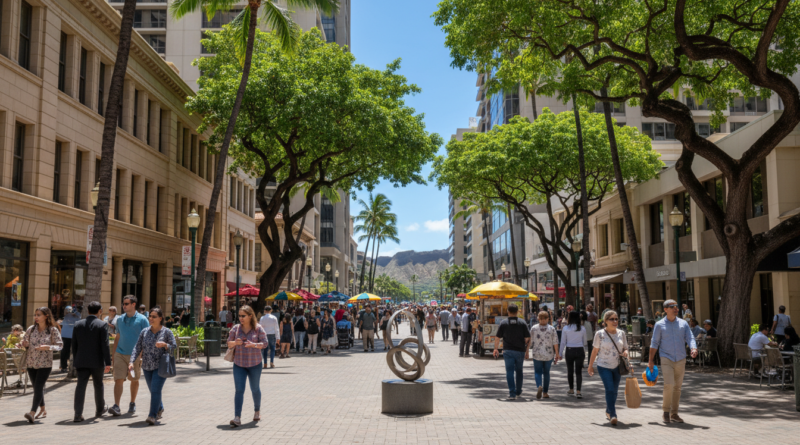
Fort Street Mall Could Get Bigger Under Bill 48 Aimed at Cutting Downtown Crime
The Honolulu City Council is considering a significant expansion of Fort Street Mall’s pedestrian-only zone as part of a broader strategy to combat rising crime rates and revitalize Downtown Honolulu’s struggling business district.
Bill 48, introduced by Councilmember Tommy Waters, would extend the current pedestrian mall from its existing boundaries between Beretania and Queen streets to include additional blocks stretching mauka to Vineyard Boulevard and makai toward the harbor front.
“We’re seeing too many incidents of petty crime and antisocial behavior that are driving away both tourists and locals from what should be the heart of our city,” Waters said during Wednesday’s committee hearing. “Expanding the pedestrian zone will create more opportunities for legitimate foot traffic while making it harder for troublemakers to operate.”
The proposed expansion would add approximately four city blocks to the existing mall, creating a larger car-free zone that supporters believe will encourage more pedestrian activity and outdoor dining. The measure has gained traction among downtown business advocates who see increased foot traffic as essential for economic recovery following years of pandemic-related challenges.
Mixed Reactions from Business Community
Local business owners along the affected stretch have expressed cautious optimism about the proposal, though some worry about the logistics of implementation. Sarah Chen, who operates Pacific Rim Café on Fort Street, sees potential benefits in creating a more walkable environment.
“If they can guarantee better security and maintenance, I think it could really help,” Chen said. “Right now, we lose customers because people don’t feel safe walking around here, especially in the evenings.”
However, delivery and loading concerns remain a sticking point for some merchants. The bill includes provisions for designated delivery windows during early morning hours, but business owners worry about the practical challenges of receiving inventory and supplies in a pedestrian-only zone.
The Downtown Honolulu Business Association has thrown its support behind the measure, arguing that successful pedestrian malls in cities like Boulder, Colorado and Burlington, Vermont demonstrate the potential for increased economic activity when implemented properly.
Security and Maintenance Key Concerns
The expansion plan comes amid ongoing concerns about homeless encampments and drug activity in downtown areas. Critics of the current Fort Street Mall point to persistent problems with maintenance and security that have plagued the pedestrian zone since its creation in the 1960s.
Under Bill 48, the city would commit to enhanced security patrols and regular cleaning services throughout the expanded zone. The measure allocates funding for additional Honolulu Police Department community policing officers and partnerships with private security firms.
Councilmember Carol Fukunaga raised questions about long-term funding commitments during Wednesday’s hearing, noting that previous attempts to revitalize Fort Street Mall have fallen short due to inadequate maintenance and oversight.
“We’ve tried this before, and without sustained investment in keeping these areas clean and safe, we end up right back where we started,” Fukunaga said.
Timeline and Implementation
If approved, the expansion would be implemented in phases over 18 months, beginning with the mauka extension toward Vineyard Boulevard. City transportation officials estimate the project would cost approximately $2.3 million, including street improvements, new landscaping, and installation of bollards to prevent vehicle access.
The bill includes provisions for a two-year pilot program, allowing the council to assess the expansion’s effectiveness before making permanent changes to the downtown street grid. Business owners would have input through quarterly community meetings with city officials.
Public hearings on Bill 48 are scheduled to continue through the end of April, with a final vote expected in early May. The measure needs approval from six of the nine council members to pass.
For downtown workers and residents, the expansion represents both an opportunity and a gamble. Success could transform the area into a vibrant pedestrian district similar to Waikiki’s Kalakaua Avenue. Failure could further isolate downtown businesses already struggling with reduced foot traffic and security concerns.
The outcome will likely influence similar pedestrian-friendly initiatives being considered for other Honolulu neighborhoods, including proposed car-free zones in Kalihi and expanded sidewalk dining areas in Kaimuki.