Skyline’s Segment 3 Hits Milestone: First Guideway Column Completed on Route to Downtown
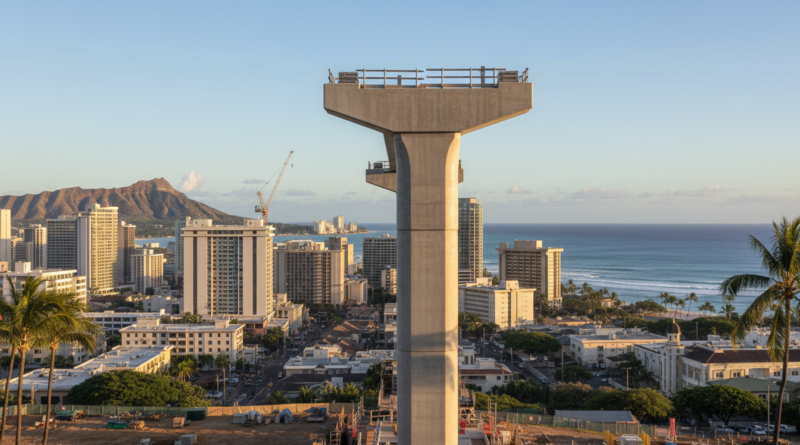
Honolulu’s rail project reached a significant construction milestone last month with the completion of Pier 732, marking the first guideway column for the long-awaited downtown segment of the Skyline transit system.
The Honolulu Authority for Rapid Transportation (HART) finished the concrete structure on March 31, officially launching the vertical construction phase for Segment 3, which will extend the rail line from Middle Street through downtown Honolulu and into Chinatown. The pier stands as a tangible sign of progress for a project that has faced years of delays and cost overruns.
“This first column represents more than just concrete and steel — it’s the foundation for connecting our urban core to the rest of Oahu,” said HART spokesperson Jennifer Martinez. “Downtown workers and residents have been waiting patiently, and now they can literally see progress rising from the ground.”
Pier 732 is strategically located along the planned route that will bring elevated trains through some of Honolulu’s most densely populated and economically vital neighborhoods. The downtown segment represents the most complex portion of the entire 20-mile system, requiring careful coordination with existing infrastructure and minimal disruption to the bustling business district.
Construction Timeline Accelerates
HART officials project that guideway columns will continue rising throughout 2026 as crews work systematically along the corridor. The construction sequence involves pouring foundations, erecting support columns, and eventually installing the concrete guideway beams that will carry trains 30 feet above street level.
The downtown segment includes four planned stations: Kalihi-Palama, Keeaumoku, Civic Center, and Chinatown. Each station will require multiple support columns and elevated platforms designed to handle thousands of daily passengers once service begins.
Current projections target 2031 for the start of downtown rail service, though HART has historically struggled to meet announced deadlines. The agency completed the initial segment from East Kapolei to Halawa in 2023, with the second segment to Middle Street opening earlier this year.
Downtown Impact and Challenges
The downtown construction presents unique logistical challenges compared to earlier segments that mostly traversed suburban areas and industrial zones. Work crews must navigate narrow streets, coordinate with existing utilities, and minimize disruptions to businesses that rely on foot traffic and vehicle access.
The Chinatown portion requires particularly delicate handling due to the neighborhood’s historic architecture and cultural significance. Community leaders have worked closely with HART to ensure construction respects the area’s character while modernizing transportation access.
Local businesses have expressed cautious optimism about the rail’s eventual impact. Restaurant owner David Lum, whose family has operated in Chinatown for three generations, sees both challenges and opportunities ahead.
“The construction will be tough on all of us, but having rail service could bring more customers from other parts of the island,” Lum said. “We just need to survive the building phase first.”
Economic Development Opportunities
The downtown rail segment is expected to catalyze significant urban development, particularly around planned station areas. City planners envision increased density housing projects, mixed-use developments, and enhanced pedestrian infrastructure that could reshape Honolulu’s urban core.
Several major property owners have already begun preliminary planning for transit-oriented development projects, anticipating increased demand for residential and commercial space near stations. The rail connection could make downtown living more attractive to residents who work in other parts of the island.
Real estate analysts predict the rail will have the most dramatic impact on property values and development patterns in the downtown area compared to other segments of the system. The combination of urban amenities, job centers, and convenient transit access creates conditions favorable for significant growth.
What Comes Next
With Pier 732 now complete, HART crews will focus on the next series of foundation and column installations moving toward the urban core. The agency plans regular community updates as construction progresses through increasingly visible phases.
For downtown residents and workers, the completion of this first column represents both promise and patience. While daily rail service remains years away, the physical progress offers reassurance that Honolulu’s transit future is finally taking shape above the city streets.
The success of Segment 3 construction will largely determine whether HART can meet its 2031 service target and begin delivering on decades of promises to transform Oahu’s transportation landscape. For now, Pier 732 stands as proof that Honolulu’s rail system continues moving forward, one concrete column at a time.
