
North Shore Neighbors Blame Drainage Failure for Worsening Kona Low Flooding
Three weeks after the devastating Kona low storms battered Oahu’s North Shore, residents near Haleiwa are pointing fingers at the city’s drainage infrastructure, claiming system failures turned manageable flooding into a neighborhood disaster.
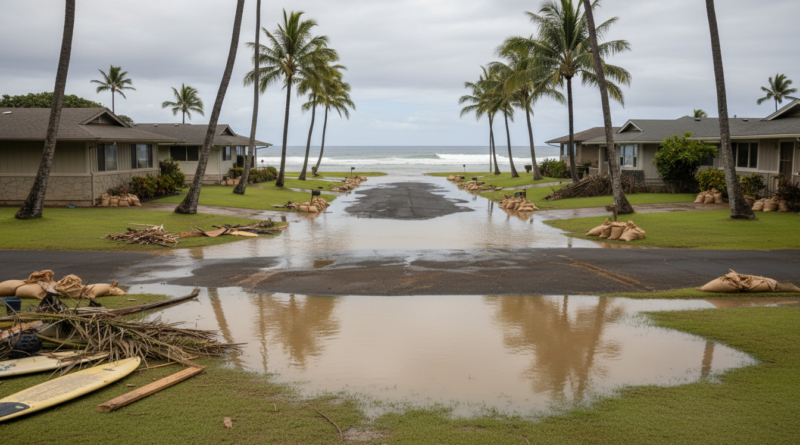
The March storms, which dumped record rainfall across the island, left several North Shore communities underwater. But according to longtime residents, the flooding in areas around Haleiwa was significantly worse than it should have been due to clogged storm drains and inadequate maintenance of the drainage system.
“We’ve lived through plenty of storms here, but this was different,” said Maria Santos, whose Haleiwa home sits just blocks from the harbor. “The water had nowhere to go because the drains were completely blocked. What should have been ankle-deep water became waist-deep in some areas.”
The complaints center around a network of storm drains and culverts that residents say haven’t been properly maintained for years. During the height of the March storms, several key drainage points became overwhelmed, causing water to back up into residential neighborhoods rather than flowing toward the ocean.
City crews have been working to clear waterways and assess damage since the storms passed, but the cleanup efforts have revealed the extent of the drainage problems. Debris, sediment, and overgrown vegetation had blocked several critical storm drains, reducing their capacity significantly.
Years of Deferred Maintenance
The North Shore’s drainage challenges aren’t new. Community members have been raising concerns about inadequate storm water management for years, particularly in low-lying areas near Haleiwa and Waialua.
The region’s unique geography, with mountains channeling runoff toward the coast, makes proper drainage infrastructure essential. When systems fail, flood waters have few alternative routes, often pooling in residential areas for hours or even days.
Several families remain displaced from their homes while cleanup continues. The combination of storm damage and standing flood water has created ongoing problems with mold and structural issues that extend well beyond the initial weather event.
Local resident and community advocate James Nakamura has been documenting drainage problems in the area for the past five years. He believes the March flooding could have been significantly reduced with proper maintenance.
“We’ve been telling the city about these blocked drains for years,” Nakamura said. “When you don’t maintain infrastructure, Mother Nature will show you the consequences.”
City Response and Next Steps
City officials acknowledge that storm drain maintenance across Oahu has faced budget constraints in recent years. The Department of Environmental Services has increased cleaning efforts since the March floods but admits the system needs comprehensive upgrades.
Emergency repairs to the most critical drainage points are expected to continue through the end of April. However, larger infrastructure improvements will likely require additional funding and planning that could take months or years to implement.
The timing is particularly concerning as Hawaii enters its wet season, when Kona low systems and other storm events become more common. Without significant improvements to drainage capacity, North Shore communities could face similar flooding risks with the next major weather event.
For now, residents are focusing on recovery while pushing for accountability. Several neighborhood associations are planning to attend upcoming City Council meetings to demand immediate action on drainage improvements.
The March storms highlighted vulnerabilities in infrastructure systems across Oahu, but the North Shore’s drainage failures may serve as a wake-up call for communities statewide. As climate change brings more intense weather events, the ability of aging infrastructure to protect residents becomes increasingly critical.
The next major test could come sooner than expected, with weather forecasters already monitoring developing weather patterns that could bring additional rainfall to the islands in coming weeks.