City Council Weighs Expanding Fort Street Mall to Combat Downtown Crime and Spur Economic Activity
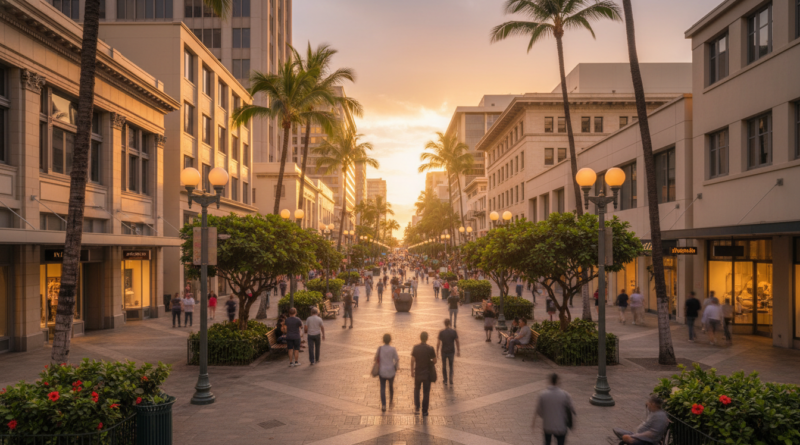
The Honolulu City Council is considering a significant expansion of the Fort Street Mall pedestrian zone, a move that could reshape downtown’s business landscape and address persistent safety concerns that have plagued the area for years.
Bill 48, introduced by Councilmember Calvin Say, would extend the existing pedestrian-only zone along Fort Street from Hotel Street to Queen Street, nearly doubling the current mall area. The proposal comes as downtown Honolulu grapples with high vacancy rates, crime concerns, and the ongoing challenge of revitalizing its urban core.
The current Fort Street Mall, which runs from King Street to Hotel Street, has been a pedestrian zone since 1969. However, business owners and community advocates argue that expanding the car-free area could create a more vibrant, safer environment that attracts both businesses and visitors.
“We’ve seen how successful pedestrian zones can transform urban areas,” said Maria Santos, president of the Downtown Honolulu Business Association. “By creating more foot traffic and eliminating vehicle concerns, we believe this expansion could be the catalyst downtown needs to truly flourish again.”
The proposal has garnered support from several quarters, including small business owners who see the expansion as an opportunity to create outdoor dining spaces and host community events. The additional pedestrian space would encompass several blocks that currently struggle with storefront vacancies, particularly in the stretch between Merchant and Queen streets.
Safety Concerns Drive Support
Crime statistics show that the proposed expansion area has experienced higher rates of petty theft and public disturbances compared to other downtown districts. Supporters argue that increased foot traffic and better lighting associated with pedestrian mall improvements could naturally reduce criminal activity.
The Honolulu Police Department has not taken an official stance on the bill but has indicated that pedestrian zones often require different policing strategies. Officers would likely patrol on foot or bicycle rather than in vehicles, potentially creating more community interaction.
Local business owner James Kim, who operates a café near Merchant Street, expressed cautious optimism about the proposal. His business has dealt with break-ins and vandalism over the past year, issues he hopes increased foot traffic might help address.
“Right now, especially in the evenings, these blocks can feel pretty isolated,” Kim said. “If we can get more people walking around, more eyes on the street, that usually makes everyone safer.”
Implementation Challenges Ahead
Despite growing support, the proposal faces logistical hurdles. The city would need to reroute bus lines that currently use Fort Street, potentially affecting several TheBus routes that serve downtown workers and residents.
Additionally, the expansion would eliminate approximately 40 parking spaces along Fort Street, a significant concern for businesses that rely on customer parking. The city is exploring partnerships with nearby parking structures to offer validated parking options for mall visitors.
Budget considerations also loom large. Initial estimates suggest the conversion could cost between $2.5 million and $4 million, including street improvements, new lighting, landscaping, and infrastructure modifications. The city would need to identify funding sources, potentially through a combination of federal grants and local tourism taxes.
Councilmember Say acknowledged these challenges but emphasized the long-term economic benefits. He pointed to successful pedestrian zones in cities like Portland and San Antonio as examples of how such investments can revitalize struggling downtown areas.
Mixed Community Response
Not all stakeholders are convinced the expansion represents the best solution. Some delivery companies and emergency services have raised concerns about access restrictions, while a few business owners worry about losing customers who prefer to drive and park directly in front of stores.
The Chinatown Business Association has requested guarantees that the expansion won’t negatively impact their district’s accessibility, particularly during major events and festivals that draw large crowds to the area.
Community meetings scheduled for later this month will provide additional opportunities for public input before the council takes a formal vote. The bill currently sits in the Planning and Sustainability Committee, where members are reviewing traffic studies and economic impact analyses.
If approved, the Fort Street Mall expansion would represent the most significant downtown infrastructure change in decades, potentially setting a precedent for similar pedestrian-friendly developments in other Honolulu neighborhoods. The project could begin construction as early as next year, with completion targeted for 2027.
For downtown Honolulu, the decision represents more than just traffic patterns — it’s about whether the city is ready to embrace a more pedestrian-centered vision for its urban core, one that prioritizes community gathering spaces over vehicle access in the heart of the Pacific’s premier city.
