DFS Group Closes Its Waikiki Galleria After 63 Years, Marking End of a Luxury Retail Era
DFS Group will shutter its iconic Waikiki Galleria store and exit Hawaii entirely by the end of 2026, ending a 63-year chapter in the islands’ luxury retail landscape. The duty-free giant has sold its Waikiki properties to BlackSand Capital for $90 million, marking the conclusion of an era that began when international travel to Hawaii was still in its infancy.
The closure affects not only the flagship Galleria location on Royal Hawaiian Avenue but also DFS’s airport duty-free operations at Daniel K. Inouye International Airport and Kahului Airport on Maui. For decades, these locations served as essential stops for international visitors seeking luxury goods, cosmetics, and Hawaii-made products before departing the islands.
“DFS has been woven into the fabric of Waikiki’s tourism economy for over six decades,” said James Tokioka, a retail analyst with Pacific Business Research. “Their departure signals a broader shift in how tourists shop and what they prioritize during their Hawaii experience.”
The Waikiki Galleria, situated in the heart of the tourist district just steps from the beach, opened in the early 1960s when Hawaii was transitioning from territory to statehood. The store capitalized on the growing jet travel boom that brought increasing numbers of international visitors, particularly from Japan and other Asian markets, to Hawaiian shores.
Changing Tourism Patterns
DFS’s decision reflects broader changes in travel retail and tourism patterns that have accelerated since the pandemic. Online shopping has reduced demand for duty-free purchases, while younger travelers often prioritize experiences over luxury goods. The rise of direct-to-consumer brands has also challenged traditional duty-free retail models.
The company’s Hawaii operations faced additional pressures from reduced international travel, particularly from Japan, which historically represented a significant portion of DFS’s customer base. Travel restrictions and economic uncertainties have permanently altered visitor demographics and spending patterns in Waikiki.
BlackSand Capital’s $90 million acquisition of the DFS properties suggests confidence in Waikiki’s real estate fundamentals, even as retail uses evolve. The investment firm, known for hospitality and mixed-use developments, has not announced specific plans for the former DFS spaces.
Prime Real Estate Opportunity
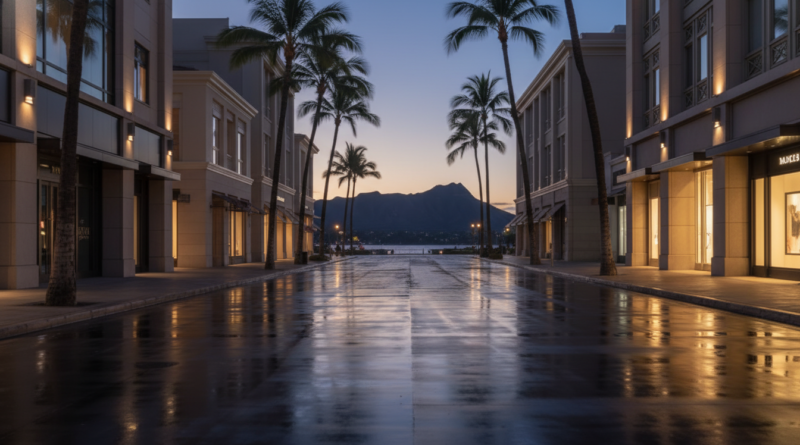
The Galleria’s location represents some of Waikiki’s most valuable retail real estate. Situated between Kalakaua Avenue’s main shopping corridor and the beach, the property offers ground-floor visibility and substantial square footage that could accommodate various retail, dining, or entertainment concepts.
Industry observers speculate the space could be reimagined as a food hall, experiential retail destination, or mixed-use development that better serves both tourists and local residents. Similar transformations have occurred throughout urban Hawaii as traditional retail models adapt to changing consumer preferences.
“The bones of that building are solid, and the location is unbeatable,” noted Maria Santos, a commercial real estate broker specializing in Waikiki properties. “Whatever comes next needs to reflect how people want to spend time and money in 2026 and beyond.”
Economic Impact
DFS’s departure will eliminate dozens of retail jobs and reduce foot traffic for surrounding Waikiki businesses that benefited from the Galleria’s international customer base. The closure also removes a significant tenant from the tourism ecosystem that has anchored Waikiki’s retail landscape for generations.
However, the transition period provides opportunities for local businesses and entrepreneurs to fill gaps in the market. Hawaiian-made products, cultural experiences, and dining concepts that previously competed with duty-free shopping may find new opportunities in the evolving retail environment.
The airport duty-free closures will similarly impact travel retail at Hawaii’s main gateways, potentially creating openings for local vendors and different retail concepts that better serve modern travelers’ preferences.
As DFS prepares its Hawaii exit strategy over the next two years, the company’s departure represents more than a business closure—it symbolizes the end of an era when duty-free shopping defined much of the international visitor experience in Hawaii. What replaces it will help determine how Waikiki adapts to serve the next generation of travelers and residents in an increasingly connected world.