
Adez Opens in Old Blind Ox Space With $65 Cook-Your-Own-Steak-on-a-Stone Concept
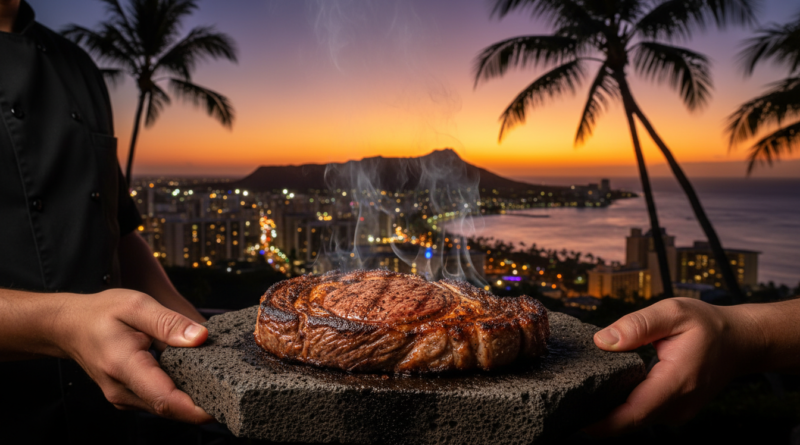
The former Blind Ox speakeasy space in downtown Honolulu has transformed into something entirely different — a restaurant where diners become their own grill master. Adez, pronounced “at-ease,” opened quietly last month with a $65 prix fixe concept that puts a 500-degree volcanic stone at every table.
The interactive dining format centers around guests cooking their own steaks, seafood, and vegetables on the heated stones delivered tableside by servers. Chef Marcus Tanaka, formerly of MW Restaurant, developed the concept after traveling through South America where similar stone-cooking traditions are common.
“We wanted to create something that brings people together around food in a completely hands-on way,” Tanaka said. “The stone cooking isn’t just a gimmick — it actually seals in flavors and gives you control over how you want your protein prepared.”
The $65 price point includes an appetizer, the stone-cooking course with choice of protein, sides, and dessert. Proteins range from locally-sourced beef cuts to fresh ahi and mahi-mahi from the Honolulu Fish Auction.
From Speakeasy to Steakhouse
The Bethel Street location required significant renovation to accommodate the stone-cooking concept. The former Blind Ox’s intimate booth seating gave way to larger tables with specialized heat-resistant surfaces and improved ventilation systems.
Servers provide brief tutorials on stone cooking techniques, though the learning curve proves part of the appeal. Tables equipped with timers help diners track cooking progress, while house-made sauces and finishing salts allow for flavor customization.
The atmosphere maintains some of the speakeasy’s moody lighting but opens up the space considerably. Edison bulb fixtures and exposed brick create warmth, while the open kitchen allows guests to watch prep work and stone heating.
Interactive Dining Trend Grows
Adez joins a growing roster of Honolulu restaurants embracing interactive dining formats. Korean BBQ restaurants like 8 Korean BBQ in Kalihi have long offered tabletop cooking, while newer concepts like fondue-focused spots in Kaimuki are finding audiences.
The hands-on approach appeals particularly to younger diners seeking Instagram-worthy experiences, though Tanaka insists the focus remains on food quality. The restaurant sources beef from Maui Cattle Company and partners with local farms for produce and herbs.
Early reviews from diners praise the novelty factor, though some note the learning curve for optimal cooking results. The restaurant provides cooking guides and encourages experimentation with different techniques.
Downtown Dining Evolution
The opening reflects broader changes in downtown Honolulu’s dining scene, as restaurants adapt to post-pandemic preferences for unique experiences over traditional service models. The location benefits from foot traffic from nearby office buildings and the growing residential population in the downtown core.
Parking remains challenging in the Bethel Street area, though the restaurant validates for nearby municipal lots. Adez currently operates Tuesday through Saturday evenings, with plans to add lunch service if demand warrants.
Reservations are strongly recommended, particularly for weekend service. The restaurant seats 45 guests across 12 tables, all equipped for stone cooking. Group dining options accommodate parties up to eight people.
The concept represents a significant investment in downtown’s dining future, as developers and restaurateurs bet on the area’s continued growth. Recent residential projects and the planned revitalization of nearby blocks suggest a growing customer base for innovative dining concepts.
For Honolulu diners seeking something beyond the typical restaurant experience, Adez offers a legitimate alternative that combines novelty with serious attention to ingredients and technique. Whether the concept maintains momentum beyond its initial curiosity factor will depend on execution and word-of-mouth from early adopters.
The restaurant’s success could signal broader acceptance of interactive dining formats in Honolulu’s traditionally conservative restaurant scene, potentially opening doors for other innovative concepts in the downtown corridor.