
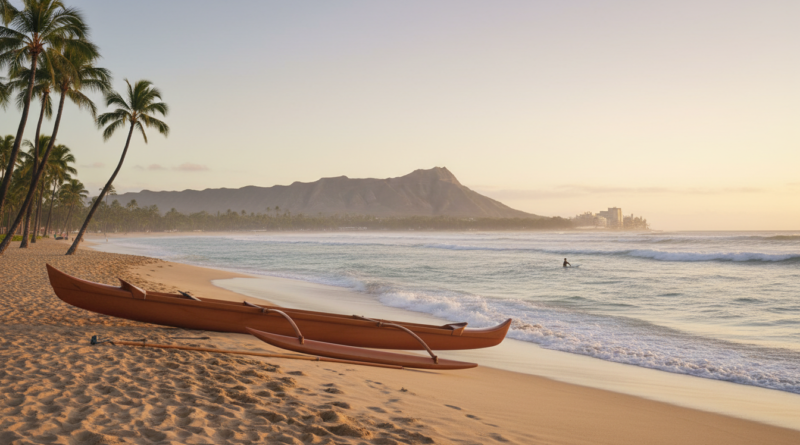
Outrigger Waikiki Beach Resort Begins $100M ‘Barefoot Luxury’ Overhaul of Its Flagship Property
The Outrigger Waikiki Beach Resort on Kalakaua Avenue is about to undergo the most ambitious transformation in its 50-year history. The hospitality giant announced this week it’s investing $100 million to completely reimagine its flagship property around what executives call “barefoot luxury” — a concept that promises to blend high-end amenities with authentic Hawaiian surf culture.
Construction begins this fall on the resort’s 524 guest rooms and suites, with the first renovated accommodations slated to debut in the third quarter of 2026. The project represents the largest single-property investment in Outrigger Hospitality Group’s portfolio, signaling the company’s commitment to maintaining its competitive edge in Waikiki’s increasingly crowded luxury market.
“We’re not just refreshing rooms — we’re completely rethinking what luxury means in Hawaii,” said Monica Salter, Outrigger’s vice president of brand experience. “Barefoot luxury is about creating spaces where guests can feel the sand between their toes while enjoying world-class service and amenities.”
Redefining Luxury in Waikiki
The “barefoot luxury” concept centers on organic materials, open-air design elements, and locally-sourced artwork that celebrates Hawaii’s ocean heritage. Guest rooms will feature custom furniture crafted from sustainably harvested koa wood, while bathrooms will incorporate lava rock and coral-inspired design elements.
Perhaps most significantly, the renovation will transform the resort’s street-level retail and dining spaces. The ground floor along Kalakaua Avenue will become a curated marketplace showcasing local artisans, surf brands, and farm-to-table dining concepts that reflect the islands’ agricultural diversity.
The project comes as Waikiki’s hospitality landscape becomes increasingly competitive. New luxury developments like the Ritz-Carlton Residences and renovations at established properties like the Royal Hawaiian have raised the bar for visitor accommodations in the iconic beach district.
Local Economic Impact
Beyond guest experience, the renovation promises substantial economic benefits for local contractors and craftspeople. Outrigger has committed to sourcing at least 60% of construction materials and furnishings from Hawaii-based suppliers, a move that could inject millions into the local economy over the project’s two-year timeline.
The renovation will also create approximately 200 construction jobs, with priority given to local workers. Additionally, the resort plans to expand its workforce by 15% once renovations are complete, adding roughly 75 permanent positions across housekeeping, food service, and guest relations.
“This investment shows confidence in Waikiki’s future as a premium destination,” said Tom Yamachika, president of the Waikiki Business Improvement District. “When flagship properties like Outrigger make this level of commitment, it elevates the entire neighborhood’s appeal to visitors and residents alike.”
Staying Open During Construction
Unlike some major hotel renovations that require full closures, Outrigger will keep the resort operational throughout construction. The phased approach means roughly 200 rooms will remain available at any given time, minimizing disruption to the property’s substantial group booking business.
The resort’s oceanfront pool deck and beach access will remain fully operational, as will its popular Duke’s Waikiki restaurant and the recently renovated fitness center. However, guests should expect some noise and limited access to certain amenities during peak construction hours.
What This Means for Waikiki’s Future
The Outrigger renovation reflects broader trends in Hawaii’s tourism industry, where visitors increasingly seek authentic experiences over generic luxury. The “barefoot luxury” concept attempts to bridge that gap by offering high-end accommodations that feel distinctly Hawaiian rather than merely transplanted from mainland resort destinations.
Industry analysts view the project as a bellwether for Waikiki’s post-pandemic recovery strategy. By emphasizing local culture and environmental sustainability, the renovation aligns with changing visitor preferences while potentially attracting a new generation of travelers who prioritize authentic experiences.
The transformation also positions Outrigger to compete more effectively with vacation rental platforms that have captured market share by offering unique, locally-flavored accommodations. By incorporating similar authenticity into a full-service resort environment, the company hopes to reclaim visitors who might otherwise choose alternative lodging options.
For Honolulu residents, the renovation represents both opportunity and change. While the construction will bring jobs and economic activity, it also signals the continuing evolution of Waikiki from a local neighborhood into an increasingly exclusive tourist enclave. The success of Outrigger’s “barefoot luxury” concept may well determine whether similar transformations throughout Waikiki enhance or diminish the area’s authentic Hawaiian character.