State Sends $89.4 Million in Rail Reimbursements as Skyline’s Downtown Segment Takes Shape
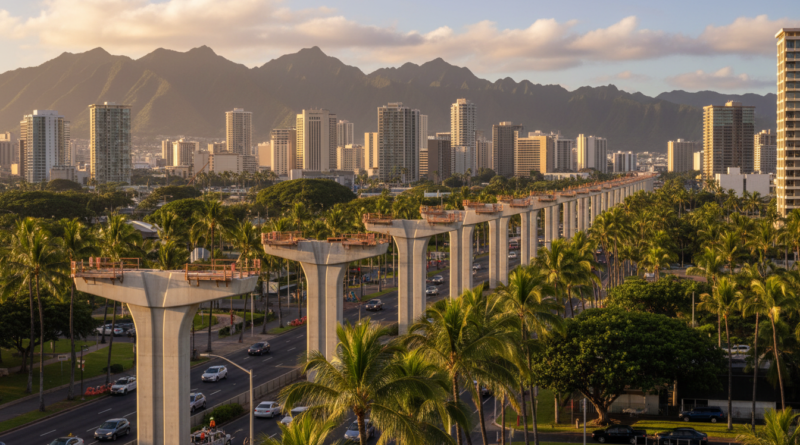
The state has approved $89.4 million in reimbursements for the Honolulu Authority for Rapid Transportation, providing much-needed financial relief as concrete columns for the rail system’s downtown segment begin rising along Dillingham Boulevard.
The reimbursement covers expenses HART incurred between July 2023 and March 2026, marking the largest single payment the state has made toward the troubled transit project. The funds represent a mix of federal dollars and state matching funds that have been tied up in bureaucratic reviews for months.
“This reimbursement helps stabilize HART’s cash flow as we move into the most complex phase of construction,” said HART Executive Director Lori Kahikina. “With Segment 3 taking shape, every dollar counts toward keeping us on schedule for the 2031 downtown opening.”
The money arrives as HART pushes forward with Segment 3, which will extend the rail line from Middle Street through Kalihi and Downtown Honolulu to Ala Moana Center. Residents driving along Dillingham Boulevard can now see the first concrete support columns taking shape, a visible sign of progress after years of delays and cost overruns.
Where the Money Goes
The $89.4 million will primarily cover construction costs for guideway segments, station construction, and systems integration work. About $45 million is earmarked for the elevated structures now rising in Kalihi, while another $30 million will fund station construction at key stops including Kalihi-Palama and Iwilei.
The remaining funds will support ongoing operations of the West Oahu segment, which has been carrying passengers between East Kapolei and Halawa since June 2023. Daily ridership on the existing line has averaged about 4,200 passengers, below initial projections but showing steady growth.
State Controller Catherine Awakuni Colón’s office conducted an extensive audit of HART’s expenses before approving the reimbursement, a process that took nearly eight months. The review identified $12 million in questionable charges that were removed from the final payment.
Downtown Timeline Reality Check
While HART maintains its 2031 target date for downtown service, construction timelines remain aggressive. The project must complete 14 stations and nearly 10 miles of elevated guideway through some of Honolulu’s most congested areas.
The Dillingham Boulevard corridor presents particular challenges, with utility relocations and traffic management requiring careful coordination. Construction crews have been working extended hours to minimize disruption to businesses along the route, but some delays appear inevitable.
Recent weather-related setbacks, including damage from heavy rains in February, have pushed some milestones back by several weeks. HART officials acknowledge the 2031 timeline has little room for additional delays, particularly as construction moves into Downtown Honolulu’s denser urban core.
The downtown segment will include stops at Iwilei, Chinatown, and the civic center area near Honolulu Hale. The final phase to Ala Moana Center involves complex engineering challenges, including crossing over existing roadways and integrating with TheBus transit center.
What Riders Can Expect
Once complete, the full 20-mile system will connect West Oahu to urban Honolulu in about 42 minutes, with trains running every 10 minutes during peak hours. The downtown segment alone is projected to serve 28,000 daily riders by 2035.
HART plans to begin testing on Segment 3 in late 2030, with passenger service launching in phases throughout 2031. The Kalihi-Palama station is expected to open first, followed by stops moving toward downtown.
For Honolulu residents, the reimbursement represents both progress and ongoing uncertainty. While construction momentum appears strong, the project’s history of cost overruns and delays continues to fuel skepticism about meeting the 2031 deadline.
The total project cost now stands at $12.4 billion, up from an original estimate of $5.1 billion in 2012. Federal funding covers about 50% of costs, with the state and city splitting the remainder through a combination of general excise tax surcharges and hotel room taxes.
With concrete rising along Dillingham Boulevard and stations taking shape, rail supporters hope visible progress will help rebuild public confidence in the project. For critics, the $89.4 million reimbursement serves as another reminder of the system’s enormous price tag and uncertain future.