
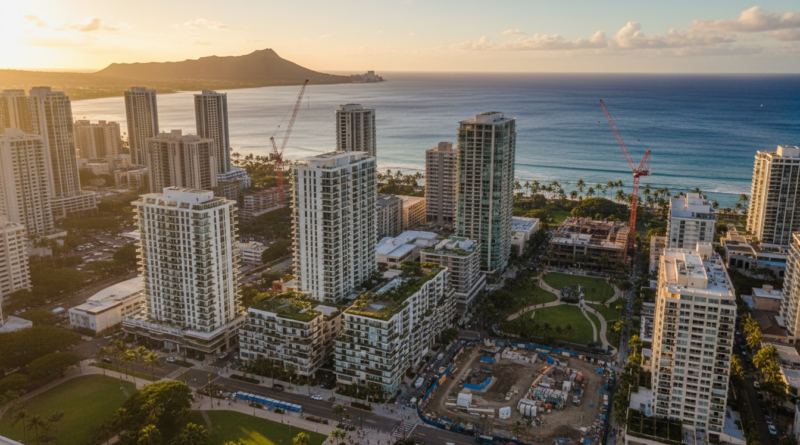
Kahuina to Break Ground in Kakaako with 861 Homes — 60% Reserved for Workforce and Affordable Buyers
A major affordable housing project is poised to reshape Kakaako’s skyline with groundbreaking scheduled for 2026. Kahuina, a mixed-use development, will deliver 861 residential units with 60% reserved for workforce and affordable buyers — a significant commitment in Hawaii’s most expensive housing market.
The project represents one of the largest affordable housing initiatives in urban Honolulu, targeting families and working professionals priced out of market-rate condominiums. With median home prices in Kakaako exceeding $1 million, Kahuina’s affordability mandate could provide a crucial entry point for local residents.
Who Qualifies and What It Costs
The development’s 517 affordable and workforce units will serve buyers earning between 80% and 140% of Area Median Income (AMI). For a family of four, that translates to household incomes ranging from approximately $76,800 to $134,400 annually.
Workforce housing units, targeting those earning 100% to 140% of AMI, are expected to price between $450,000 and $650,000. Affordable units for buyers at 80% to 100% of AMI will likely range from $350,000 to $500,000, though final pricing awaits city approval.
By comparison, market-rate condominiums in nearby towers like Ae’o and Anaha typically start above $700,000 for one-bedroom units, with two-bedroom homes often exceeding $1.2 million.
“This project addresses a critical gap in our housing market,” said James Koshiba, a real estate broker specializing in Kakaako developments. “We have luxury condos and true affordable housing, but very little for the working families who keep our city running — teachers, firefighters, healthcare workers.”
Commercial Component Targets Local Business
Beyond residential units, Kahuina will feature 42,000 square feet of ground-floor commercial space designed to activate street-level pedestrian traffic. The retail component aims to serve both residents and the broader Kakaako community with everyday conveniences.
Early plans suggest space for restaurants, cafes, small retailers, and professional services. The developer has indicated preference for local businesses over national chains, aligning with community desires for authentic neighborhood character.
The commercial strategy reflects lessons learned from other Kakaako developments where ground floors initially struggled to attract tenants. Projects like Ward Village have found success mixing dining, services, and entertainment venues that cater to both residents and visitors.
Kakaako’s Transformation Continues
Kahuina joins a wave of development transforming the former industrial district into Honolulu’s densest residential neighborhood. The project sits within the Hawaii Community Development Authority’s master-planned area, which requires new developments to include affordable housing components.
The timing coincides with completion of major infrastructure improvements, including the expansion of Keeaumoku Street and enhanced pedestrian connections to Ala Moana Center. These improvements position Kakaako as increasingly walkable and transit-accessible.
However, the neighborhood still grapples with growing pains. Traffic congestion, limited parking, and strained utility infrastructure challenge new residents. Kahuina’s developers must coordinate with city planners to ensure adequate support systems.
Application Process and Timeline
Interested buyers for affordable and workforce units will need to qualify through the city’s income verification process and complete homebuyer education courses. Applications typically open 12 to 18 months before unit delivery.
Priority goes to Hawaii residents, with additional preferences for first-time homebuyers and essential workers. Buyers must agree to occupancy requirements and resale restrictions designed to keep units affordable for future qualified purchasers.
Construction is expected to span three years following groundbreaking, with first occupancy targeted for 2029. The phased delivery will likely prioritize affordable units to meet community housing needs.
For Honolulu’s working families, Kahuina represents a rare opportunity to establish roots in the city’s most dynamic neighborhood. With housing costs continuing to outpace income growth, the project’s success could influence future development requirements and demonstrate the viability of mixed-income communities in urban Honolulu.
The development’s impact extends beyond housing, potentially catalyzing small business growth and strengthening Kakaako’s evolution from a bedroom community to a complete neighborhood where residents can live, work, and play.