
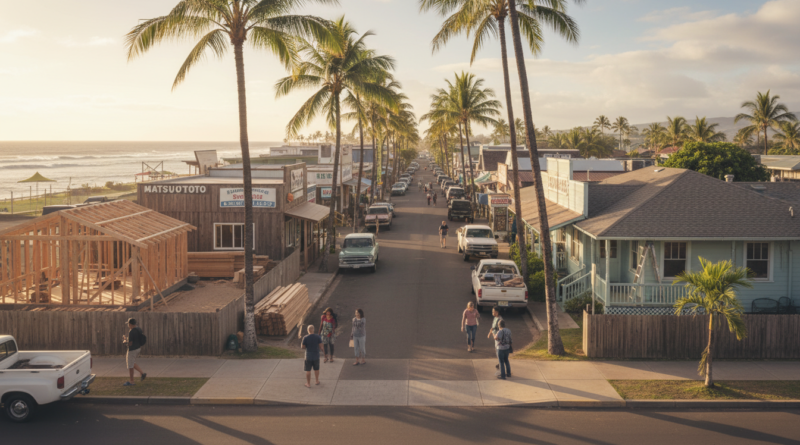
Two Months After the Kona Low, North Shore Quietly Rebuilds Even as Haleiwa Welcomes Visitors Back
Tourists are flooding back to Haleiwa’s famous shrimp trucks and surf shops along Kamehameha Highway, but just a few blocks inland, many North Shore residents are still picking up the pieces from March’s devastating Kona Low. The contrasting scenes paint a complex picture of recovery on Oahu’s famous North Shore, where economic necessity and ongoing rebuilding efforts exist side by side.
The North Shore Chamber of Commerce has been working overtime to reassure visitors that the area is “open for business” following the March flooding that damaged hundreds of homes and businesses. Popular destinations like Giovanni’s Shrimp Truck, Haleiwa Joe’s, and the surfboard shops that line the historic town center are bustling with activity again, drawing the crowds that keep the local economy afloat.
But venture into residential neighborhoods like Pupukea, Sunset Beach, and parts of Waialua, and the story looks different. Construction crews can be spotted elevating flood-damaged homes, while some families are still living in temporary housing or with relatives as repairs continue.
“We’re grateful that visitors are coming back because we need that economic support,” said Lisa Kato, a longtime Haleiwa resident whose family has owned a small gift shop on Kamehameha Highway for three generations. “But people need to understand that our community is still healing. Some of our neighbors lost everything.”
Infrastructure Concerns Linger
Perhaps more concerning for long-term residents is that the drainage system failures that worsened March’s flooding haven’t been fully addressed. Several North Shore neighborhoods experienced unprecedented water levels during the Kona Low, with some residents attributing the severity to clogged storm drains and inadequate infrastructure maintenance.
In April, neighbors in areas like Pupukea Heights and parts of Haleiwa town pointed to blocked culverts and overwhelmed drainage systems as contributing factors to the flooding. While city crews have cleared some debris and conducted inspections, comprehensive infrastructure upgrades remain in the planning stages.
The March 15-17 Kona Low brought record rainfall to parts of the North Shore, with some areas receiving more than 10 inches in a 24-hour period. The combination of heavy rain, high surf, and what residents describe as inadequate drainage created a perfect storm that sent water rushing through neighborhoods that rarely flood.
A Tale of Two Recoveries
The disparity between the bustling commercial areas and struggling residential neighborhoods reflects broader challenges facing many Hawaiian communities after natural disasters. Tourism-dependent businesses face pressure to reopen quickly to avoid losing visitors to other destinations, while residents often face longer, more complex recovery timelines.
Many North Shore families are still navigating insurance claims, contractor delays, and the emotional toll of losing cherished belongings. Some homes in low-lying areas near Anahulu River and Waialua are being elevated several feet above their original foundations — a process that can take months and cost tens of thousands of dollars.
The elevated homes create an unusual streetscape in some neighborhoods, with houses on tall stilts standing next to others still at ground level. It’s become a visible reminder of climate change adaptation in a community that’s increasingly vulnerable to extreme weather events.
Community Support Networks
Local organizations and churches have stepped up to support ongoing recovery efforts, even as media attention has shifted elsewhere. The North Shore Food Bank continues distributing supplies to affected families, while volunteer groups help with cleanup and rebuilding projects on weekends.
Haleiwa Elementary School, which served as an evacuation center during the flooding, has become an informal community hub for sharing resources and information about available assistance programs. Teachers report that some students are still dealing with displacement and trauma from the flooding.
The resilience of North Shore communities has been evident throughout the recovery process, with neighbors helping neighbors in ways that exemplify the spirit of aloha. But residents emphasize that recovery is measured in years, not months.
Looking Forward
As summer approaches and visitor numbers continue climbing, North Shore residents are balancing gratitude for economic recovery with advocacy for better infrastructure and flood prevention measures. Community meetings about drainage improvements and flood mitigation strategies are drawing larger crowds than usual, with residents determined to be better prepared for the next big storm.
For visitors planning North Shore adventures this summer, the message from locals is clear: come and support our businesses, but also understand that behind the postcard-perfect beaches and food trucks, a community is still rebuilding. The aloha spirit that draws millions to these shores each year is perhaps most evident not in the tourist areas, but in the neighborhoods where residents continue supporting each other through a long road to recovery.