HoMA Opens ‘Quiet Luxury’ Exhibition May 22 — Honolulu Meets Edo-Era Fashion Rebels
The Honolulu Museum of Art will unveil a captivating exploration of fashion rebellion when “Quiet Luxury: The Art of Understated Elegance in Edo Japan” opens May 22, running through October 4 in the museum’s downtown galleries.
The exhibition showcases how 18th and 19th-century Japanese merchants and artisans brilliantly subverted their government’s strict dress codes through subtle sophistication — a form of resistance that museum curators say resonates deeply with Hawaii’s own complex cultural history of adaptation and quiet defiance.
During Japan’s Edo period (1603-1868), sumptuary laws dictated that only samurai and nobility could wear bright colors, silk, and elaborate patterns. The merchant class, despite growing wealth, was legally restricted to browns, grays, and simple designs.
But Edo’s creative minds found ways around these restrictions that would make any modern fashionista proud.
The Art of Secret Luxury
“These artisans developed incredibly sophisticated techniques to create beauty within constraints,” said HoMA’s Asian Art curator Jennifer Saville. “They used subtle gradations of indigo, intricate weaving patterns that caught light differently, and hidden silk linings that only the wearer would know about. It was luxury that whispered rather than shouted.”
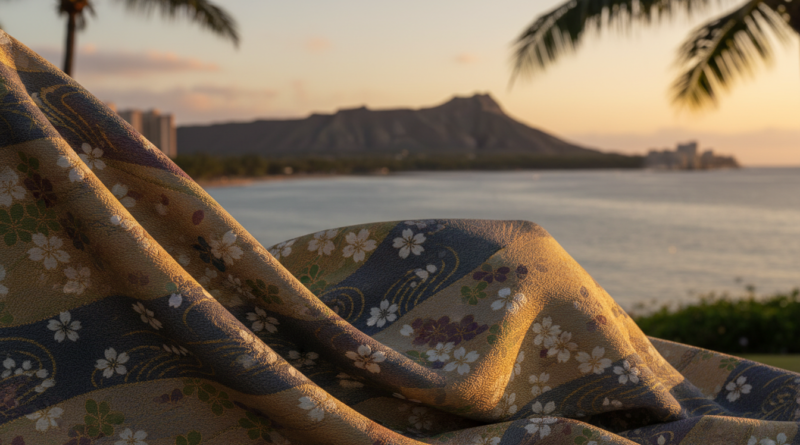
The exhibition draws primarily from HoMA’s own permanent collection, including textiles, woodblock prints, and decorative arts that tell this story of coded elegance. Visitors will see examples of “iki” — the aesthetic philosophy of understated chic that emerged from these restrictions — expressed through everything from kimono with barely-there patterns to hair ornaments that revealed their precious materials only upon close inspection.
One standout piece is an 1830s merchant’s coat that appears to be simple brown cotton from a distance. Step closer, and intricate geometric patterns emerge from the weave, created through a labor-intensive technique that took months to complete.
Local Connections
The themes of “Quiet Luxury” speak particularly to Hawaii’s layered cultural identity, where indigenous, Asian, and Western influences have long created their own forms of coded communication and resistance.
“When you think about the ways local families here have preserved cultural practices, or how immigrant communities maintained traditions while adapting to new circumstances, there are real parallels,” Saville noted. “The idea of finding ways to express identity and values within restrictive systems — that’s something Hawaii residents understand deeply.”
The exhibition design itself reflects this philosophy of quiet sophistication. Rather than crowded galleries, the museum has created intimate viewing spaces that encourage close looking, with lighting designed to reveal the subtle textures and patterns that might otherwise go unnoticed.
Interactive elements include magnifying stations where visitors can examine the incredible detail work in textile fragments, and a hands-on demonstration of indigo dyeing techniques that shows how artisans achieved dozens of different blue tones using the same base material.
Beyond Beautiful Objects
While the aesthetic appeal is undeniable, museum director Halona Norton-Westbrook emphasizes that “Quiet Luxury” is ultimately about human creativity and resilience.
“These weren’t just pretty clothes,” Norton-Westbrook said. “They were acts of cultural resistance, ways of maintaining dignity and expressing identity when direct defiance wasn’t possible. That’s a story that transcends any single culture or time period.”
The exhibition also explores how these Edo-period innovations influenced modern Japanese design philosophy, from the minimalist aesthetic of contemporary fashion designers to the subtle luxury approach of brands like Muji and Uniqlo.
Programming around the exhibition includes a June 15 lecture on “The Politics of Dress in Island Communities” and monthly textile workshops where participants can try traditional Japanese dyeing and weaving techniques.
For downtown workers and Chinatown art walkers, the exhibition offers a perfect pause from urban hustle — a chance to slow down and appreciate beauty that reveals itself gradually, much like the best of Honolulu’s own cultural treasures.
“Quiet Luxury” represents more than historical curiosity for a city where cultural fusion and adaptation remain daily realities. It’s a reminder that the most profound forms of resistance and self-expression often happen in whispers rather than shouts, in the careful choices we make about how we present ourselves to the world.
The Honolulu Museum of Art is located at 900 S. Beretania Street. Regular admission applies, with free entry for Hawaii residents on the first Wednesday of each month.