
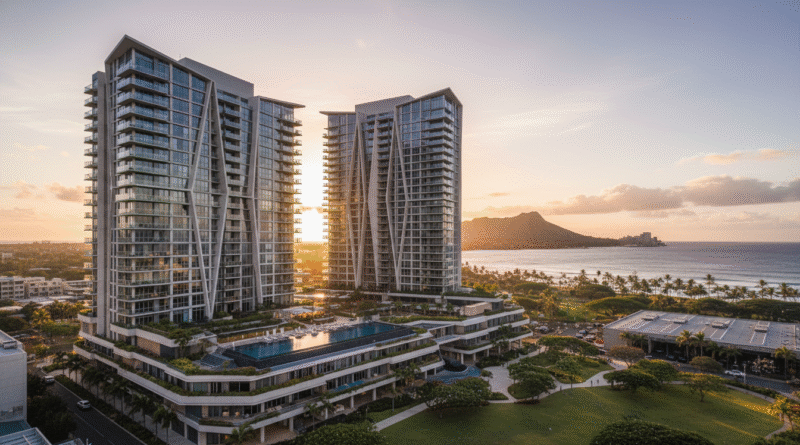
Kakaako’s Kahuina Project Eyes 2026 Groundbreaking with 861 Units — 60% Affordable Housing
A massive residential development in Kakaako is moving closer to reality, with Stanford Carr Development’s Kahuina project targeting a 2026 groundbreaking for what could become one of Honolulu’s largest affordable housing commitments by a private developer.
The 861-unit project on Block C of the Our Kakaako master plan promises that 60% of its residential units will be designated as workforce and affordable housing. That translates to more than 500 units priced below market rate in one of Oahu’s most sought-after neighborhoods, where luxury condos routinely sell for over $1 million.
Located on the makai side of Ala Moana Boulevard between Cooke and Kamakee streets, Kahuina represents a significant test of whether private developers can deliver meaningful affordable housing in Honolulu’s urban core. The project also includes 42,000 square feet of commercial space designed to activate the street level with retail and dining options.
Ambitious Timeline Meets Market Realities
Stanford Carr Development, known for projects like Modera Kakaako and Waihonua, faces the challenge of maintaining affordability commitments while navigating Honolulu’s notoriously expensive construction market. Building costs have surged in recent years, forcing some developers to scale back or abandon affordable housing components.
“The success of projects like Kahuina will determine whether Kakaako becomes a truly mixed-income community or just another playground for wealthy buyers,” said John Kawamoto, a longtime Kakaako resident and community advocate. “We’re cautiously optimistic but want to see concrete commitments backed by solid financing.”
The project must navigate the Hawaii Community Development Authority’s approval process, which has become increasingly focused on ensuring developers follow through on affordability promises. Recent years have seen several high-profile cases where developers sought to reduce affordable housing commitments after receiving initial approvals.
Kakaako’s Transformation Continues
Kahuina sits within the broader Our Kakaako master plan, a ambitious redevelopment of former industrial lands that has already delivered thousands of residential units over the past decade. The area has transformed from a gritty warehouse district into Honolulu’s most active construction zone, complete with new parks, bike lanes, and a growing dining scene.
The neighborhood now stretches from downtown Honolulu to Ala Moana Beach Park, offering residents walkable access to employment centers, shopping, and recreational amenities. This connectivity makes affordable units particularly valuable, as residents can potentially reduce transportation costs by living near work and transit options.
However, the rapid pace of development has raised concerns about displacement and whether longtime Hawaii residents can actually afford to live in the new Kakaako. Median home prices in the area have climbed steadily, making the affordability component of projects like Kahuina crucial for maintaining economic diversity.
Financing and Feasibility Questions
The project’s financial structure remains under wraps, but delivering 500+ affordable units will likely require creative financing including tax credits, government subsidies, or cross-subsidization from market-rate units. Stanford Carr has successfully navigated these complexities before, but Kahuina represents a much larger commitment.
Construction timelines in Honolulu have stretched considerably due to labor shortages and supply chain issues. The 2026 groundbreaking target assumes permitting proceeds smoothly and financing remains in place — two significant assumptions in today’s development environment.
The commercial component could provide crucial revenue to support the residential affordability commitments. Ground-floor retail in Kakaako has seen mixed success, with some spaces struggling to attract tenants while others benefit from the area’s growing foot traffic.
What It Means for Honolulu
If delivered as promised, Kahuina could serve as a model for future private development in urban Honolulu. The project tests whether market forces and regulatory requirements can align to produce significant affordable housing without direct government development.
For prospective residents, the project represents one of the largest opportunities to secure below-market housing in central Honolulu. However, the actual affordability levels and qualification requirements won’t be finalized until closer to construction.
The success or failure of Kahuina’s affordability commitments will likely influence how the city and HCDA structure future development approvals. With housing costs continuing to drive residents off-island, projects like this represent crucial tests of whether Honolulu can grow while maintaining space for working families.
Stanford Carr Development expects to release more detailed project information and pricing as permitting advances through 2025. The developer has committed to regular community meetings to address resident concerns and provide construction updates once groundbreaking begins.
