
A New Haleiwa Agricultural Park Is Giving Immigrant and Refugee Farmers a Place to Grow
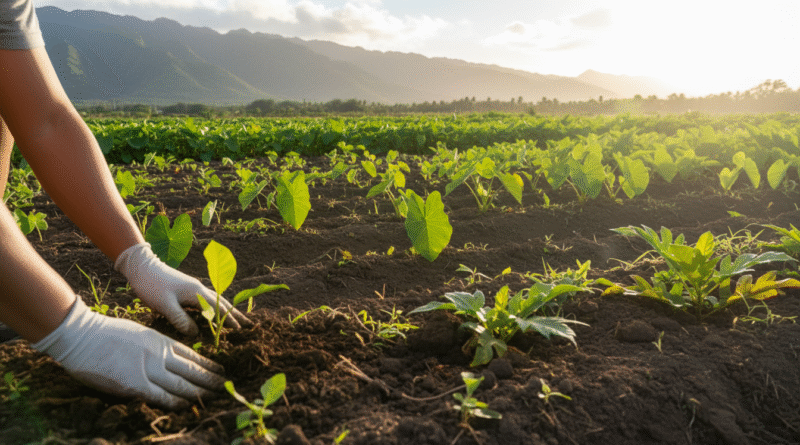
A new agricultural park in Haleiwa is putting down roots as a place where immigrant and refugee farmers can cultivate both crops and community connections on Oahu’s North Shore.
The Pacific Gateway Center has partnered with Kamehameha Schools to launch the innovative farming initiative on land near Haleiwa town, creating opportunities for newcomers to Hawaii who bring agricultural expertise from their home countries. The project addresses a critical need for affordable farmland while tapping into the rich farming traditions that immigrants and refugees carry with them.
Many of the participants are experienced farmers who worked the land professionally in countries like Myanmar, Somalia, and various Pacific Island nations before making Hawaii their home. Now they’re adapting their skills to Oahu’s unique growing conditions, from the rich volcanic soil to the year-round growing season that differs dramatically from their previous farming environments.
“These farmers bring generations of knowledge about sustainable agriculture practices,” said Maria Santos, community outreach coordinator for the Pacific Gateway Center. “What we’re providing is the space and support system they need to rebuild their livelihoods and contribute to Hawaii’s food security.”
The agricultural park spans several acres of Kamehameha Schools land that had previously been underutilized for farming. Individual plots are leased to participating families at affordable rates, with the program also providing access to shared tools, irrigation systems, and storage facilities that would be cost-prohibitive for individual farmers starting out.
Building Food Security and Community
The timing couldn’t be more crucial for Oahu’s food landscape. Hawaii imports roughly 90% of its food, making the islands vulnerable to supply chain disruptions that became painfully apparent during the pandemic. Local food production initiatives like the Haleiwa agricultural park represent small but meaningful steps toward greater food self-sufficiency.
Beyond the economic benefits, the farming plots are becoming gathering spaces where different cultural communities share techniques, seeds, and stories. Hmong farmers are teaching Somali families about companion planting, while Micronesian growers are sharing knowledge about taro cultivation with newcomers from Southeast Asia.
The produce grown at the park serves multiple markets. Some farmers sell directly to neighbors and at local farmers markets, including the popular Haleiwa Farmers Market held on Thursdays. Others are building relationships with North Shore restaurants eager to source locally-grown ingredients, particularly the specialty vegetables and herbs that reflect the diverse culinary traditions of the farming families.
Several plots are dedicated to growing traditional crops that connect families to their cultural heritage — bitter melons popular in Filipino cooking, okra varieties from Africa, and medicinal herbs used in traditional healing practices. These specialty crops often command higher prices than common vegetables, providing better economic returns for the small-scale farmers.
Learning Hawaii’s Growing Rhythms
The transition to farming in Hawaii presents unique challenges even for experienced agriculturalists. The year-round growing season means different planting and harvesting rhythms than many farmers knew in their home countries. Soil composition, rainfall patterns, and pest management all require new approaches.
The Pacific Gateway Center provides educational workshops covering everything from Hawaii’s agricultural regulations to sustainable pest control methods that work in the tropical climate. Extension agents from the University of Hawaii College of Tropical Agriculture regularly visit to offer technical assistance.
Water management has emerged as a particularly important focus area. While Oahu receives abundant rainfall in some areas, the North Shore’s agricultural zones require careful irrigation planning. The park has invested in efficient drip irrigation systems that conserve water while ensuring consistent crop production.
Economic Impact and Future Growth
Early results suggest the agricultural park is meeting its goals of economic empowerment. Several families report earning $200-400 monthly from their plots — modest amounts that nonetheless provide crucial supplemental income for households often juggling multiple part-time jobs.
The success has sparked interest from other organizations looking to replicate the model. Discussions are underway with landowners in other parts of Oahu about potential expansion sites, particularly in areas with existing immigrant and refugee populations in need of economic opportunities.
For Haleiwa residents, the agricultural park represents a return to the area’s farming roots while embracing the multicultural reality of modern Hawaii. The project strengthens local food systems while creating pathways for newcomers to contribute their skills and rebuild their lives.
As the farming families prepare for their second planting season, the agricultural park stands as proof that given the right support and opportunities, Hawaii’s newest residents can help cultivate solutions to some of the islands’ most pressing challenges around food security and economic inclusion.