
King Kamehameha Day 2026: Lei Draping, Floral Parade, and How to Celebrate on Wednesday
Thousands of visitors and residents will gather downtown and in Waikiki on Wednesday, June 11, 2025, to honor Hawaii’s first monarch during the annual King Kamehameha Day celebration. The state holiday features two signature events that showcase Hawaiian culture and history: the traditional lei draping ceremony at Aliiolani Hale and the colorful floral parade winding from Iolani Palace through the heart of Honolulu.
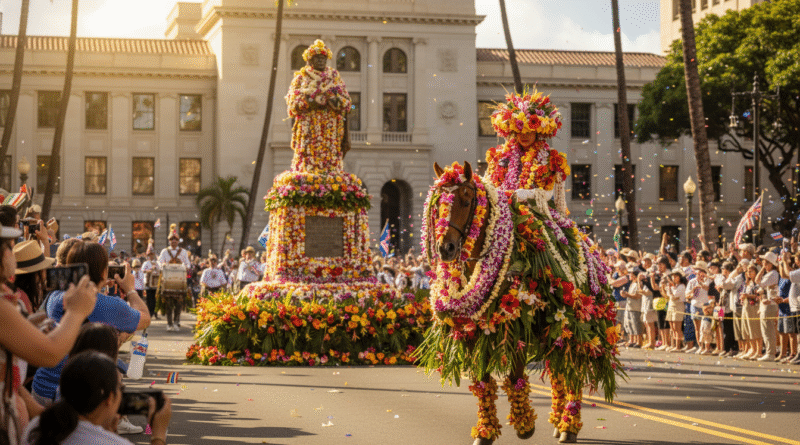
The day begins early with the lei draping ceremony at the King Kamehameha statue fronting Aliiolani Hale on King Street. Starting at 9 a.m., community members, cultural organizations, and visiting dignitaries will present fresh flower lei to honor Kamehameha I, who united the Hawaiian Islands in 1810.
“The lei draping is one of our most sacred traditions,” said Keoni Nakamura, cultural director for the Hawaiian Cultural Center. “Each lei represents respect and gratitude for our ali’i who brought peace to these islands.”
The ceremony features traditional Hawaiian chants, hula performances, and remarks from state officials. Participants often dress in traditional Hawaiian attire, creating a vibrant display of cultural pride in the shadow of downtown’s government buildings.
Floral Parade Brings Color to City Streets
At 10 a.m., the King Kamehameha Floral Parade kicks off from Iolani Palace, traveling down King Street through downtown before turning toward Waikiki. The parade route continues along Kalakaua Avenue, concluding at Kapiolani Park near the Waikiki Shell.
This year’s parade promises the traditional spectacle that has delighted families for decades. Pau riders — women dressed in elaborate Victorian-era riding habits atop decorated horses — lead the procession alongside colorful floats created by schools, businesses, and community organizations throughout Oahu.
Marching bands from high schools across the island will perform, joined by hula halau (dance schools) and cultural groups celebrating Hawaiian heritage. The Royal Hawaiian Band, established in 1836, typically anchors the musical performances.
Prime viewing spots include the sidewalks along King Street near Iolani Palace, the intersection of King and Bishop streets downtown, and anywhere along Kalakaua Avenue in Waikiki. Families often stake out spots early, bringing folding chairs and coolers for the multi-hour celebration.
Cultural Significance and Modern Traditions
King Kamehameha Day became an official Hawaiian Kingdom holiday in 1871 under King Kamehameha V. After statehood in 1959, Hawaii maintained the June 11 observance as one of only two state holidays unique to the islands, along with Prince Kuhio Day.
The holiday honors Kamehameha I, known as Kamehameha the Great, who conquered and unified the Hawaiian Islands through military campaigns between 1795 and 1810. His leadership established the Kingdom of Hawaii and preserved Hawaiian independence for nearly a century.
The iconic statue at Aliiolani Hale, draped in dozens of lei during the ceremony, is actually the second casting of the original sculpture. The first statue was lost at sea but later recovered and now stands in Kamehameha’s birthplace in North Kohala on Hawaii Island.
Beyond the official ceremonies, many Honolulu restaurants and cultural sites offer special programming. The Bishop Museum typically extends hours and features Hawaiian cultural demonstrations, while several Waikiki hotels host traditional luau performances.
Planning Your King Kamehameha Day
Both events are free and open to the public, though parking downtown can be challenging. The city typically closes several streets along the parade route, and TheBus offers special service to accommodate increased ridership.
Visitors should dress for warm, humid weather and bring sun protection. Traditional Hawaiian attire is encouraged but not required. Food vendors usually set up along the parade route, particularly near Kapiolani Park.
After the parade, many families continue celebrating at Kapiolani Park with picnics and beach activities. The adjacent Waikiki Beach provides a perfect backdrop for extending the festivities into the afternoon.
For Honolulu residents, King Kamehameha Day represents more than a day off work — it’s an opportunity to connect with Hawaiian culture and history while enjoying community celebration. The holiday reminds locals and visitors alike of Hawaii’s unique position as the only U.S. state with a royal heritage, and the ongoing importance of preserving and celebrating that legacy.
As the lei-draped statue of Kamehameha I overlooks downtown Honolulu each June 11, the ceremony and parade serve as living reminders of the monarch who shaped these islands and the vibrant culture that continues to thrive today.