
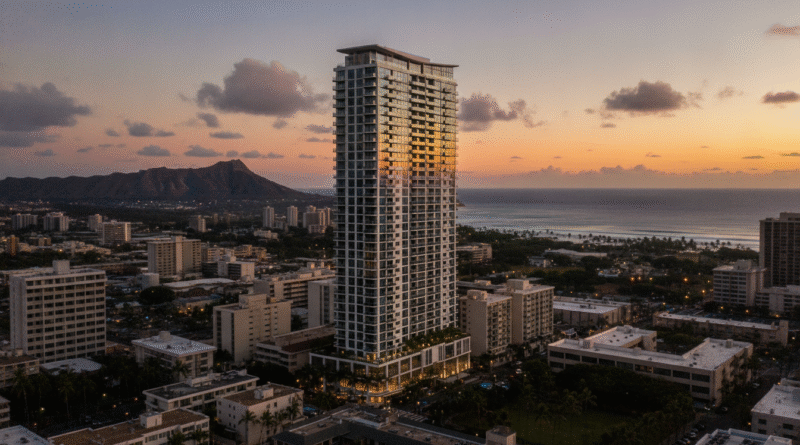
Kahuina Breaks Ground in Kakaako With 861 Units — 60% Affordable and Workforce Housing
Stanford Carr Development is preparing to break ground on Kahuina, a mixed-use tower that will add 861 residential units to Kakaako’s rapidly evolving skyline. The project, slated to begin construction in 2026, represents one of the largest affordable and workforce housing commitments in the neighborhood’s recent development wave.
Located on Block C of the Our Kakaako master plan, Kahuina will dedicate 60% of its units to affordable and workforce housing — a significant percentage that could help address Honolulu’s housing shortage. The remaining 40% will be market-rate condominiums.
The tower will also include 42,000 square feet of ground-floor commercial space, adding retail and dining options to the Keeaumoku Street corridor. This mixed-use approach aligns with the broader Our Kakaako vision of creating a walkable, live-work community between downtown and Ala Moana.
Addressing Kakaako’s Housing Pipeline
Kahuina’s affordable housing component comes as Kakaako faces increasing pressure to provide housing options for local families. The Hawaii Community Development Authority, which oversees development in the area, has required developers to include affordable units as part of their projects.
“This project demonstrates how we can build density while maintaining our commitment to local residents,” said community advocate Lisa Chang, who has followed Kakaako development for the past decade. “The challenge will be ensuring these workforce units remain truly accessible to the families who need them most.”
The workforce housing units will target households earning between 80% and 140% of Area Median Income, while affordable units will serve those earning up to 80% AMI. For a family of four in Honolulu, this translates to annual incomes ranging from approximately $76,000 to $134,000 for workforce units.
Block C’s Strategic Location
Block C sits in a prime location within the Our Kakaako master plan, bordered by Keeaumoku Street and positioned between the existing Whole Foods Market and planned community spaces. The site offers easy access to the planned Keeaumoku Transit Station, part of the city’s rail system that will connect Kakaako to downtown Honolulu and West Oahu.
Stanford Carr Development has been active in Kakaako for several years, with previous projects including Ke Kilohana and other residential towers in the area. The company’s experience in the neighborhood positions them to navigate the complex approval process required for mixed-income housing developments.
The Our Kakaako master plan envisions the area as a model for sustainable urban development, with an emphasis on public spaces, pedestrian connectivity, and diverse housing options. Kahuina’s design will need to integrate with planned parks, including a large central green space that will serve as the neighborhood’s community gathering point.
Commercial Space and Community Impact
The 42,000 square feet of commercial space planned for Kahuina’s ground floor could help address the neighborhood’s need for local-serving businesses. Current Kakaako residents often travel to Ala Moana Center or Ward Village for everyday shopping and dining needs.
The retail component will likely include a mix of restaurants, services, and possibly a small grocery store to serve the growing residential population. This street-level activation is crucial for creating the walkable environment envisioned in the master plan.
Construction of Kahuina will also bring additional infrastructure improvements to the Keeaumoku Street corridor, including sidewalk enhancements and utility upgrades that will benefit the broader neighborhood.
Timeline and What’s Next
The 2026 construction start timeline positions Kahuina to deliver units in the late 2020s, as Kakaako’s population is expected to reach build-out levels. The project must still navigate final approvals from the Hawaii Community Development Authority, including detailed design review and community input sessions.
For Honolulu residents watching the city’s housing crisis unfold, Kahuina represents both promise and pressure. The project’s success in delivering truly affordable units will likely influence future development requirements across the city.
As Kakaako transitions from an industrial area to a dense residential neighborhood, projects like Kahuina will determine whether the transformation benefits longtime residents or primarily serves wealthy newcomers. The 60% affordable and workforce housing commitment suggests developers are taking seriously their role in addressing Honolulu’s housing needs, but the proof will come when families start moving in.