Skyline Segment 3 Column Construction Rises in Iwilei and Downtown — What Commuters Should Expect
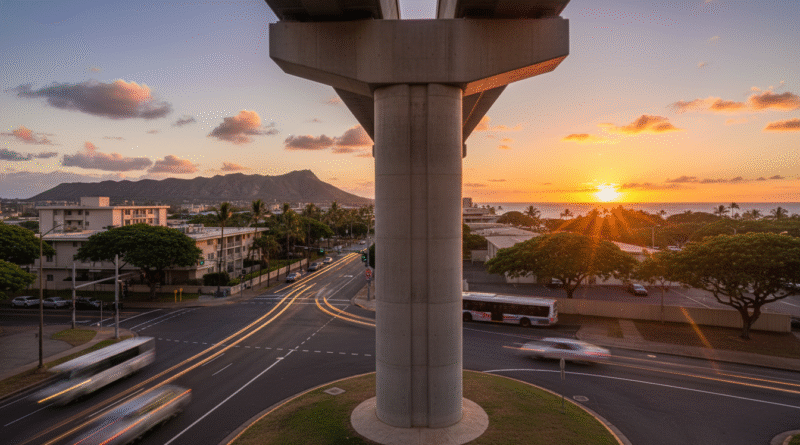
Massive concrete columns are rising along Kaʻaahi Street in Iwilei and stretching toward downtown Honolulu as construction crews make visible progress on the Skyline rail system’s third segment. The elevated guideway columns, some reaching heights of 40 feet, mark a significant milestone in the project’s march toward the planned 2031 opening of the full 20-mile system.
The column construction represents the most visible sign yet that Segment 3 is moving beyond underground utility work into the dramatic phase of building Oahu’s first rail transit system. Workers have been pouring concrete foundations and erecting steel-reinforced columns that will eventually support the elevated tracks carrying trains from Aloha Stadium to downtown and Kakaako.
Traffic impacts are already being felt along the construction corridor. Drivers on Nimitz Highway near the harbor have encountered lane restrictions and periodic closures as crews maneuver heavy equipment and concrete trucks into position. The work zone stretches from the Iwilei area through downtown, creating bottlenecks during morning and evening rush hours.
“We’re asking for patience from the community as we build this transformative project,” said Honolulu Authority for Rapid Transportation spokesperson Tina Clothier. “The short-term construction impacts will deliver long-term benefits for generations of Oahu residents.”
The construction timeline shows utility relocation work along Dillingham Boulevard continuing through early 2025, with column construction expected to accelerate through 2026. Crews must carefully coordinate with Hawaiian Electric, Hawaiian Telcom, and other utility providers to relocate decades-old infrastructure before the guideway can be completed.
Ridership Projections Signal Strong Demand
Recent ridership data from the existing Skyline segments provides encouraging signs for the system’s eventual completion. Daily ridership has reached approximately 9,200 passengers, exceeding initial projections and suggesting strong pent-up demand for rail transit on an island where traffic congestion consistently ranks among the nation’s worst.
The numbers are particularly impressive given that the current system only connects West Oahu communities to the airport and Kalihi, missing major employment centers in downtown and Kakaako. Transportation planners expect ridership to surge dramatically once Segment 3 delivers riders directly to downtown’s business district and the growing residential towers of Kakaako.
Local commuters like Keeaumoku resident James Nakamura are watching the construction with cautious optimism. “I drive from Aiea to downtown every day, and it takes 45 minutes on a good day,” Nakamura said. “If rail can cut that to 25 minutes, I’m ready to park my car and ride the train.”
The elevated guideway construction presents unique engineering challenges in Honolulu’s dense urban core. Crews must work around everything from historic buildings in Chinatown to active shipping operations at Honolulu Harbor. Environmental considerations include minimizing impacts to Keehi Lagoon and coordinating with ongoing Kakaako development projects.
Economic Impact Beyond Transportation
The visible progress on Segment 3 is already influencing real estate and development patterns around future stations. Property values near planned stations in Kakaako and downtown have shown steady increases, with developers planning transit-oriented projects that capitalize on future rail access.
The Kakaako station, planned near Ward Village, will serve one of Oahu’s fastest-growing residential areas. The downtown station will connect to major employers, government offices, and the revitalized harbor district, potentially transforming commuting patterns across the island.
Construction impacts are expected to intensify over the next two years as crews shift from column work to installing the actual guideway sections that will carry trains. This phase will require additional street closures and traffic diversions, particularly around sensitive areas like Honolulu Harbor and the downtown core.
For Honolulu residents, the rising columns represent both promise and patience. The 2031 completion date remains seven years away, meaning continued construction disruptions alongside the eventual payoff of reduced traffic congestion and expanded transportation options.
The project’s success will ultimately be measured not just in ridership numbers, but in its ability to provide reliable, efficient transit that convinces car-dependent islanders to embrace public transportation. With each new concrete column, that future moves closer to reality for Oahu’s commuters.