
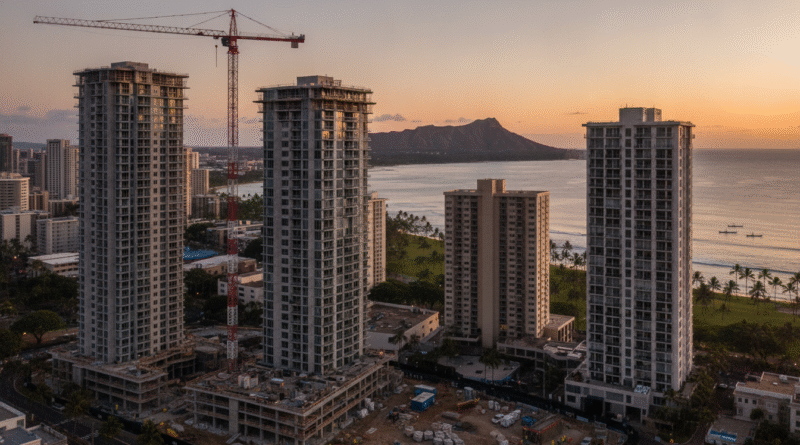
Kakaʻako’s Kahuina Breaks Ground on 861-Unit Project With 60% Affordable Housing
Stanford Carr Development is set to break ground on Kahuina, a massive 861-unit residential project in Kakaʻako that promises to deliver one of the neighborhood’s largest affordable housing components when construction begins in 2026. The development, designated as Block C in the Our Kakaʻako master plan, will reserve 60% of its units for workforce and affordable housing—a significant commitment that could reshape the area’s housing landscape.
Located in the heart of Kakaʻako’s urban core, Kahuina represents a critical piece of the broader vision to transform the former industrial district into a mixed-income community. The project will include 42,000 square feet of commercial space alongside its residential towers, creating a mixed-use environment that planners hope will serve both new residents and the existing community.
“This project demonstrates that we can build dense, urban housing while still maintaining affordability for local families,” said planning consultant Maria Santos, who has worked on similar developments across Honolulu. “The 60% affordable component is particularly significant given the current housing crisis we’re facing.”
Fitting Into the Master Plan
Kahuina’s development timeline aligns with the broader Our Kakaʻako master plan, which envisions the transformation of 600 acres of formerly industrial land into a thriving urban district. The master plan calls for a careful balance of market-rate and affordable housing, with infrastructure improvements to support the increased density.
The project sits within walking distance of planned transit connections and existing amenities like Ward Village, positioning residents near employment centers and shopping. This strategic location is part of the master plan’s goal to create a walkable urban environment that reduces car dependency.
Block C represents one of the final major residential parcels to be developed under the current master plan framework. Previous phases have focused primarily on market-rate luxury condominiums, making Kahuina’s affordable housing commitment a notable shift in development priorities.
Construction Timeline and Community Impact
With groundbreaking scheduled for 2026, residents can expect several years of construction activity in the area. Stanford Carr Development has indicated that the project will be built in phases, though specific completion timelines have not been finalized.
The development’s scale—861 units across multiple towers—means construction will likely impact traffic patterns around Ala Moana Boulevard and nearby streets. Local officials are coordinating with developers to minimize disruptions to existing residents and businesses in the area.
The project’s commercial component is designed to serve both new residents and the broader Kakaʻako community. Plans include ground-floor retail spaces that could house restaurants, services, and small businesses, adding to the neighborhood’s growing commercial ecosystem.
Addressing Kakaʻako’s Housing Challenge
The affordable housing component addresses long-standing concerns about Kakaʻako’s development pattern. Previous projects in the area have focused heavily on luxury condominiums priced well beyond the reach of most local families, contributing to displacement pressures in nearby neighborhoods.
Workforce housing units in Kahuina will be targeted at families earning between 80% and 120% of the area median income, while affordable units will serve those earning less. This income targeting is designed to accommodate teachers, nurses, service workers, and other essential professions that have struggled to find housing in urban Honolulu.
The project’s affordable units will be subject to long-term deed restrictions, ensuring they remain accessible to local families for decades rather than converting to market-rate housing after a few years.
What’s Next for Kakaʻako
Kahuina’s development marks a significant milestone in Kakaʻako’s evolution from industrial district to residential neighborhood. The project’s emphasis on affordable housing reflects growing political pressure to ensure new development serves existing residents rather than just attracting mainland buyers.
For Honolulu residents, Kahuina represents both opportunity and challenge. The project promises to add much-needed affordable housing inventory to the market while contributing to traffic and infrastructure demands in an already dense urban area.
As construction approaches, community members should expect regular updates on traffic management, infrastructure improvements, and affordable housing application processes. The success of Kahuina’s mixed-income model could influence future development decisions throughout urban Honolulu.