Honolulu’s New $35M Waterfront Farmers Market Breaks Ground at Kewalo Basin
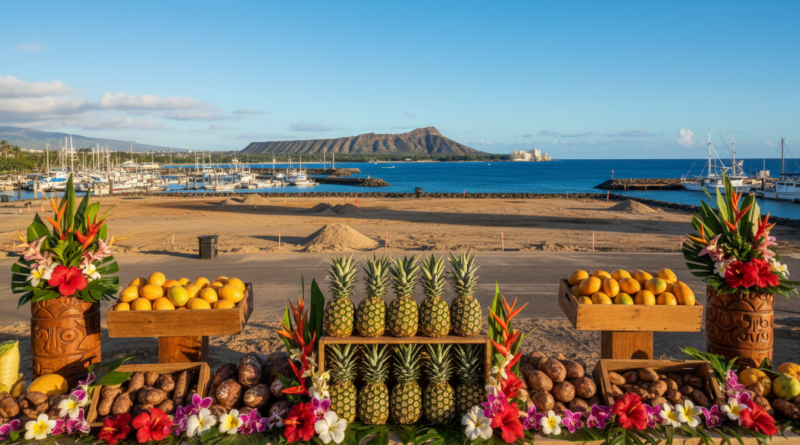
Construction crews broke ground Tuesday on Honolulu’s most ambitious agricultural project in decades — a $35 million permanent farmers market at Kewalo Basin that promises to transform how residents shop for local produce while providing island farmers with their largest retail showcase yet.
The 4.2-acre waterfront development will feature 80 vendor stalls arranged around a central pavilion, replacing the aging boat storage facility that has occupied the prime real estate between Ala Moana Beach Park and Ward Village for nearly 40 years. The open-air design draws inspiration from traditional Hawaiian fish markets, with covered walkways and natural ventilation systems that embrace the trade winds.
“This represents the largest investment in local agriculture infrastructure that Honolulu has seen since statehood,” said City Council Chair Tommy Waters, who spoke at Tuesday’s groundbreaking ceremony. “We’re not just building a market — we’re creating an economic lifeline for our island farmers and strengthening our food security.”
The project addresses a critical need for local agricultural producers, many of whom currently rely on weekend pop-up markets or selling directly to restaurants. The new facility will operate seven days a week, providing consistent income opportunities for an estimated 200 local farms across Oahu, Maui, the Big Island and Kauai.
Design Honors Local Heritage
Architects from Honolulu-based Group 70 International designed the market to echo the traditional fish auctions that once operated along Honolulu Harbor. The central pavilion features soaring timber beams reminiscent of old pier structures, while the vendor stalls radiate outward like the spokes of a traditional Hawaiian fishing net.
Native plants will line the walkways, and a demonstration kitchen will host cooking classes featuring locally grown ingredients. The design prioritizes natural materials and sustainable building practices, including solar panels and rainwater collection systems.
The facility will anchor the eastern end of Kewalo Basin Harbor, creating a pedestrian-friendly connection between Ala Moana Beach Park and the harbor’s recreational boating facilities. Food trucks and a small restaurant are planned for the makai side, taking advantage of ocean views.
Economic Boost for Local Farms
The market’s economic impact extends far beyond retail sales. Research commissioned by the Hawaii Department of Agriculture estimates the facility will generate $28 million in annual economic activity, supporting approximately 300 full-time equivalent jobs across the agricultural supply chain.
Currently, Hawaii imports roughly 85% of its food, making residents vulnerable to supply chain disruptions and price volatility. The new market aims to increase consumption of locally grown produce by providing convenient access to island-grown fruits, vegetables, and specialty crops.
“Having a permanent home where customers know they can find us every day will completely change our business model,” said Leilani Nakamura, who operates a 15-acre organic farm in Waialua. “Right now, we spend half our time just trying to find places to sell our produce. This gives us the stability to plan ahead and expand our operations.”
The market will reserve 60% of its stalls for certified Hawaii-grown produce, with the remaining spaces allocated to local prepared foods, artisanal products, and specialty items. Vendors must meet strict sourcing requirements, with at least 75% of their products originating from Hawaiian farms or producers.
Addressing Urban Development Pressures
The project comes as agricultural land across Oahu faces increasing development pressure, with prime farmland often selling for residential or commercial use. The new market provides farmers with a reliable revenue stream that could help keep agricultural operations viable.
State agriculture officials view the project as a model for similar developments on neighbor islands. Maui County has already expressed interest in developing a comparable facility in Kahului, while Hawaii County is exploring options for the Kona and Hilo areas.
Construction is expected to take 18 months, with the market scheduled to open in spring 2025. The project received $20 million in federal rural development grants, $10 million from the City and County of Honolulu, and $5 million from private investors.
The development represents a significant shift in Kewalo Basin’s identity, transforming an industrial waterfront area into a community-centered destination that celebrates Hawaii’s agricultural heritage while supporting its economic future. For Honolulu residents, it promises year-round access to the freshest local produce in a uniquely Hawaiian setting that honors both the land and sea that sustain island life.