
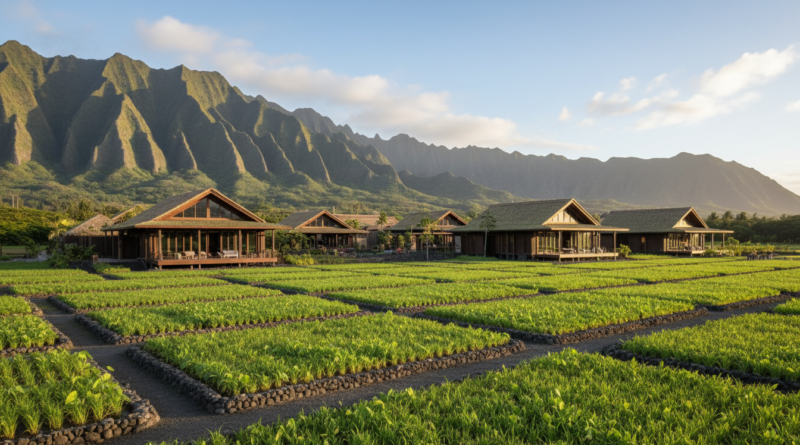
Native Hawaiian Cultural Center Breaks Ground on New Education Campus in Kaneohe
The Native Hawaiian Cultural Center officially broke ground Tuesday on its $12 million education campus in Kaneohe, marking a significant milestone in efforts to preserve and share traditional Hawaiian knowledge for future generations.
The 15-acre facility, located on Kamehameha Highway near the base of the Ko’olau Mountains, will serve as the organization’s first permanent home after operating from various community spaces across O’ahu for nearly two decades. Construction is expected to begin next month, with the campus opening to students and visitors in late 2025.
“This is more than just a building project — it’s about creating a living sanctuary where our keiki can connect with their ancestral wisdom,” said Dr. Keoni Nakamura, the center’s executive director, during Tuesday’s blessing ceremony. “We’re planting seeds that will grow into a forest of cultural understanding.”
The campus will feature traditional hale structures alongside modern classrooms, a working lo’i kalo patch, native plant gardens, and an amphitheater overlooking He’eia Fishpond. Plans include dedicated spaces for traditional crafts like kapa making, lauhala weaving, and wood carving, as well as a commercial kitchen for Native Hawaiian culinary programs.
Expanding Educational Reach
The new facility represents a major expansion of the center’s educational mission. Currently serving about 500 students annually through partnerships with local schools and community groups, the organization expects to triple that number once the campus opens.
Programming will range from elementary school field trips to adult continuing education courses in Hawaiian language, traditional navigation, and sustainable farming practices. The center also plans to offer summer immersion programs and weekend workshops for families.
“We’ve had waiting lists for our programs for years,” explained Program Coordinator Leilani Hodges. “This campus will finally let us meet the incredible demand from both Native Hawaiian families and the broader community who want to learn about our culture.”
The project has garnered support from diverse funding sources, including a $4 million grant from the Office of Hawaiian Affairs, $3 million from the Harold K.L. Castle Foundation, and nearly $2 million raised through community fundraising efforts. The remaining costs will be covered through federal education grants and private donations.
Honoring the Land
Tuesday’s groundbreaking ceremony began at sunrise with traditional oli and pule led by Hawaiian cultural practitioners from across the islands. Participants blessed the land with salt water from nearby Kaneohe Bay and scattered maile leaves throughout the property.
The location holds deep significance for organizers, situated in an area rich with Hawaiian history and close to several important cultural sites. Ancient fishponds dot the nearby coastline, while the surrounding mountains were historically used for gathering traditional medicines and materials.
“Our kupuna chose this land carefully,” noted Cultural Advisory Board member Robert Kawelo. “It connects the mountains to the sea, giving our students access to all the environments that shaped traditional Hawaiian life.”
The campus design incorporates sustainable building practices aligned with traditional Hawaiian environmental values. Solar panels will provide renewable energy, while rainwater collection systems will irrigate the educational gardens. Building materials include locally sourced ohia wood and volcanic rock.
Community Impact
Beyond formal education programs, the center plans to host community events, cultural festivals, and visiting artist residencies. The amphitheater will provide a venue for traditional music and hula performances, while the commercial kitchen will support community poi making and other food sovereignty initiatives.
Local officials see the project as an economic boost for the Windward side, creating construction jobs initially and permanent positions once operational. The facility is expected to employ 25 full-time staff members and dozens of part-time cultural practitioners and visiting instructors.
“This campus will be a cultural anchor for our community,” said Kaneohe Neighborhood Board Chair Michelle Kamealoha. “It brings together education, tradition, and economic opportunity in a way that truly serves our people.”
The center continues seeking community input on programming and design details through monthly meetings held at Kaneohe Elementary School. Organizers emphasize that the campus will remain accessible to all community members regardless of Hawaiian ancestry, reflecting the inclusive approach that has characterized the organization since its founding in 2006.
As construction begins, the Native Hawaiian Cultural Center represents a growing movement to institutionalize cultural education and ensure traditional knowledge survives for generations to come. For Windward O’ahu residents, it promises to become a cornerstone of community identity and pride.
