
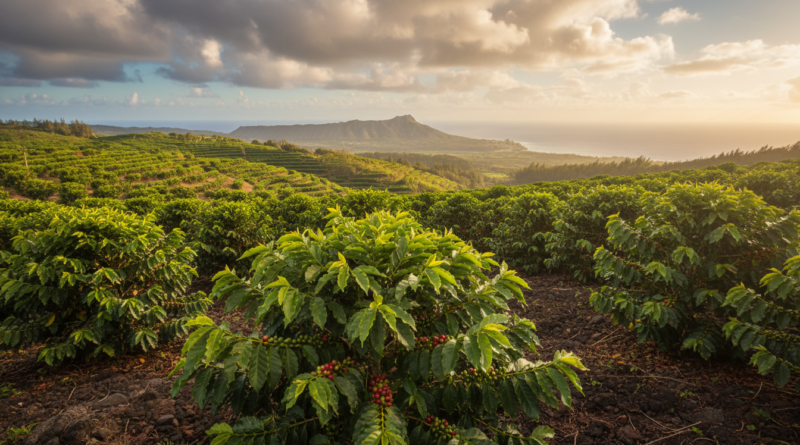
Hawaii Coffee Farmers Face New Challenges as Climate Shifts Growing Conditions
Coffee farmers across Hawaii’s Big Island are grappling with unprecedented changes to their growing conditions as shifting weather patterns threaten one of the state’s most iconic agricultural exports. From the volcanic slopes of Kona to the misty hills of Ka’u, growers report increasingly erratic rainfall, rising temperatures, and new pest pressures that are forcing them to rethink centuries-old cultivation methods.
The challenges come at a critical time for Hawaii’s coffee industry, which contributes more than $50 million annually to the state’s economy and employs thousands of residents across multiple islands. Many family-owned farms that have been passed down through generations now find themselves adapting to conditions their ancestors never faced.
“We’re seeing rainfall patterns that are completely different from what my grandfather experienced when he started this farm in the 1940s,” said Maria Gonzalez, owner of Mauna Loa Coffee Estates in South Kona. “The dry seasons are lasting longer, and when the rains do come, they’re more intense. It’s like trying to hit a moving target with our irrigation and harvesting schedules.”
The University of Hawaii’s College of Tropical Agriculture and Human Resources has documented these changes through ongoing research partnerships with local growers. Their data shows average temperatures in coffee-growing regions have increased by 1.5 degrees Fahrenheit over the past two decades, while rainfall has become 15% more variable year-over-year.
Pest Pressure and New Diseases
Beyond weather concerns, farmers are battling an influx of invasive species and plant diseases that thrive in the changing conditions. The coffee berry borer, a tiny beetle that has plagued growers for years, is now active year-round instead of following predictable seasonal patterns.
Coffee leaf rust, a fungal disease that devastated crops across Central and South America in recent years, has also appeared sporadically on Hawaiian farms. While not yet widespread, its presence has many growers on high alert and implementing new monitoring protocols.
These biological pressures are forcing farmers to invest in expensive treatments and prevention methods, adding costs to an already challenging business model. Small-scale farms, which make up the majority of Hawaii’s coffee operations, are particularly vulnerable to these additional expenses.
Innovation and Adaptation
Despite the challenges, Hawaiian coffee farmers are responding with remarkable innovation. Many are experimenting with drought-resistant varietals, implementing sophisticated water management systems, and exploring agroforestry techniques that provide natural shade and soil protection.
Some Kona farmers have partnered with local tech companies to develop precision agriculture tools that monitor soil moisture, temperature, and pest activity in real-time. These systems allow for more targeted interventions that can reduce both costs and environmental impact.
Others are diversifying their operations, adding complementary crops like macadamia nuts or tropical fruits that can provide income stability when coffee yields fluctuate. This approach mirrors traditional Hawaiian agricultural practices that emphasized crop diversity for resilience.
Support Systems and Resources
Recognizing the strategic importance of coffee farming to Hawaii’s agricultural identity, state agencies and nonprofit organizations have increased support for struggling growers. The Hawaii Department of Agriculture recently announced expanded funding for climate adaptation research and farmer education programs.
The Hawaii Coffee Association has also launched new initiatives connecting farmers with resources for sustainable farming practices and market development. These efforts include workshops on water conservation, integrated pest management, and direct-to-consumer marketing strategies that can help farms maintain profitability despite production challenges.
Local financial institutions have begun offering specialized loans for agricultural adaptation projects, recognizing that supporting coffee farmers serves broader community interests in rural areas where these operations are major employers.
Looking Ahead
While the challenges facing Hawaii’s coffee farmers are significant, many in the industry remain optimistic about finding sustainable solutions. The combination of traditional knowledge, modern technology, and strong community support provides a foundation for adaptation.
The success of these efforts will impact more than just coffee lovers’ morning routines. Coffee farming is deeply woven into Hawaii’s cultural identity and rural economy, supporting entire communities from Kauai to the Big Island.
As climate conditions continue to evolve, the innovations emerging from Hawaiian coffee farms may serve as models for agricultural adaptation worldwide. For Honolulu residents who value locally-grown products and supporting island agriculture, the resilience of these farming communities represents a crucial piece of Hawaii’s sustainable future.