Hawaii Congressional Delegation Secures $200M for Military Base Environmental Cleanup
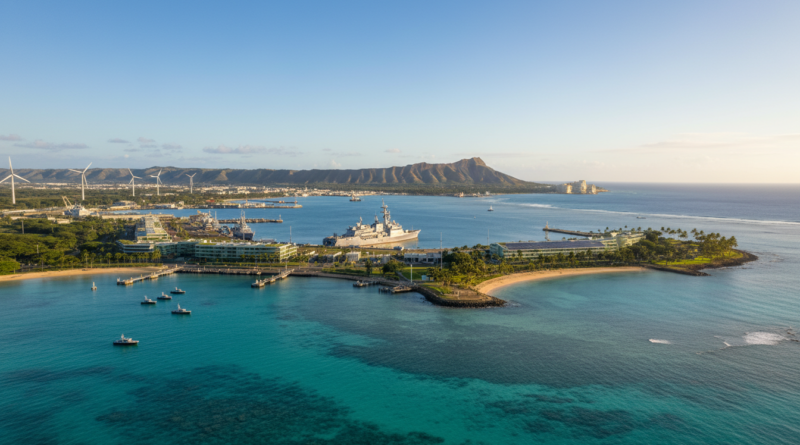
Hawaii’s congressional delegation announced Tuesday they have secured $200 million in federal funding for environmental cleanup efforts at military installations across the islands, with a significant portion earmarked for contamination remediation at Joint Base Pearl Harbor-Hickam and Marine Corps Base Hawaii at Kaneohe Bay.
The funding, included in the recently passed National Defense Authorization Act, represents the largest single allocation for military environmental cleanup in Hawaii’s history. Senator Brian Schatz, who led the effort alongside Senator Mazie Hirono and Representatives Ed Case and Jill Tokuda, said the money will address decades of fuel contamination and other environmental hazards that have threatened local water supplies and marine ecosystems.
“This isn’t just about cleaning up past mistakes—it’s about protecting the health of our communities and the natural resources that define who we are as islanders,” Schatz said during a press conference at the State Capitol. “From Wahiawa to Waimanalo, families deserve clean water and healthy environments.”
The bulk of the funding—approximately $120 million—will target the ongoing Red Hill fuel facility crisis, where underground storage tanks leaked petroleum products into groundwater supplies that serve nearly 400,000 Oahu residents. The Navy has already begun defueling the facility, but extensive soil and groundwater remediation is expected to take decades.
Another $50 million will address contamination at Kaneohe Bay, where military operations dating back to World War II have left behind a complex legacy of fuel spills, munitions debris, and chemical contaminants. The base sits adjacent to culturally significant fishponds and some of Oahu’s most pristine coral reefs.
Statewide Impact Expected
The remaining funds will be distributed across military installations on the Big Island, Maui, and Kauai, targeting everything from abandoned ammunition storage sites to contaminated airfields. At Pohakuloa Training Area on the Big Island, cleanup efforts will focus on unexploded ordnance and potential depleted uranium contamination that has concerned local communities for years.
Environmental attorney David Henkin of Earthjustice, who has represented community groups in lawsuits against the military over contamination issues, called the funding “a long-overdue down payment on environmental justice for Hawaii’s communities.”
“For too long, our islands have borne the environmental costs of military operations without adequate resources for cleanup,” Henkin said. “This funding begins to address that imbalance, though much more will be needed.”
The announcement comes as the Hawaii Department of Health continues to investigate the extent of contamination across military sites. Recent studies have found elevated levels of perfluorinated compounds, heavy metals, and petroleum products in soil and groundwater samples from multiple bases.
Timeline and Oversight
Implementation of the cleanup projects is expected to begin in spring 2024, with the Department of Defense working alongside state environmental regulators to prioritize the most critical sites. The delegation secured language requiring quarterly progress reports to Congress and annual public meetings in Hawaii to ensure community input.
Representative Tokuda emphasized the importance of transparency in the cleanup process, noting that past military environmental responses have sometimes lacked adequate community engagement. Her office will host public information sessions in each congressional district to explain how residents can stay informed about cleanup activities in their areas.
The funding also includes provisions for workforce development, with $10 million set aside to train local residents in environmental remediation techniques. This component addresses longstanding concerns about military contractors importing mainland workers for cleanup projects rather than employing local talent.
Senator Hirono stressed that while the $200 million represents significant progress, it’s only the beginning of what will likely be a multi-billion-dollar, multi-decade effort to fully address military contamination across the islands.
Looking Ahead
The delegation is already working on securing additional funding in next year’s defense appropriations bill, with early discussions focusing on expanded groundwater monitoring and marine ecosystem restoration. They’re also pushing for permanent changes to military environmental protocols to prevent future contamination incidents.
For Oahu residents, the immediate impact will be most visible at Red Hill, where cleanup activities are expected to create temporary traffic disruptions along the H-1 freeway corridor. The Department of Health will establish a community liaison office in Aiea to coordinate with affected neighborhoods throughout the remediation process.
This historic funding allocation signals a new chapter in Hawaii’s relationship with its military tenants—one where environmental stewardship carries equal weight with national security missions. As cleanup work begins across the islands, the success of these efforts will determine whether Hawaii can finally begin healing from decades of environmental damage while maintaining its critical role in Pacific defense strategy.