
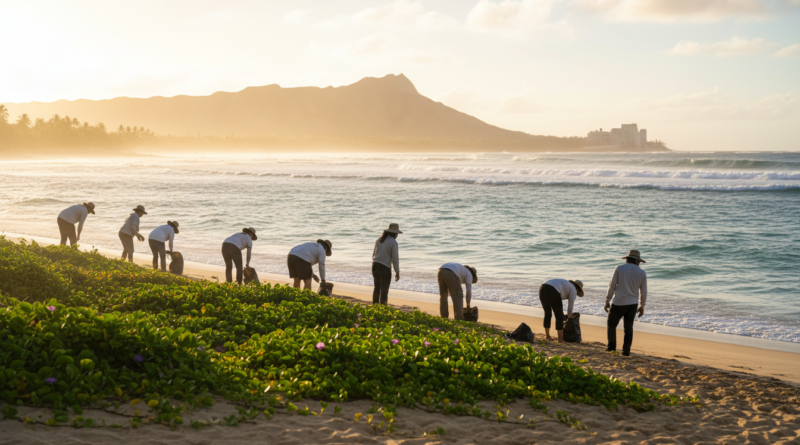
Sustainable Coastlines Hawaii Hosts Island-Wide Earth Week Cleanup and Restoration Events
As Oahu recovers from another intense storm season, Sustainable Coastlines Hawaii is mobilizing volunteers across the island for a week-long series of cleanup and restoration events starting Monday. The nonprofit’s Earth Week initiative offers residents seven opportunities to pitch in, from removing microplastics on the North Shore to restoring native plant habitats in East Oahu.
The organization has mapped out daily events from April 21-27, each targeting different environmental challenges facing our coastlines. Monday kicks off with a microplastic cleanup at Kahuku Beach, where volunteers will use specialized sifting equipment to remove tiny plastic particles from the sand — pollution that’s invisible to casual beachgoers but devastating to marine life.
“After this winter’s storms, we’re seeing more debris washing up than we have in years,” said Kailua resident and Sustainable Coastlines volunteer coordinator Maria Santos. “But it’s also created opportunities to restore areas that haven’t been accessible for cleanup in the past.”
Tuesday’s event moves to Waimanalo Beach Park for a traditional beach cleanup focused on larger debris. Wednesday shifts inland to Bellows Field Beach Park for native plant restoration, where volunteers will help establish naupaka and beach morning glory to prevent erosion.
The North Shore gets attention again Thursday with a cleanup at Sunset Beach, while Friday’s event targets the often-overlooked Keehi Lagoon area near the airport. The week wraps up with weekend events at Hanauma Bay Nature Preserve and a final restoration project at Makapuu Beach Park.
Post-Storm Restoration Efforts
This year’s Earth Week programming reflects lessons learned from recent storm seasons. Heavy rains and high surf have accelerated erosion along popular beaches while depositing unprecedented amounts of marine debris along our shores.
The microplastic cleanup at Kahuku represents a newer focus for the organization. These tiny plastic fragments, often smaller than a grain of rice, accumulate in sand and are consumed by shorebirds and marine animals. The specialized sifting process requires patience but can remove thousands of particles in a single session.
Native plant restoration has become equally critical as storm surge and erosion strip away natural barriers that protect inland areas. The naupaka and other indigenous species being planted create root systems that stabilize sand and provide habitat for native wildlife.
Each cleanup site was selected based on recent storm damage assessments and ongoing environmental monitoring. Hanauma Bay’s inclusion reflects the preserve’s commitment to community stewardship, while Keehi Lagoon addresses an area that rarely receives volunteer attention despite heavy use by local families.
How to Join the Effort
All events run from 8 a.m. to 11 a.m. and are free to join, with all equipment provided. Volunteers should bring water, sunscreen, and closed-toe shoes. Children are welcome at all events with adult supervision.
Registration isn’t required, but organizers encourage signing up online to help with planning. The events typically draw 25-50 volunteers each, creating opportunities for residents to meet neighbors while contributing to environmental protection.
Transportation to some sites requires planning, particularly for North Shore events. Sustainable Coastlines coordinates carpools from central locations for volunteers without vehicles. The organization also provides educational materials about marine ecosystems and pollution prevention at each event.
Beyond the immediate cleanup benefits, these events serve as entry points for residents interested in ongoing environmental work. Many participants become regular volunteers or advocate for policy changes in their communities.
Long-Term Impact
This Earth Week initiative builds on Sustainable Coastlines Hawaii’s year-round programming, which has removed more than 50 tons of debris from Oahu’s coastlines since 2019. The organization tracks cleanup data to identify pollution sources and advocate for prevention measures.
The native plant restoration work creates lasting change that extends beyond individual volunteer days. Plants installed during previous Earth Week events have established successful colonies that now provide natural storm protection and wildlife habitat.
For Honolulu residents concerned about climate change impacts on our island home, these events offer concrete ways to contribute to solutions. As sea levels rise and storm intensity increases, community-driven conservation efforts become more critical for protecting the beaches and coastal areas that define island life.
The full schedule and registration information is available on Sustainable Coastlines Hawaii’s website. With Earth Day falling on Tuesday this year, the organization hopes to attract both experienced volunteers and first-time participants ready to invest in Oahu’s environmental future.