City Council Tightens Rules on Transit-Oriented Development Incentives Near Skyline Stations
The Honolulu City Council is poised to approve new legislation that would require developers seeking lucrative incentives near Skyline rail stations to provide more substantial community benefits upfront, potentially reshaping how transit-oriented development unfolds along the 20-mile corridor.
The measure, which cleared its first reading Wednesday, would tighten requirements for developers applying for density bonuses, tax increment financing, and other financial incentives within a half-mile radius of Skyline stations. Under the proposed rules, projects would need to demonstrate concrete commitments to affordable housing, public spaces, and community amenities before receiving city approval.
“We’ve seen too many promises of community benefits that never materialize once the shovels hit the ground,” said Councilmember Ann Kobayashi, who co-sponsored the bill. “This legislation ensures developers deliver on their commitments to the neighborhoods they’re transforming.”
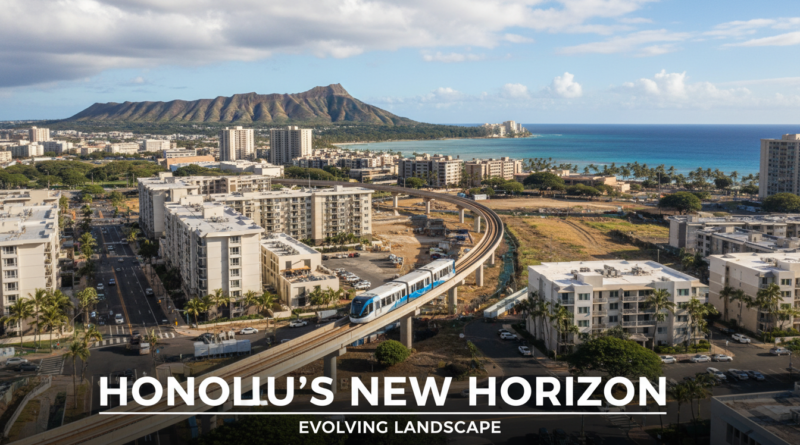
The new requirements would affect development opportunities from East Kapolei to Ala Moana Center, covering some of Oahu’s most rapidly changing neighborhoods. Areas around the Kalihi-Palama, Keeaumoku, and Civic Center stations have already seen increased development interest since Skyline’s opening phases.
What Developers Must Deliver
Under the proposed framework, developers seeking city incentives would need to provide binding commitments for specific community benefits before breaking ground. The requirements include reserving at least 20% of residential units for households earning 80% or less of area median income, creating public gathering spaces equivalent to 10% of the development’s footprint, and contributing to a community benefit fund based on project size.
The legislation also mandates that developers engage in meaningful community consultation during the planning phase, including public meetings in the affected neighborhoods and incorporation of resident feedback into project designs.
For commercial developments, the rules would require ground-floor spaces prioritized for local businesses, with rent controls to prevent displacement of existing neighborhood establishments. Developers would also need to demonstrate how their projects enhance pedestrian and bicycle connectivity to nearby Skyline stations.
The Hawaii Community Development Authority, which oversees transit-oriented development policies, would gain expanded oversight powers to monitor compliance and revoke incentives for projects that fail to meet their community benefit commitments.
Industry Response Mixed
Local developers have expressed concerns about the added requirements potentially slowing housing production in areas where Oahu desperately needs more inventory. The Building Industry Association of Hawaii argues that overly restrictive rules could discourage investment near transit stations, undermining the state’s goals for reducing car dependency.
However, community organizations in neighborhoods along the rail line have largely supported the measure. Residents in Kalihi-Palama, where several large mixed-use projects are in planning phases, have particularly advocated for stronger protections against displacement and gentrification.
“Our families have lived in these neighborhoods for generations,” said Maria Santos, president of the Kalihi-Palama Neighborhood Association. “We support development that includes us, not development that pushes us out.”
The measure represents a significant shift from the city’s previous approach, which relied more heavily on voluntary agreements and post-construction compliance monitoring. Several recent transit-oriented projects, including developments near the Pearl Highlands and Aloha Stadium stations, have faced criticism for failing to deliver promised community benefits.
Regional Context and Timing
The legislation comes as Skyline continues its phased rollout, with service currently operating between Kapolei and Kalihi-Palama. The next phase, extending to Civic Center, is expected to begin service later this year, followed by the final segment to Ala Moana Center.
Transit-oriented development has become increasingly crucial to Oahu’s housing strategy as land prices continue rising and traffic congestion worsens. The city has identified areas around Skyline stations as key opportunities to create walkable, mixed-use communities that could house thousands of additional residents without requiring new infrastructure investments.
Similar transit-oriented development frameworks in cities like Portland and Denver have shown that strong community benefit requirements can actually enhance long-term property values and neighborhood stability, according to urban planning research cited in the council’s committee report.
The full City Council is expected to vote on the measure at its April 23 meeting. If approved, the new requirements would take effect 60 days later, applying to all new applications for transit-oriented development incentives.
For Honolulu residents, the outcome could determine whether the areas around Skyline stations become inclusive, community-centered neighborhoods or follow the pattern of transit-adjacent development that has priced out longtime residents in other cities. The balance between encouraging development and protecting existing communities will likely define Oahu’s urban landscape for decades to come.