
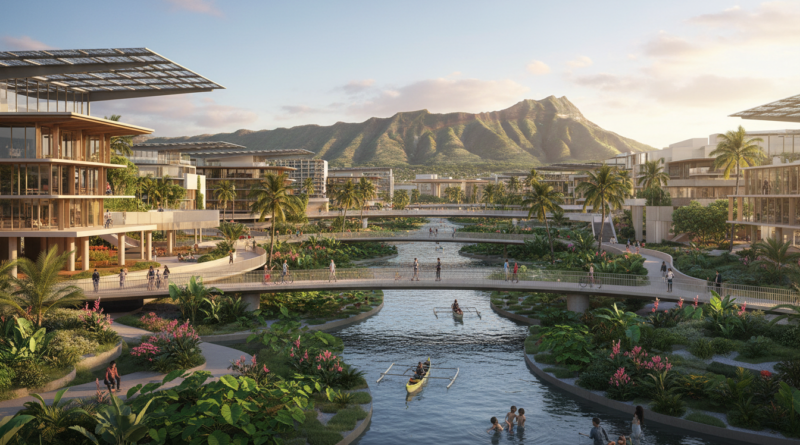
UH Research Team Wins National Award for Architectural Vision of a Flood-Adapted Waikiki
A University of Hawaiʻi research team has earned international acclaim for reimagining how Waikīkī could adapt to rising seas, winning the prestigious Design Innovation Award at the 2026 ARCC-EAAE International Conference in Copenhagen.
The interdisciplinary team, led by UH Mānoa School of Architecture professors Dr. Sarah Chen and Dr. Michael Kauahi, presented their “Amphibious Waikīkī” concept — a comprehensive vision for transforming the iconic resort district into a flood-resilient urban environment. Their proposal beat out 127 submissions from universities across 34 countries.
“Rather than fighting the ocean, we’re learning to live with it,” said Dr. Chen, whose team spent three years developing the architectural framework. “Waikīkī has always been shaped by water — from ancient fishponds to modern beach tourism. Our design honors that relationship while preparing for new realities.”
The award-winning proposal centers on what researchers call “adaptive infrastructure” — buildings and public spaces designed to function both during normal conditions and periodic flooding. Key elements include elevated pedestrian networks connecting hotels and retail spaces, amphibious structures that can rise with flood waters, and integrated green spaces that double as water retention areas.
Floating Above Future Floods
The team’s most innovative concept involves redesigning Waikīkī’s streetscape as a multi-level environment. Ground floors would be designed for periodic inundation, with essential services and living spaces elevated above projected flood levels. Public walkways would connect second and third floors across the district, creating what researchers term “sky streets.”
Their proposal also reimagines Ala Wai Canal as a dynamic waterway that could temporarily expand during extreme weather events, with adjacent parks and green spaces designed to serve as overflow areas. The iconic Waikīkī Beach would be supplemented with constructed wetlands and living shorelines that provide both flood protection and habitat restoration.
Current sea-level rise projections estimate Waikīkī could face regular flooding of up to three feet by 2100, with storm surges potentially reaching much higher. The district generates approximately $2 billion annually in tourism revenue and houses more than 30,000 residents and workers daily.
Building on Hawaiian Innovation
The research draws heavily on traditional Hawaiian land management practices, particularly the ahupuaʻa system that integrated mountain-to-ocean resource management. The team consulted with Native Hawaiian cultural practitioners and incorporated concepts like loko iʻa (fishponds) and engineered wetlands into their modern adaptation strategies.
“Our ancestors understood how to work with water cycles and seasonal flooding,” Dr. Kauahi explained. “We’re applying that wisdom to contemporary urban design challenges.”
The project also addresses social equity concerns, ensuring that flood adaptations don’t displace existing communities or create barriers to beach access. Proposed affordable housing units would be integrated into the adaptive infrastructure, with community spaces designed to serve as both gathering places and emergency shelters.
Real-World Applications
While the full vision remains conceptual, elements of the research are already influencing local planning discussions. The City and County of Honolulu’s Climate Change Commission has referenced the UH study in recent resilience planning documents.
“This isn’t just an academic exercise,” said Honolulu City Councilmember Tommy Waters, who represents the Waikīkī area. “We’re facing real decisions about infrastructure investments in the next decade, and this research provides a roadmap for smart, proactive planning rather than reactive crisis management.”
The research team is now working with local developers and city planners to pilot smaller-scale versions of their concepts. A demonstration project focusing on flood-adaptive streetscaping is planned for a section of Kalākaua Avenue, pending city approval and funding.
The international recognition brings both prestige and practical benefits to Hawaiʻi’s climate adaptation efforts. The award includes a $50,000 research grant and opportunities for the UH team to collaborate with leading climate resilience researchers worldwide.
For Waikīkī’s future, the award represents more than academic achievement — it offers a tangible vision of how one of Hawaiʻi’s most economically vital areas could thrive despite rising seas. As coastal communities worldwide grapple with similar challenges, the “Amphibious Waikīkī” concept positions Honolulu as a leader in climate-adaptive urban design.
The research team plans to present their findings to the Hawaiʻi State Legislature’s climate resilience committee next month, seeking support for expanded pilot projects and implementation funding.