
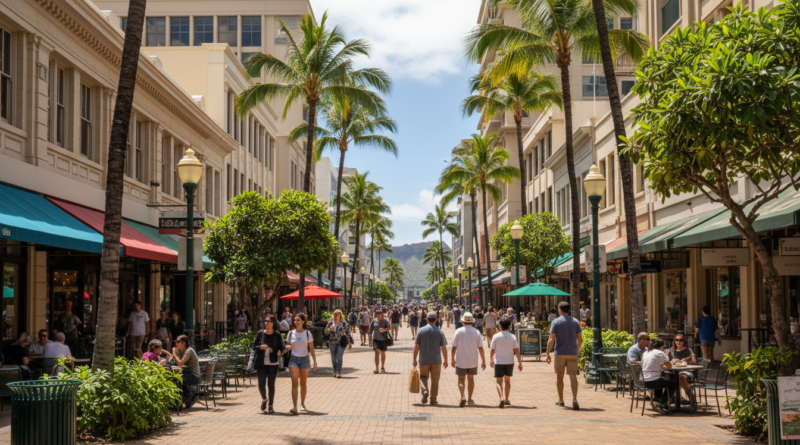
City Council’s Fort Street Mall Expansion Bill Aims to Curb Downtown Crime and Boost Business
The Honolulu City Council is considering a controversial proposal to expand the pedestrian-only zone around Fort Street Mall in Downtown Honolulu, with supporters arguing the move could simultaneously tackle rising crime rates and breathe new life into struggling businesses.
Bill 48, introduced by Councilmember Carol Fukunaga, would extend the current pedestrian mall boundaries from Hotel Street to Beretania Street, creating a nearly six-block car-free corridor through the heart of downtown. The measure comes as business owners and residents have raised increasing concerns about safety and economic decline in the area.
“We’re looking at this as a comprehensive approach to downtown revitalization,” Fukunaga said during Wednesday’s committee hearing. “By creating more pedestrian-friendly spaces, we can encourage foot traffic while also making it easier for our police to patrol and maintain public safety.”
The current Fort Street Mall, which runs between King and Hotel streets, has been a pedestrian zone since 1969. However, the area has struggled in recent years with vacant storefronts, petty crime, and concerns about public safety that have deterred both shoppers and tourists from venturing into downtown.
Crime Statistics Drive Policy Discussion
Honolulu Police Department data shows property crimes in the downtown core have increased 18% over the past two years, with theft and vandalism being the most common offenses. Drug-related arrests in the Fort Street area have also risen, particularly during evening hours when foot traffic typically drops off.
The expansion would prohibit vehicle traffic on Fort Street from Hotel Street north to Beretania Street, while also restricting access on connecting side streets during peak hours. Proponents argue that increased pedestrian activity, combined with improved lighting and more frequent police patrols, could help deter criminal activity.
Small business owners along the proposed expansion route remain divided on the plan. Some see it as an opportunity to create a more vibrant shopping and dining district similar to successful pedestrian malls in other cities.
Mixed Reactions from Business Community
Jennifer Kim, who owns Aloha Threads boutique on Fort Street, supports the expansion but worries about the transition period. “Anything that brings more people downtown is good for business,” she said. “But we need to make sure customers can still access us easily during construction and the changeover.”
Others worry about losing convenient vehicle access for deliveries and elderly customers. Restaurant owner David Nakamura, whose family has operated Shige’s Saimin on Fort Street for three decades, expressed concerns about supply deliveries and parking availability for staff.
The bill includes provisions for designated delivery hours and loading zones to address these concerns, though specific logistics are still being worked out with the Department of Transportation Services.
Economic development experts point to successful pedestrian mall projects in cities like Boulder, Colorado, and Burlington, Vermont, as examples of how car-free zones can boost retail activity and property values. However, they also note that such projects require sustained investment in programming, maintenance, and security to succeed long-term.
Implementation Timeline and Costs
If approved, the Fort Street Mall expansion would be implemented in phases over 18 months, starting with the section between Hotel and Merchant streets. The city estimates total implementation costs at $2.8 million, including street improvements, new lighting, landscaping, and signage.
The Department of Parks and Recreation would oversee programming for the expanded mall area, with plans for periodic farmers markets, cultural events, and outdoor dining spaces to encourage regular foot traffic throughout the week.
Mayor Rick Blangiardi has not yet taken a public position on the bill but indicated his administration is “carefully reviewing the proposal and its potential impacts on downtown traffic patterns and business operations.”
The bill faces at least two more committee hearings before coming to a full Council vote, likely in late May. Council Chair Tommy Waters has scheduled a public hearing for April 15 to gather additional community input.
For downtown workers and residents, the proposal represents a significant shift in how Honolulu approaches urban planning and public safety. Success could serve as a model for similar projects in other neighborhoods, while failure might set back pedestrian-friendly development initiatives citywide.
The expanded pedestrian zone would directly affect daily routines for thousands of downtown workers and could influence property values and business viability along one of Honolulu’s most historic commercial corridors.