
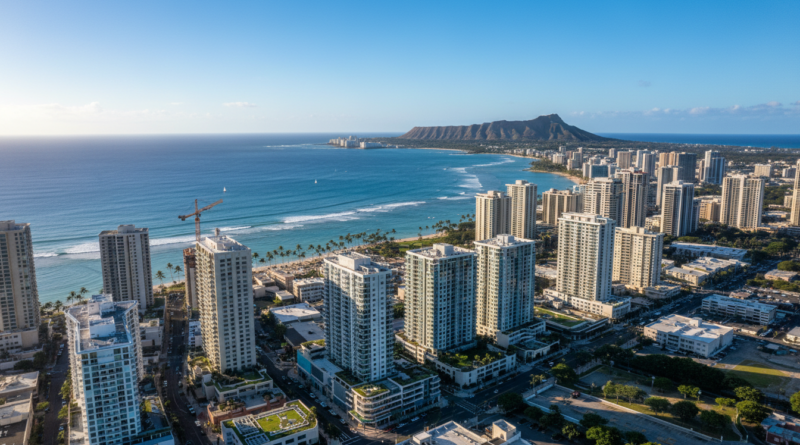
Kakaako’s Kahuina Tower Will Bring 861 Homes — 60% Affordable — to Our Kakaako Master Plan
Stanford Carr Development is placing a massive bet on Honolulu’s affordable housing future with Kahuina Tower, a 861-unit residential project planned for Kakaako that promises to deliver 60% workforce and affordable housing when it breaks ground in 2026.
The ambitious development, located on Block C of the Our Kakaako Master Plan, represents one of Oahu’s largest commitments to affordable housing in a single project. With 517 of its 861 units designated as workforce or affordable housing, Kahuina could house more than 1,000 residents in apartments priced below market rate.
The project sits within the Hawaii Community Development Authority’s master-planned community that spans 60 acres of former industrial land between downtown Honolulu and Ala Moana. Our Kakaako aims to transform the area into a mixed-use neighborhood with parks, retail, and thousands of residential units over the next decade.
More Than Just Housing
Kahuina Tower won’t just add homes to Honolulu’s tight housing market. The development includes 42,000 square feet of commercial space at ground level, designed to bring retail and services within walking distance of residents.
The mixed-use approach reflects broader planning goals for Kakaako, where officials want to create a walkable community that reduces car dependency. The tower’s location puts future residents within easy reach of Ward Village, Ala Moana Center, and downtown Honolulu via existing transit connections.
“This project represents exactly the kind of development we need to address Honolulu’s housing crisis,” said Aedward Los Banos, executive director of the Hawaii Community Development Authority. “By requiring significant affordable housing components, we’re ensuring that working families can afford to live in this new community.”
Affordable Housing By Design
The 60% affordable housing requirement stems from HCDA regulations governing the Our Kakaako master plan. All residential developments within the community must reserve substantial portions of their units for buyers earning 80% to 140% of area median income.
For a family of four, that translates to household incomes between roughly $76,000 and $133,000 annually. These income limits target teachers, firefighters, nurses, and other essential workers who often struggle to afford housing near their jobs in urban Honolulu.
Stanford Carr Development has not yet released specific pricing for Kahuina’s affordable units, but HCDA guidelines typically cap sales prices significantly below market rate. Recent comparable projects in Kakaako have offered affordable condos starting in the $400,000 to $600,000 range.
Construction Timeline and Market Impact
With groundbreaking planned for 2026, Kahuina’s first residents could move in by 2028 or 2029. The timeline depends on final permit approvals and construction market conditions, which have seen significant volatility in recent years.
The project adds to a growing pipeline of housing developments across Kakaako. When combined with other Our Kakaako projects and nearby Ward Village towers, the area could see more than 10,000 new residential units completed over the next decade.
That scale of development represents a dramatic shift for the neighborhood, which was dominated by light industrial uses and auto repair shops just 15 years ago. The transformation has brought both opportunities and concerns about gentrification and traffic impacts.
Infrastructure and Transportation
Kahuina residents will have access to multiple transportation options, including planned improvements to bus service along Ala Moana Boulevard and connections to the city’s rail system at the nearby Kalihi-Palama station once it opens.
The Our Kakaako master plan includes new parks and pedestrian pathways designed to connect residential areas with commercial districts and waterfront access. Block C sits near the planned central park that will anchor the community’s open space network.
However, the influx of thousands of new residents raises questions about impacts on already-congested roads leading to and from Kakaako. HCDA has required developers to contribute to transportation improvements, but some community advocates worry infrastructure won’t keep pace with population growth.
What This Means for Honolulu
Kahuina Tower represents both promise and pressure for Honolulu’s housing market. If successful, it could provide a replicable model for large-scale affordable housing development that doesn’t rely solely on government funding.
The project’s 60% affordable housing requirement exceeds what most private developers offer voluntarily, suggesting that strong public policy can drive meaningful affordable housing production. Other jurisdictions across Hawaii are watching to see whether the Our Kakaako approach can be adapted elsewhere.
For working families priced out of many Honolulu neighborhoods, Kahuina could provide a rare opportunity to own homes in a central location with access to jobs, schools, and services. The project’s success or failure may influence how aggressively the city pursues similar affordable housing mandates in future developments.
