
Hawaii Still Has the Nation’s Highest Housing Wage — A Worker Needs 114 Hours a Week to Afford Rent
A new report confirms what many Honolulu residents already know from their monthly budget battles: Hawaii continues to hold the dubious distinction of having the nation’s highest housing wage in 2026.
According to recent housing affordability data, a minimum-wage worker in Hawaii would need to clock 114 hours per week — nearly three full-time jobs — to afford a modest two-bedroom rental without being cost-burdened. The state’s housing wage sits at $42.31 per hour, more than double the current minimum wage of $18 per hour.
For Maria Santos, a certified nursing assistant who works at Kapiolani Medical Center, these numbers aren’t just statistics — they’re her reality. The 34-year-old mother of two currently shares a cramped one-bedroom apartment in Kalihi with her children, paying $1,800 monthly for what was originally designed as affordable housing.
“I work full-time plus overtime whenever I can get it, but it’s still not enough,” Santos said. “My kids are getting older and they need their own space, but every two-bedroom I look at wants first month, last month, and security deposit upfront. That’s like $6,000 just to move in.”
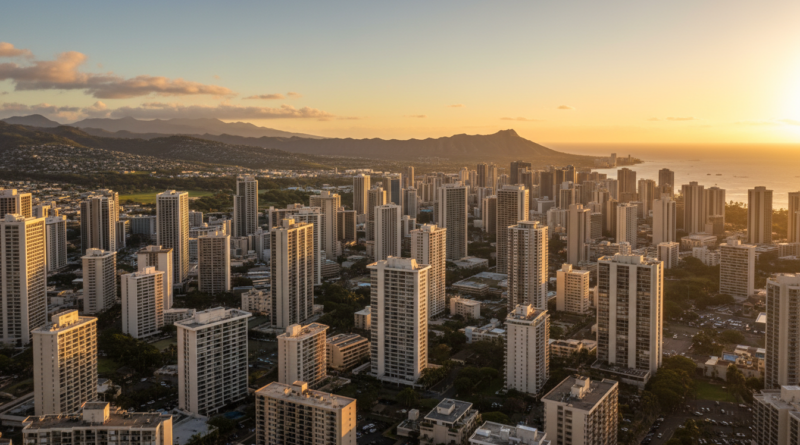
The housing crisis hits particularly hard in urban Honolulu, where new development in areas like Kakaako has brought luxury condominiums but little relief for working families. Despite promises of affordable units in mixed-use developments, many middle-income residents find themselves priced out of both market-rate and so-called affordable housing.
The Math That Doesn’t Add Up
The housing wage calculation assumes that rent should consume no more than 30% of a worker’s gross income — the federal standard for avoiding cost burden. In Hawaii, where the average rent for a two-bedroom apartment hovers around $2,200 statewide and significantly higher in desirable Honolulu neighborhoods, that math becomes impossible for most single-income households.
James Kealoha, a longtime Downtown Honolulu resident and food service worker, has watched his neighborhood transform over the past decade. What were once affordable apartments near his job at a hotel restaurant have given way to high-rise condos marketed to mainland buyers and international investors.
“I’ve been here 15 years, but my landlord just told us the rent’s going up another $300 next month,” Kealoha explained. “That’ll put me at $2,000 for a studio apartment. I make $16 an hour — you do the math.”
The ripple effects extend beyond individual hardship. Local businesses struggle to retain employees who can’t afford to live near their jobs, leading to longer commutes and increased traffic congestion as workers seek housing in more affordable areas like Waianae or the North Shore.
Policy Solutions Remain Elusive
At the city level, Honolulu officials have implemented various measures aimed at increasing affordable housing stock, including inclusionary zoning requirements and expedited permitting for affordable projects. However, housing advocates argue these efforts haven’t kept pace with demand or addressed the fundamental supply shortage.
The city’s latest housing plan calls for creating 22,500 new affordable units by 2030, but construction costs and regulatory hurdles continue to slow development. Meanwhile, existing affordable housing developments face their own challenges, with many properties built in the 1990s and early 2000s approaching the end of their affordability periods.
Recent data from the Oahu real estate market suggests moderate growth expected for 2026, with median home prices stabilizing but remaining well above national averages. For renters, this offers little comfort as investor demand continues to drive up rental costs across the island.
“The market forces are bigger than what local government can control alone,” said Dr. Jennifer Chen, a housing economist at the University of Hawaii. “We need coordinated action from state and federal levels, plus creative solutions that go beyond traditional affordable housing models.”
Some promising initiatives include community land trusts, which remove land costs from the housing equation, and employer-assisted housing programs that help essential workers access below-market rentals. However, these programs remain small-scale compared to the magnitude of need.
For residents like Santos and Kealoha, the wait for systemic solutions means continued financial stress and difficult choices between housing costs and other necessities. As Hawaii’s housing wage remains the nation’s highest, the gap between what workers earn and what they need to afford decent housing continues to widen, making the islands increasingly unlivable for the very people who keep the economy running.
The next city budget cycle will reveal whether local officials are prepared to make the substantial investments necessary to address this crisis, or whether Hawaii’s working families will continue shouldering an unsustainable burden just to call these islands home.