City Council Votes 8-1 to Study Extending Skyline Rail to UH Manoa
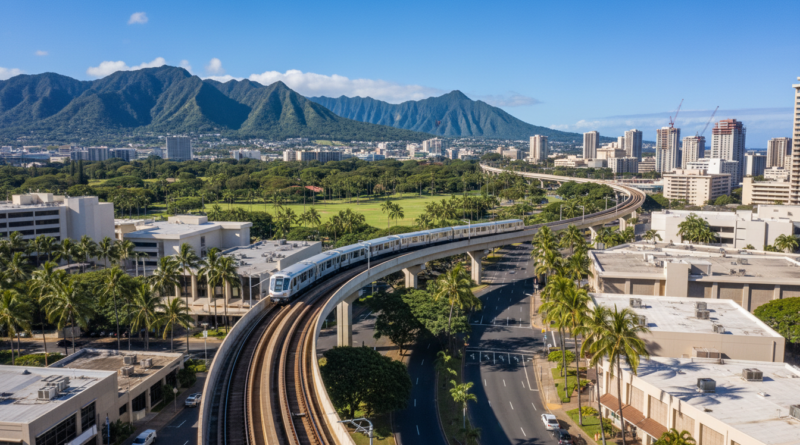
The Honolulu City Council voted 8-1 last month to advance studies for extending the Skyline rail system beyond its current planned terminus, including a proposed branch line that would connect Kakaako to the University of Hawaii at Manoa campus.
Bill 60, which passed in February, directs the Honolulu Authority for Rapid Transportation (HART) to begin preliminary engineering studies on several potential rail extensions. The UH Manoa route represents the most ambitious of the proposals, potentially bringing rapid transit to one of the state’s largest employment and education centers.
“This is about connecting our university community to the broader transportation network,” said Councilmember Carol Fukunaga, who sponsored the legislation. “Students, faculty, and staff deserve better transit options than sitting in traffic on University Avenue every day.”
The proposed extension would branch off from the main Skyline route in Kakaako, traveling through neighborhoods like Kalihi-Palama before reaching the Manoa campus. Early estimates suggest the extension could cost between $3 billion and $4 billion, though those figures remain preliminary pending the engineering studies.
Engineering Studies Begin This Summer
HART officials indicate the preliminary engineering phase will begin this summer and take approximately 18 months to complete. The studies will examine route feasibility, environmental impacts, and more precise cost estimates.
The rail extension would need to navigate challenging topography between urban Honolulu and the Manoa valley. Engineers will evaluate whether to build elevated tracks, tunnels, or a combination of both approaches.
Community meetings are planned throughout the study period, with the first sessions scheduled for late summer in affected neighborhoods. HART plans to present initial findings to the City Council by early 2027.
Mixed Community Response
Response from Manoa residents has been mixed since the council vote. Some welcome the prospect of improved transit connections, particularly given chronic traffic congestion on routes like University Avenue and Punahou Street.
“Getting to downtown from UH is a nightmare during rush hour,” said Maria Santos, a graduate student who commutes from her Kaimuki apartment. “Rail would be a game-changer for students like me who can’t afford to live closer to campus.”
However, other residents express concerns about construction impacts and changes to neighborhood character. The Manoa Neighborhood Board has scheduled multiple meetings to discuss the proposal and gather community input.
Property values along potential routes have already shown movement, with some Kakaako condos advertising their proximity to future rail connections. Real estate agents report increased interest in areas that could benefit from improved transit access.
Funding Questions Remain
The biggest challenge facing the extension may be financial. The existing Skyline project has faced significant cost overruns, with the current phase from Pearl Harbor to Kakaako projected to cost over $12 billion.
Councilmember Andria Tupola cast the lone dissenting vote, citing concerns about adding more debt before the current rail project is complete. “We need to finish what we started before taking on another multi-billion dollar commitment,” she said during the February vote.
Federal funding could play a crucial role in making the extension viable. HART officials plan to explore New Starts grants and other federal transportation programs once preliminary engineering is complete.
The state legislature is also considering complementary funding mechanisms, including potential increases to the general excise tax surcharge that currently helps fund rail construction.
Timeline Stretches Into Next Decade
Even if studies prove favorable and funding is secured, construction on a UH Manoa extension wouldn’t begin until the late 2020s at earliest. The project would likely take another decade to complete, meaning students and faculty might not see rail service until the late 2030s.
That timeline assumes the current Skyline system successfully opens to Kakaako as planned in 2025, providing the foundation for any extensions.
For now, the engineering studies represent a critical first step in what could eventually become one of Hawaii’s largest infrastructure projects. The findings will determine whether extending rail to UH Manoa is technically feasible and financially realistic.
As Honolulu continues to grapple with traffic congestion and housing affordability, improved transit connections between job centers and residential areas could reshape how residents move around the island. The next 18 months of studies will provide the data needed to make those long-term decisions.