
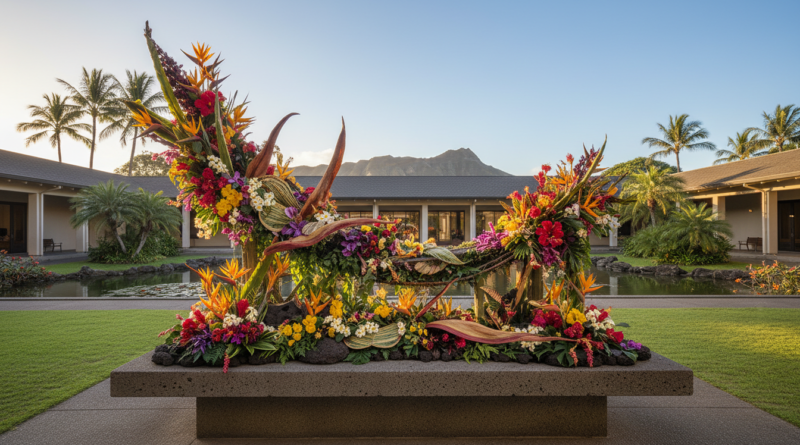
HoMA’s ‘Imagine That!’ Flower Show Fuses Floral Art and Sustainability for Three Days Only
The Honolulu Museum of Art transforms into a blooming showcase this weekend as the Garden Club of Honolulu presents “Imagine That!” — a three-day floral exhibition that merges competitive flower arranging with urgent environmental messaging.
Running May 8-10, the show marks a rare collaboration between Honolulu’s premier art institution and the island’s most prestigious horticultural organization. More than 100 floral designers will compete across multiple categories while incorporating sustainability themes into their arrangements.
“This isn’t your typical flower show,” said Susan Yamamoto, president of the Garden Club of Honolulu. “We’re challenging our designers to create beauty while addressing the environmental challenges our islands face — from native plant conservation to reducing floral waste.”
The exhibition spreads across HoMA’s main galleries in downtown Honolulu, with arrangements positioned alongside the museum’s permanent collection. Visitors can expect to see traditional ikebana displays next to contemporary installations featuring locally sourced native plants like mamane and naupaka.
Competition Categories Reflect Island Values
The show features eight competition categories, each designed to highlight different aspects of Hawaiian environmental stewardship. The “Native Treasures” division requires designers to use only indigenous plants, while “Ocean’s Edge” focuses on coastal conservation themes.
A standout category called “Second Chances” challenges participants to create arrangements using repurposed materials — driftwood sculptures, recycled containers, and plants rescued from construction sites. The category reflects growing awareness about waste reduction in Hawaii’s event and hospitality industries.
Professional florists compete alongside amateur gardeners, with entries judged by a panel including landscape architects, sustainability experts, and representatives from Lyon Arboretum and the National Tropical Botanical Garden.
Beyond the competition, educational stations throughout the galleries will demonstrate sustainable floral practices. Visitors can learn about composting flower waste, growing native plants in urban settings, and supporting local flower farms instead of importing arrangements from the mainland.
Cultural Institution Embraces Green Mission
HoMA’s decision to host the flower show aligns with the museum’s broader environmental initiatives. The institution has been working to reduce its carbon footprint and increase community engagement around sustainability themes.
“Art has always been a powerful vehicle for social messaging,” said Dr. Jennifer Saville, HoMA’s curator of contemporary art. “This exhibition uses the beauty of floral design to start conversations about environmental responsibility — something that resonates deeply with our island community.”
The timing coincides with HoMA’s ongoing “Living Systems” exhibition series, which explores the intersection of art, nature, and human impact on the environment. Several contemporary artists featured in the museum’s collection address similar themes of ecological balance and conservation.
Interactive elements include a “design-your-own” station where children can create small arrangements using plant materials that would otherwise be discarded. The activity aims to introduce younger generations to both floral artistry and waste reduction principles.
Supporting Local Growers
Organizers partnered with farms across Oahu to source materials locally, reducing transportation emissions while supporting island agriculture. Participating farms include Aloun Farms in Ewa Beach, Ho Farms in Kahuku, and several small-scale operations in Windward Oahu.
The emphasis on local sourcing addresses a significant challenge in Hawaii’s floral industry, where most commercial flowers are imported from California or overseas producers. By showcasing locally grown alternatives, the exhibition hopes to encourage both florists and consumers to consider island-grown options.
Entry fees for the competition support the Garden Club’s scholarship program, which funds horticultural education for local students. The organization has awarded more than $150,000 in scholarships over the past decade, helping train the next generation of landscape professionals and botanists.
General admission to “Imagine That!” is included with regular museum entry. Special behind-the-scenes tours with participating designers are available Saturday and Sunday afternoons for an additional fee.
The exhibition represents more than decorative artistry — it’s a call to action disguised as a celebration. As Hawaii continues grappling with invasive species, habitat loss, and the environmental costs of tourism, events like this demonstrate how cultural institutions can engage the community in conservation efforts while maintaining their artistic mission.
For Honolulu residents interested in sustainable living or simply appreciating beautiful floral displays, this weekend offers a unique opportunity to see competitive flower arranging elevated to an art form with purpose.