
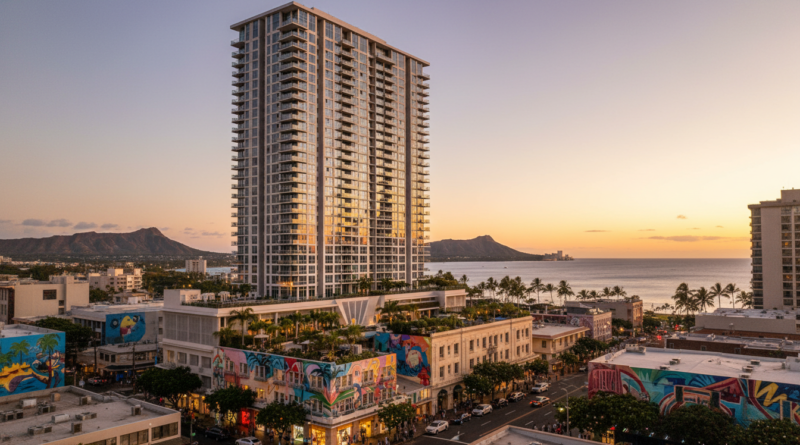
Kahuina: The Kakaako Project Poised to Deliver 861 Homes With 60% Affordable to Honolulu
A massive mixed-use development promising to deliver more affordable housing than any other project in Kakaako’s pipeline is set to break ground this year, potentially reshaping the neighborhood’s reputation as a luxury enclave out of reach for local families.
Kahuina, developed by Stanford Carr Development on Block C of the Our Kakaako master plan, will deliver 861 residential units with an unprecedented 60% designated as affordable or workforce housing. The project also includes 42,000 square feet of commercial space in the heart of one of Honolulu’s most rapidly transforming neighborhoods.
“This represents exactly what Kakaako was always meant to be — a place where local families can actually afford to live and work,” said Kyle Chock, executive director of the Hawaii Housing Finance and Development Corporation. “When you look at the scale of affordable units Kahuina is promising, it’s a game-changer for the area.”
The development spans the block bounded by Ala Moana Boulevard, Cooke Street, and Kawaiahao Street, positioning it within walking distance of downtown Honolulu and mere blocks from Keeaumoku Street’s growing retail corridor. Its location places future residents at the intersection of urban convenience and waterfront access, with Keeaumoku Park and the emerging Kakaako Waterfront Park nearby.
Affordable Housing Takes Center Stage
What sets Kahuina apart from other Kakaako developments is its commitment to affordable and workforce housing. While luxury condominiums have dominated the neighborhood’s skyline in recent years, this project flips that formula.
Of the 861 units planned, approximately 516 will be priced for families earning between 80% and 140% of the area median income. This means households earning roughly $76,000 to $133,000 annually could qualify, depending on family size and specific unit pricing.
The remaining 40% will be market-rate units, creating the kind of mixed-income community that housing advocates have long called for in Kakaako. This approach aims to avoid the economic segregation that can occur when affordable housing is concentrated in separate developments.
Commercial Space Adds Local Flavor
The 42,000 square feet of ground-level commercial space represents another departure from typical Kakaako projects. Rather than focusing solely on high-end retail, the development plans call for neighborhood-serving businesses that could include local restaurants, services, and community-oriented shops.
This retail component is designed to activate the street level and create the kind of walkable, mixed-use environment that urban planners envision for Kakaako’s future. The commercial spaces face major thoroughfares, potentially drawing foot traffic from both residents and the broader community.
Stanford Carr Development, known for projects like the successful Na Lei Hulu development in Kapolei, brings experience in creating affordable housing that doesn’t sacrifice design quality. The company has built a reputation for understanding Hawaii’s unique market conditions and regulatory environment.
Kakaako’s Evolution Continues
Kahuina represents a significant piece of the larger Our Kakaako master plan, which envisions transforming 60 acres of former industrial land into a vibrant urban neighborhood. The master plan calls for a mix of residential, commercial, and public spaces designed to create a true live-work-play environment.
The development comes as Kakaako faces growing scrutiny over its direction. Critics have argued that the neighborhood’s evolution has favored wealthy newcomers over local residents, with luxury towers pricing out the very communities the redevelopment was meant to serve.
Recent market data shows Kakaako condominiums often selling for well over $1 million, making homeownership impossible for most local families. Kahuina’s affordable component directly addresses this challenge, though questions remain about long-term affordability controls.
The project also arrives as Honolulu grapples with a severe housing shortage. The city needs an estimated 22,000 new housing units to meet current demand, with the vast majority needed in the affordable and workforce categories.
What’s Next
Construction timelines for Kahuina have not been finalized, but the project is expected to be built in phases over several years. The development must still navigate Hawaii’s complex permitting process, though Stanford Carr’s experience with similar projects could help streamline approvals.
For Honolulu residents, Kahuina represents both promise and a test case. If successful, it could provide a model for creating truly inclusive urban development that serves local families while contributing to neighborhood vitality.
The project’s ultimate impact will depend on execution — from construction quality to the types of businesses that occupy the commercial space to the long-term management of affordable units. But for now, Kahuina offers something Kakaako hasn’t seen much of lately: housing that regular Honolulu families might actually be able to call home.
