State Unlocks $89.4M in Rail Reimbursements as Skyline Construction Pushes Into Downtown
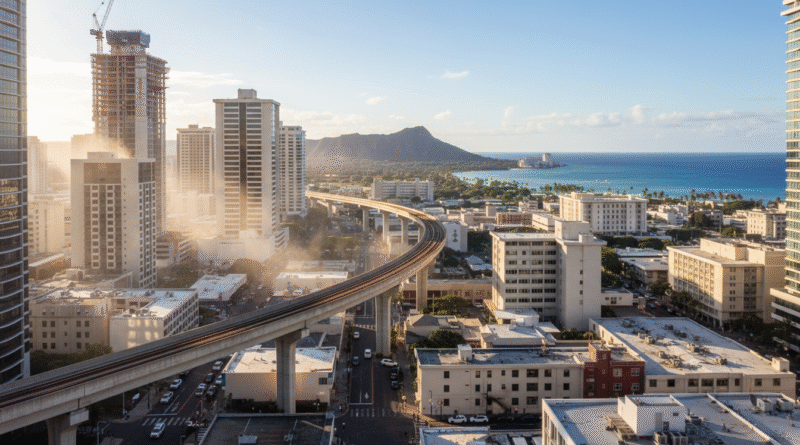
The Hawaii Department of Transportation has approved $89.4 million in reimbursements for the Honolulu rail project, providing a crucial financial boost as construction crews begin laying foundations for stations in Chinatown and erecting concrete columns through the Iwilei and Downtown corridors.
The reimbursement represents months of backed-up invoices from the Honolulu Authority for Rapid Transportation (HART) that had been under state review. The timing couldn’t be more critical, as HART pushes forward with the most complex and expensive phase of Skyline construction — threading elevated rail infrastructure through Honolulu’s dense urban core.
Construction activity has ramped up significantly in recent weeks along the planned rail route. Foundation work is currently underway at the planned Chinatown station, while crews are simultaneously installing massive concrete support columns between Iwilei and Downtown Honolulu. The work requires careful coordination with existing utilities, traffic patterns, and historic preservation requirements in some of the city’s oldest neighborhoods.
“This reimbursement helps stabilize our cash flow during the most challenging phase of construction,” said HART spokesperson Tina Yamaki. “We’re working in areas where every foot of construction requires extensive coordination with existing infrastructure and business operations.”
Downtown Timeline Under Pressure
The financial approval comes as questions mount about HART’s ability to meet its March 2031 target for opening rail service to Downtown Honolulu. The downtown segment represents the most technically demanding portion of the entire 20-mile system, requiring construction through some of Honolulu’s busiest commercial districts.
Recent construction progress has shown both promise and challenges. While foundation work proceeds on schedule at several station sites, utility relocations and coordination with existing buildings have created bottlenecks that could impact the overall timeline.
The rail line will eventually serve five stations between Kalihi-Palama Transit Center and the planned Downtown terminus: Kalihi, Kapalama, Sand Island, Keeaumoku, and Downtown Center. Each station requires extensive infrastructure work, including elevated platforms, electrical systems, and integration with existing transportation networks.
Financial Stability Concerns
HART has faced ongoing cash flow challenges as construction costs have escalated beyond original projections. The rail project’s total budget has grown to approximately $12.4 billion, making it one of the most expensive public works projects in Hawaii history.
State legislators have expressed concerns about the project’s financial management, leading to increased scrutiny of reimbursement requests. The $89.4 million approval suggests state officials are satisfied with HART’s documentation and oversight procedures, at least for this batch of expenses.
The reimbursements cover a range of construction activities, including materials, labor, and contractor payments for work completed between January and April 2024. State transportation officials conducted detailed reviews of invoices and project documentation before approving the payments.
Community Impact in Urban Core
Downtown and Chinatown businesses have reported mixed experiences with ongoing construction. While some establishments have seen reduced foot traffic due to construction barriers and noise, others anticipate long-term benefits once rail service begins operating.
Construction crews are working to minimize disruptions during peak business hours, but the scale of the project makes some impacts unavoidable. Street closures, utility work, and crane operations have become daily realities for residents and workers in the affected areas.
The Chinatown station, in particular, presents unique challenges due to the neighborhood’s historic character and dense concentration of small businesses. HART has committed to preserving the area’s cultural identity while providing modern transit access.
Looking Ahead
The next critical milestone will be completion of structural work on the elevated guideway through the Iwilei corridor, which must be finished before rail cars can begin testing on the downtown segment. HART officials say this work should be completed by late 2025, setting up the final two years for station construction and system testing.
For Honolulu residents, the $89.4 million reimbursement represents both progress and ongoing uncertainty. While the financial approval suggests the project remains on stable footing, the ambitious 2031 timeline continues to face pressure from construction complexities and potential cost overruns.
The success of the downtown segment will ultimately determine whether Skyline can fulfill its promise of providing comprehensive transit service connecting West Oahu communities to the urban core where most jobs and services are concentrated.