
Oahu Affordable Housing Crisis: Minimum-Wage Workers Would Need to Work 114 Hours a Week to Afford a 2-Bedroom
A minimum-wage worker in Hawaii would need to put in 114 hours per week — nearly three full-time jobs — just to afford a modest two-bedroom rental, according to new 2024 data that reinforces the islands’ position as having the nation’s most unaffordable housing market.
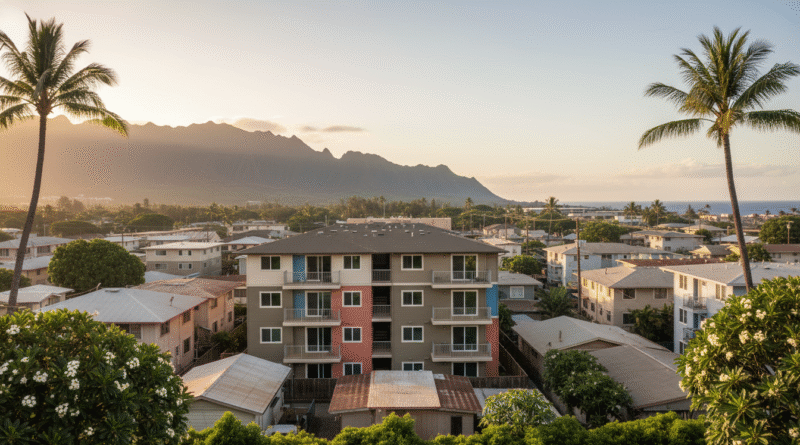
The sobering statistics come as applications opened this week for Koa Vista II, a new 97-unit affordable housing project in Central Oahu that’s already generating significant interest from families struggling to find reasonably priced homes. The project illustrates both the desperate demand for affordable housing and the scale of development needed to address Hawaii’s housing crisis.
Hawaii’s “housing wage” — the hourly income needed to afford a two-bedroom rental without spending more than 30% of income on housing — stands at $42.42 per hour, more than double the state’s minimum wage of $18 per hour. This means renters earning minimum wage would need to work the equivalent of 114 hours weekly to afford median market-rate housing.
The data reveals that 54% of Hawaii renters are considered “cost-burdened,” meaning they spend more than 30% of their income on housing costs. Many local families are forced to dedicate 50% or more of their earnings to rent, leaving little room for other necessities like food, healthcare, and transportation.
Central Oahu Project Offers Hope
Koa Vista II, developed by the Hawaii Public Housing Authority in partnership with private developers, represents a crucial step toward addressing the shortage. Located in the growing Central Oahu corridor, the mixed-income development will offer units ranging from one to four bedrooms, with rents set at various income levels to serve working families, teachers, first responders, and service workers.
“We’re seeing unprecedented demand for these affordable units,” said Maria Santos, a housing advocate with the Oahu Community Development Corporation. “For every affordable unit that becomes available, we typically see 10 to 15 qualified applicants. It shows just how desperate the need is across our island.”
The application process for Koa Vista II opened Monday and will remain open for 30 days, with units expected to be available for occupancy by late 2025. Priority will be given to applicants who work in essential services and those with local ties to the community.
Ripple Effects Across Industries
The housing affordability crisis is creating ripple effects throughout Oahu’s economy, particularly impacting small businesses that rely on local workers. Restaurants, retail shops, and service providers are struggling to attract and retain employees who can’t afford to live near their workplaces.
Many workers are forced to live in overcrowded conditions, commute long distances from more affordable areas, or leave Hawaii altogether for mainland opportunities. The exodus of working-age residents is particularly pronounced among teachers, healthcare workers, and other essential service providers.
Local businesses in Waikiki and downtown Honolulu report difficulty staffing positions, even when offering wages above minimum wage, because workers still can’t afford housing costs. Some establishments have begun offering housing stipends or exploring employer-assisted housing programs to attract talent.
Statewide Challenges
The affordability crisis extends beyond Oahu to neighboring islands, where limited housing stock and geographic constraints create even greater challenges. On Maui and Kauai, the situation is exacerbated by vacation rental conversions that remove long-term housing from the market.
Housing advocates point to several factors driving the crisis: limited developable land, lengthy permitting processes, high construction costs, and competition from out-of-state buyers seeking vacation properties or investment opportunities. The median home price on Oahu now exceeds $1 million, putting homeownership out of reach for most local families.
Looking Forward
While projects like Koa Vista II provide hope, housing experts emphasize that much larger-scale solutions are needed. The state estimates it needs to produce 50,000 new housing units over the next decade to meet demand and begin addressing the current shortage.
Proposed solutions include streamlining the permitting process, increasing funding for affordable housing development, and implementing policies to preserve existing affordable units. Some advocates are also pushing for measures to limit speculative investment and prioritize housing for local residents.
For Honolulu families currently struggling with housing costs, projects like Koa Vista II offer a lifeline — but they also highlight the enormous gap between need and available resources. As the application period continues, the overwhelming response will likely underscore once again why housing remains the most pressing issue facing Hawaii residents today.
