Pan-Pacific Festival Returns June 12–14 With Kalakaua Block Party and Pacific Rim Performers
The heart of Waikiki will pulse with Pacific Rim rhythms when the 43rd Pan-Pacific Festival transforms Kalakaua Avenue into a massive cultural celebration June 12-14. The three-day festival brings together performers from across the Pacific, turning Hawaii’s most famous strip into a showcase of hula, taiko drumming, and traditional arts from Japan, Korea, Hawaii, and beyond.
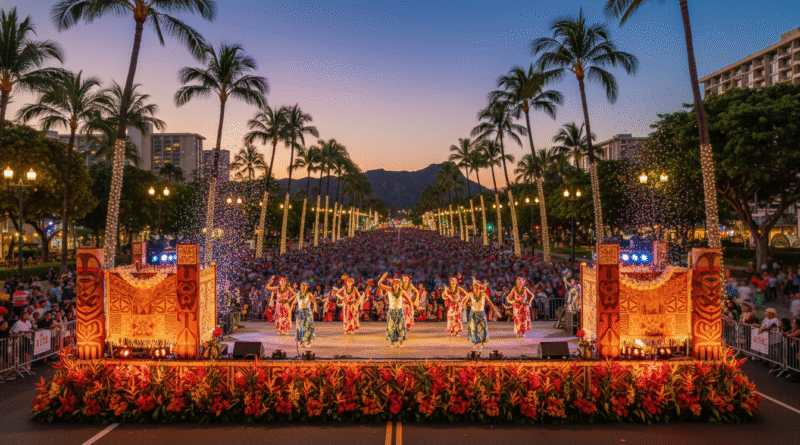
This year’s festival promises to be one of the largest yet, with organizers expecting thousands of performers and tens of thousands of spectators to converge on the area between the Royal Hawaiian Center and the International Market Place. The centerpiece remains the Saturday evening block party, when Kalakaua Avenue closes to traffic and becomes an open-air stage stretching for blocks.
“The Pan-Pacific Festival represents everything we love about Hawaii’s multicultural spirit,” said festival director Keiko Matsui. “When you see a Japanese taiko group performing alongside a Hawaiian hula halau, with Korean traditional dancers waiting in the wings, you’re witnessing the true essence of what makes our islands special.”
Free Events Draw Crowds to Waikiki
All festival events remain free to the public, continuing a 43-year tradition that has made this one of Hawaii’s most accessible cultural celebrations. The festival officially opens Friday evening at 6 p.m. with performances at the Royal Hawaiian Center’s Royal Grove, featuring local hula schools and visiting Japanese cultural groups.
Saturday’s block party runs from 4 p.m. to 9 p.m., with four stages positioned along Kalakaua Avenue. This year’s lineup includes the Matsuriza Taiko Drummers from Tokyo Disneyland, making their first Hawaii appearance in five years, alongside established local favorites like Halau Hula Ka No’eau and the University of Hawaii Japanese Cultural Club.
The International Market Place will host continuous cultural demonstrations throughout the weekend, including traditional lei making, origami workshops, and Korean calligraphy sessions. These hands-on activities typically draw families looking to engage beyond just watching performances.
New This Year: Digital Cultural Exchange
Festival organizers have added a digital component for 2024, partnering with schools across the Pacific Rim to livestream performances and enable cultural exchanges between student groups. The initiative connects young performers in Hawaii with counterparts in Japan, Korea, and other Pacific nations.
The Royal Hawaiian Center will also debut a new permanent exhibit space during the festival, showcasing artifacts and art pieces from Pacific cultures. This addition reflects the center’s increased commitment to cultural programming beyond the annual festival.
Sunday’s programming focuses on traditional ceremonies and more intimate performances. The day begins at 10 a.m. with a blessing ceremony at Kuhio Beach Park, followed by smaller-scale performances that allow audiences to interact more directly with artists and cultural practitioners.
Transportation and Logistics
Festival-goers should plan for significant crowds and limited parking in Waikiki throughout the weekend. City officials recommend using TheBus or rideshare services, as street parking will be severely restricted along Kalakaua Avenue and surrounding streets.
The festival provides shuttle service between major Waikiki hotels and the main performance areas, with shuttles running every 15 minutes during peak hours. Hotel guests can access shuttle schedules through their concierge services.
Food vendors will line Kalakaua Avenue during the block party, offering everything from traditional Hawaiian plate lunches to Japanese street food. However, many attendees bring their own refreshments and set up on the sidewalks hours before performances begin.
Cultural Significance Continues
The Pan-Pacific Festival originated in 1980 as a way to celebrate Hawaii’s role as a cultural bridge between East and West. Over four decades, it has grown into one of the state’s premier cultural events, drawing participants from as far as New Zealand and the Philippines.
This year’s festival takes on additional significance as Hawaii’s tourism industry continues recovering from pandemic impacts. The event serves as both a celebration of cultural diversity and a showcase for visitors of what makes Hawaii unique beyond its beaches and resorts.
For Honolulu residents, the festival offers a rare opportunity to experience world-class cultural performances without traveling off-island. It also provides local cultural groups with an international platform to share their traditions and connect with practitioners from across the Pacific.
The festival concludes Sunday evening with a closing ceremony at sunset, featuring all participating groups in a collaborative performance that has become a festival tradition. This final gathering typically draws emotional responses from both performers and audiences, cementing connections that extend far beyond the weekend celebration.