Skyline Segment 3 Construction Ramps Up: Dillingham Boulevard Utility Work to Wrap by Year’s End
The Honolulu Authority for Rapid Transportation is making steady progress on the most challenging phase of the Skyline rail project, with utility relocation work along Dillingham Boulevard expected to wrap up by the end of the year as crews prepare to build the system’s final three miles through urban Honolulu.
Segment 3 of the $12 billion rail system will extend the existing line from Kalihi-Palama station through Iwilei and into Downtown Honolulu, adding six new stations including stops at Honolulu Community College, Kapalama, Middle Street Transit Center, Iwilei, Chinatown, and the crucial Downtown station at Halekauwila Street.
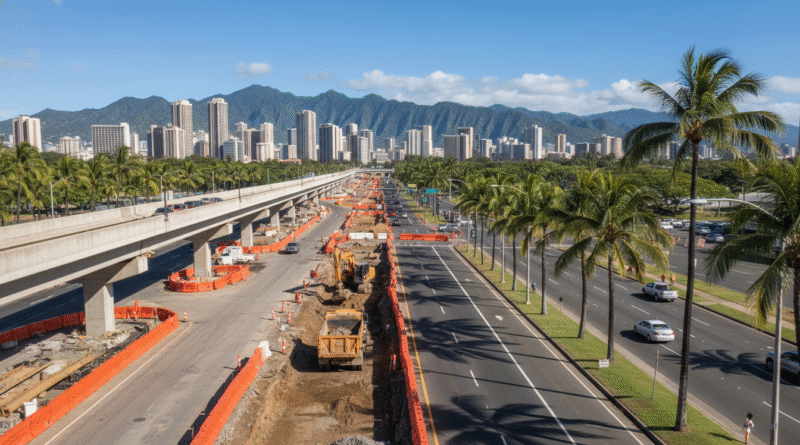
The current utility work represents a critical milestone for the project, which has faced years of delays and cost overruns. Crews are relocating water, sewer, electrical, and telecommunications lines to make way for the elevated guideway columns that will support trains 30 feet above street level.
“We’re seeing real momentum now with Segment 3,” said HART spokesperson Bill Brennan. “The utility work might not look glamorous to drivers passing by, but it’s essential groundwork that allows us to start building the guideway structure that will transform how people move around our city.”
Downtown Construction Challenges
Unlike the earlier segments that primarily traversed suburban areas and agricultural land, Segment 3 presents unique engineering challenges as it winds through some of Oahu’s most densely developed neighborhoods. The guideway will navigate around existing high-rises, cross over busy intersections, and thread between structures in Downtown’s compact business district.
The Middle Street Transit Center station, currently under construction near Keeaumoku Street, will serve as a major hub connecting rail passengers to TheBus routes throughout the island. Meanwhile, the planned Chinatown station will sit just blocks from the historic district’s restaurants and cultural attractions.
Business owners along the route have expressed cautious optimism about the project’s progress, though many have endured years of construction-related disruptions. Restaurant and retail establishments in Kalihi and Iwilei have reported ongoing challenges with customer access and parking during the utility phase.
Integration with Operating Segments
The first two segments of Skyline, spanning 11 miles from East Kapolei to Kalihi-Palama, have been carrying passengers since June 2023. Daily ridership has steadily climbed as West Oahu residents embrace the system for commuting to urban job centers and connecting to other transportation options.
Once Segment 3 opens, expected in the late 2020s, the full 20-mile system will provide a direct connection from Kapolei to Downtown Honolulu in approximately 45 minutes. HART projects the complete system will carry more than 100,000 daily riders, significantly reducing traffic congestion on the H-1 freeway and surface streets.
The authority has incorporated lessons learned from operating the first segments into Segment 3’s design, including improved station layouts and enhanced integration with bus connections. The Downtown terminal will link directly to the planned Bus Rapid Transit system and existing TheBus routes serving Waikiki and other destinations not served by rail.
Timeline and Next Steps
Following completion of utility relocations, HART will begin installing the massive concrete columns that will support the elevated guideway. This phase, expected to begin in earnest next year, will be the most visible sign of progress for residents and commuters traveling through the corridor.
Guideway construction will proceed in phases, with crews working simultaneously on multiple sections to minimize the overall timeline. The authority expects to begin testing trains on Segment 3 tracks by the mid-2020s, followed by extensive safety and operational testing before opening to passengers.
The project’s final phase will extend rail service from Downtown to Ala Moana Center, though funding and timeline details for that segment remain under discussion at the state and federal levels.
For Honolulu residents, Segment 3 represents the fulfillment of rail’s promise to transform urban mobility. The completion of utility work marks a crucial step toward connecting Oahu’s fastest-growing residential areas with its primary employment center, potentially reshaping development patterns and commuting habits across the island for generations to come.