
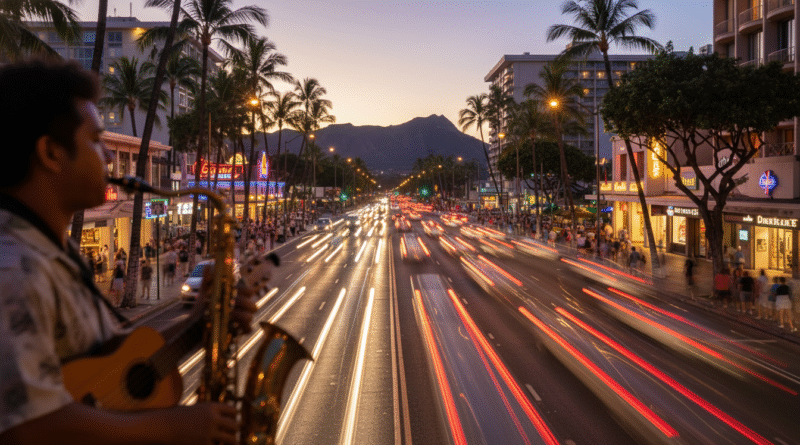
Should Waikiki Regulate Its Street Performers? City Leaders Weigh New Rules After Resident Complaints
The ukulele strumming and hula dancing that soundtrack Waikiki’s sidewalks could soon face new city regulations as Honolulu leaders grapple with mounting complaints about noise, crowds and safety concerns tied to street performers.
City Council members are exploring rules that would potentially limit when and where buskers can perform in the tourist district, marking a significant shift for an area where impromptu performances have long been part of the authentic Hawaiian experience visitors seek.
The push for regulation comes after residents and business owners raised concerns about amplified music lasting late into the evening, performers blocking pedestrian traffic on already crowded sidewalks, and aggressive solicitation for tips from tourists.
“We’re seeing situations where the volume is so loud that people in nearby condos can’t sleep, and sidewalks become impassable when large crowds gather around performers,” said Councilmember Tommy Waters, who represents the Waikiki area.
The delicate balance between preserving Waikiki’s vibrant street culture and addressing quality-of-life concerns has sparked debate among residents, performers and free-speech advocates. Many worry that overregulation could sanitize the neighborhood’s character and limit opportunities for local artists to share Hawaiian culture with visitors.
Current Landscape
Today, street performers in Waikiki operate under minimal restrictions. They can set up along most sidewalks as long as they don’t block pedestrian access, and noise ordinances apply only after 10 p.m. in residential areas.
This relatively hands-off approach has created a diverse ecosystem of entertainers. On any given evening, visitors might encounter slack-key guitarists near the International Market Place, fire dancers along Kalakaua Avenue, or traditional hula groups performing impromptu shows by the beach.
But the growth in both tourism numbers and performer ranks has intensified competition for prime spots and led to what some describe as increasingly commercial approaches to busking.
Voices from the Street
Local performers express mixed feelings about potential regulations. Some welcome structure that could eliminate bad actors, while others fear bureaucratic barriers that would price out grassroots artists.
“I’ve been playing music on these streets for 15 years, sharing our culture with people from around the world,” said longtime Waikiki performer Keoni Makua, a slack-key guitarist who often sets up near the Royal Hawaiian Center. “Reasonable rules might help, but we can’t let them kill the spirit of what makes this place special.”
The proposed regulations under discussion include designated performance zones, time limits for individual acts, volume restrictions throughout the day, and potentially a permit system similar to those used in other major tourist destinations.
Balancing Act
Tourism industry representatives acknowledge the complexity of the issue. Street performers undeniably contribute to Waikiki’s atmosphere, providing the kind of authentic cultural experiences that visitors increasingly seek in an era of homogenized travel destinations.
However, the Hawaii Tourism Authority has also received complaints from visitors about overly aggressive solicitation and performances that feel more like commercial enterprises than cultural sharing.
Legal experts note that any regulations must carefully navigate First Amendment protections for artistic expression. Courts have generally upheld reasonable time, place and manner restrictions on street performances, but blanket bans or overly restrictive permit processes face constitutional challenges.
The Waikiki Neighborhood Board has scheduled public hearings for next month to gather input from residents, performers and businesses. Board members hope to craft recommendations that preserve the area’s cultural authenticity while addressing legitimate concerns about noise and congestion.
Looking Ahead
Similar debates have played out in tourist destinations worldwide, from Venice Beach to Times Square. Cities that have successfully managed street performance typically use a combination of designated zones, time limits and community oversight rather than outright bans.
For Waikiki, the challenge lies in maintaining the neighborhood’s reputation as a place where Hawaiian culture thrives organically while ensuring residents can enjoy their community and visitors can navigate sidewalks safely.
The City Council is expected to begin formal discussions on potential ordinances this fall, with any new rules likely taking effect in early 2024. Until then, the music plays on, even as the community grapples with how to preserve both its cultural heritage and quality of life in one of the world’s most famous neighborhoods.