
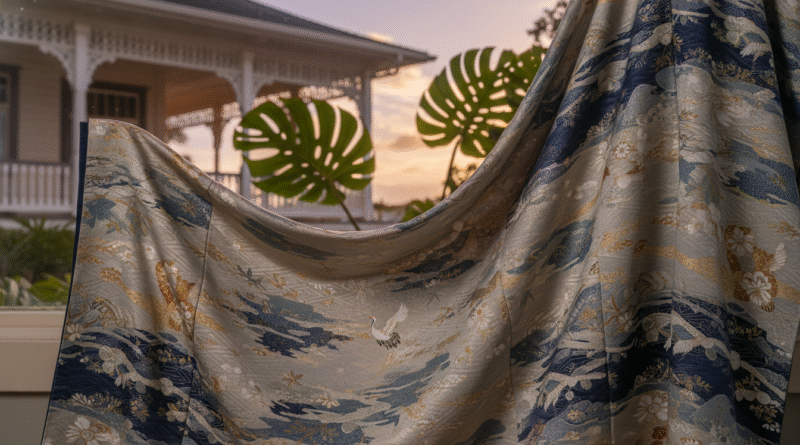
HoMA Opens ‘Quiet Luxury’ Exhibit on Edo-Era Fashion Rebellion — Through October
The Honolulu Museum of Art has unveiled a captivating exploration of rebellion through fabric and thread with its latest exhibition, “Quiet Luxury: Subversive Fashion in the Edo Period.” The show, which runs through October 4, reveals how Japanese artisans and fashionistas of the 17th through 19th centuries found ingenious ways to defy government restrictions on luxury.
During Japan’s Edo period (1603-1868), the ruling Tokugawa shogunate implemented strict sumptuary laws designed to maintain social order by regulating what people could wear based on their class. Merchants, despite their growing wealth, were legally prohibited from displaying their prosperity through elaborate clothing or bright colors.
But Edo society found ways to push back. The exhibition showcases how this legal constraint sparked a sophisticated form of resistance that would influence Japanese aesthetics for centuries to come.
The Art of Subtle Defiance
Rather than abandoning luxury altogether, Edo-period fashion innovators developed what curators call “iki” — a aesthetic philosophy celebrating understated elegance and hidden sophistication. Kimono makers began incorporating intricate patterns visible only upon close inspection, using expensive materials in ways that appeared modest from a distance.
The museum’s collection features kimono with elaborate inner linings that wouldn’t be seen in public, and textiles that used costly dyeing techniques to achieve seemingly simple earth tones. One standout piece displays a merchant’s jacket that appears plain black until visitors notice the subtle geometric patterns woven with silk threads that catch light differently than the cotton base.
“These garments tell the story of creative resistance,” said Dr. Shawn Eichman, HoMA’s curator of Asian art. “What looks like compliance with the law was actually a sophisticated form of rebellion that required incredible skill and artistic vision.”
Beyond Fashion: Art Reflects Social Change
The exhibition extends beyond clothing to include ukiyo-e woodblock prints that documented this fashion evolution. Artists like Kitagawa Utamaro and Katsushika Hokusai captured the subtle beauty of restrained luxury in their depictions of courtesans, kabuki actors, and merchants.
These prints, displayed alongside period textiles, show how the concept of “quiet luxury” permeated all levels of Edo society. Even geishas and courtesans, who were permitted more elaborate dress, embraced the aesthetic of hidden beauty and sophisticated simplicity.
The museum has arranged the pieces chronologically, allowing visitors to trace how sumptuary laws inadvertently created one of Japan’s most enduring design philosophies. Interactive displays explain dyeing techniques and pattern-making methods that allowed artisans to create luxury within legal constraints.
A Downtown Cultural Destination
Located in the heart of downtown Honolulu at 900 S Beretania Street, the museum provides an ideal setting for this exploration of East-meets-Pacific cultural exchange. The exhibition occupies the museum’s renovated Asian art galleries, where natural lighting enhances the subtle beauty of the displayed textiles.
Museum visitors can complement their viewing with the museum’s permanent collection of Japanese art, including contemporary pieces that show how Edo-period aesthetics continue to influence modern designers. The museum’s Pavilion Café offers a perfect spot to process the exhibition while enjoying views of the museum’s sculpture garden.
For fashion enthusiasts, the timing couldn’t be better. The concept of “quiet luxury” has resurged in contemporary fashion, making this historical exploration particularly relevant for understanding current design trends.
What’s Next for Art Lovers
The exhibition runs through October 4, giving Honolulu residents and visitors several months to explore this fascinating intersection of art, politics, and fashion. Museum admission is $20 for adults, with discounts available for Hawaii residents.
The museum has planned complementary programming throughout the exhibition’s run, including lectures on Japanese textile techniques and guided tours that dive deeper into the social context of Edo-period fashion rebellion.
This show offers Honolulu’s art community a rare opportunity to examine how creativity thrives under constraint — a theme that resonates beyond historical Japan. As contemporary artists and designers continue to navigate various social and economic pressures, the Edo period’s lesson in “quiet luxury” provides both inspiration and historical perspective on the power of subtle resistance.
