
New Public Art Installation Along Ala Moana Boulevard Celebrates Polynesian Voyaging
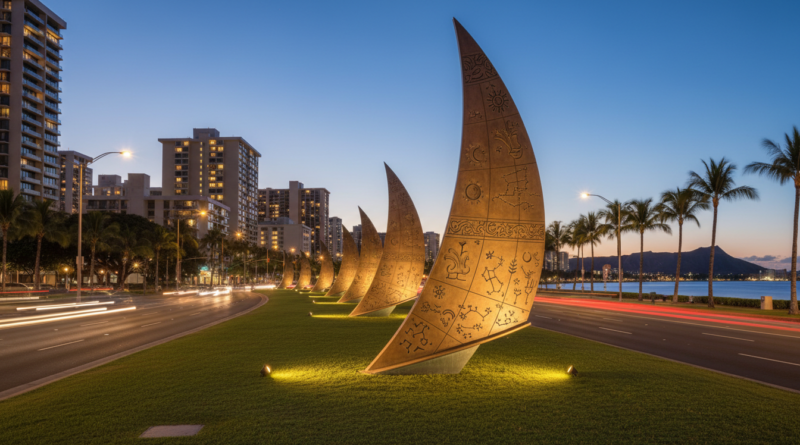
A striking new public art installation along Ala Moana Boulevard is turning heads and celebrating Hawaii’s deep connection to Polynesian voyaging traditions. The massive sculptural piece, titled “Hokule’a’s Wake,” was unveiled this week near the intersection of Ala Moana and Ward Avenue, transforming a previously underutilized median strip into a tribute to traditional Pacific navigation.
The installation features seven towering bronze sails arranged in a wave-like formation, each standing 12 feet tall and embedded with traditional Polynesian navigation symbols. Created by local artist Kaha’i Topolinski in collaboration with the Polynesian Voyaging Society, the piece incorporates recycled materials from decommissioned sailing vessels and features LED lighting that mimics the constellation patterns used by ancient navigators.
“This installation represents the courage and ingenuity of our ancestors who crossed thousands of miles of open ocean using only the stars, winds, and currents as their guide,” said Topolinski, whose great-grandfather was a traditional navigator from Satawal. “Every time someone drives past this spot, I want them to remember that Hawaii exists because of those incredible voyages.”
The project, funded through a $340,000 grant from the Hawaii State Foundation on Culture and the Arts, took nearly two years to complete. The median location was specifically chosen for its visibility to the thousands of commuters who travel Ala Moana Boulevard daily, connecting downtown Honolulu to neighborhoods like Kakaako and Keeaumoku.
Community Input Shaped Design
The artistic vision emerged from extensive community workshops held at nearby Keeaumoku Community Center throughout 2023. Residents from surrounding neighborhoods, including many Native Hawaiian families, shared stories about their connections to voyaging traditions and helped influence the final design elements.
Each bronze sail incorporates different navigational symbols: the Southern Cross, wave patterns indicating swells from different directions, and bird flight paths that guided voyagers to land. At night, the LED constellation lighting creates an educational experience, with QR codes allowing passersby to learn about traditional navigation techniques through their smartphones.
The installation also addresses practical urban concerns. The sculptural elements are designed to withstand Hawaii’s salt air and occasional high winds, while integrated planters feature native coastal plants like naupaka and beach morning glory that require minimal maintenance and support local ecosystems.
“We wanted to create something beautiful that also serves the community,” explained Maria Santos, project coordinator for the city’s Public Art Program. “The plants help with stormwater management while the lighting improves safety for pedestrians crossing this busy intersection.”
Educational Component Connects Past and Present
Beyond its visual impact, “Hokule’a’s Wake” serves as an outdoor classroom. Small plaques integrated into the design explain how Polynesian navigators used natural indicators to find their way across the Pacific, connecting historical voyaging methods to modern wayfinding techniques still used by the Polynesian Voyaging Society.
The timing of the installation’s completion coincides with renewed interest in traditional Pacific navigation. The Polynesian Voyaging Society’s training programs have seen increased enrollment over the past year, particularly among young Native Hawaiians seeking to connect with their cultural heritage.
Local schools are already incorporating visits to the installation into their Hawaiian studies curricula. Roosevelt High School teacher David Nakamura brought his Hawaiian history class to see the piece during its first week on display.
“Students can touch these bronze sails and really understand the scale of what their ancestors accomplished,” Nakamura said. “It makes the history tangible in a way that textbooks simply cannot.”
The installation represents part of Honolulu’s broader effort to integrate more culturally significant public art throughout the city. Similar projects are planned for other high-visibility locations, including a piece celebrating traditional Hawaiian fishing practices near Keeaumoku Walmart and another honoring the legacy of Queen Liliuokalani in the downtown area.
As Honolulu continues to grow and change, installations like “Hokule’a’s Wake” serve as important reminders of the navigational expertise and cultural wisdom that made life in these Pacific islands possible. For the thousands of residents and visitors who pass this corner daily, the bronze sails offer both artistic beauty and a moment to reflect on the remarkable journey that brought Polynesian peoples to Hawaii centuries ago.