
BoxJelly Returns: Honolulu’s Original Co-Working Pioneer Plants a Flag in Chinatown
BoxJelly, the co-working pioneer that helped define Honolulu’s startup culture in the 2010s, is making its return to the local scene with a new location in Chinatown, marking another milestone in the historic district’s ongoing transformation.
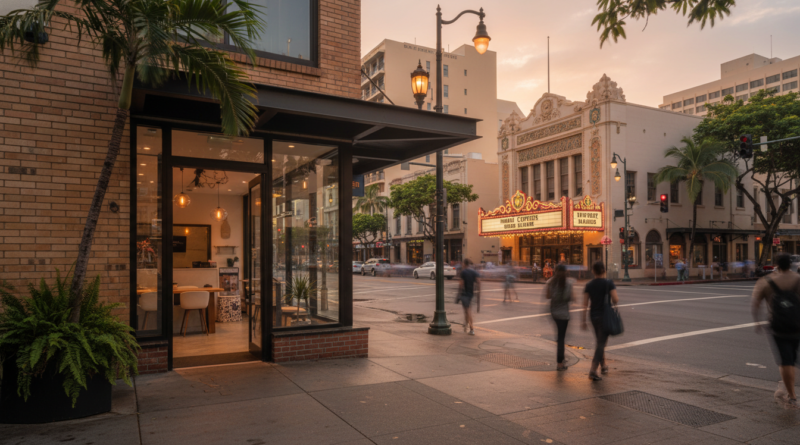
The company has filed renovation permits for a space on Bethel Street, directly across from the Hawaii Theatre Center, signaling its confidence in an area that has seen a quiet but steady stream of new businesses opening their doors over the past year.
Founded in 2008, BoxJelly was among the first co-working spaces in Hawaii, originally operating out of a cramped second-floor walk-up in Kalihi before moving to larger digs in Kaka’ako. The company helped nurture dozens of local startups and freelancers during the early days of Hawaii’s tech boom, becoming a gathering place for entrepreneurs who might otherwise have worked in isolation from coffee shops or home offices.
The Chinatown location represents a homecoming of sorts for co-founder Tony Hsieh — not to be confused with the late Zappos CEO of the same name — who sees the historic district as ripe for the kind of organic community building that made the original BoxJelly successful.
“Chinatown has this authentic energy that you can’t manufacture,” Hsieh said. “It’s got the bones of a real neighborhood, with the foot traffic and the mix of old and new that creates natural collision points for people with ideas.”
The timing appears strategic. Chinatown has been experiencing what local business advocates describe as a “slow-motion revival,” with new establishments opening alongside longtime fixtures like Lucky Belly and The Pig and the Lady.
A Neighborhood in Transition
Recent months have seen an uptick in activity along the district’s main corridors. A new dim sum spot opened on Maunakea Street in February, while a specialty matcha café launched on Hotel Street last month. Two Vietnamese restaurants serving modern takes on banh mi and pho are scheduled to open before summer.
The wave of food and beverage establishments has been accompanied by retail and service businesses, including a vintage clothing boutique, a bike repair shop, and a small gallery specializing in local contemporary art.
For BoxJelly, the move to Chinatown represents both a return to its grassroots origins and an bet on the neighborhood’s trajectory. The company’s previous Kaka’ako location, which closed during the pandemic, had grown to accommodate more than 100 members at its peak.
The new space, while smaller, is designed to recapture the intimate feel that made BoxJelly a community hub rather than just a place to rent desk space. Plans call for a mix of dedicated desks, hot desks, and meeting rooms, along with common areas designed to encourage the kind of spontaneous interactions that can lead to collaborations or new ventures.
Tech Sector Rebounds
BoxJelly’s return comes as Hawaii’s technology sector shows signs of rebounding from pandemic-era setbacks. Several local startups have secured significant funding rounds in recent months, while established companies have begun expanding their Hawaii operations again.
The co-working model itself has evolved since BoxJelly’s early days, with remote work becoming more normalized and flexible workspace arrangements in higher demand. The company plans to incorporate lessons learned from the industry’s maturation, including improved technology infrastructure and more sophisticated community programming.
The Bethel Street location puts BoxJelly within walking distance of several other businesses that cater to creative professionals and entrepreneurs, including printshops, design studios, and specialty coffee roasters. The proximity to the Hawaii Theatre Center also means the space will be in the heart of one of Chinatown’s cultural anchors.
Local economic development officials see the expansion as a positive sign for both the neighborhood and the broader startup ecosystem. The presence of dedicated workspace for entrepreneurs and freelancers can help retain talent that might otherwise relocate to mainland markets with more established infrastructure.
BoxJelly expects to begin operations in the new space by late summer, with a soft opening planned for members of the local startup community before opening to the general public. The company is also exploring partnerships with local organizations to host events and workshops focused on entrepreneurship and small business development.
For Chinatown, BoxJelly’s arrival represents another piece in the puzzle of sustainable revitalization — one that builds on the neighborhood’s existing character rather than replacing it wholesale. As more businesses choose to plant their flags in the historic district, the question becomes whether this momentum can be sustained while preserving what makes the area distinctive.