Matson Navigation Invests $400M in New Container Ships for Hawaii Routes
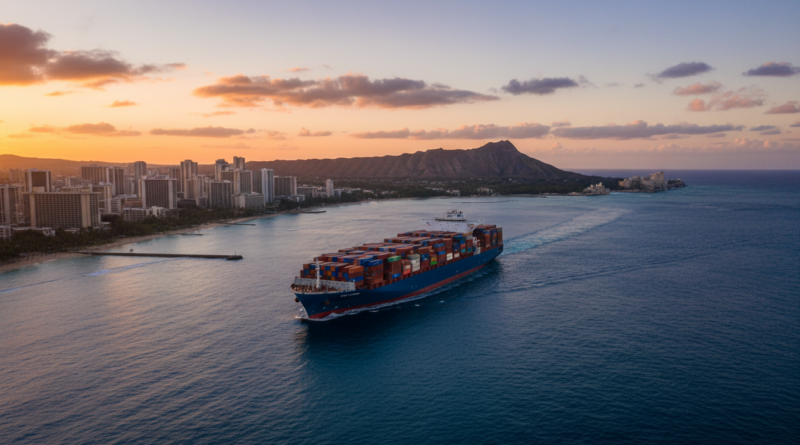
Matson Navigation Company announced a $400 million investment in new container vessels specifically designed for Hawaii service, marking the largest fleet expansion in the company’s recent history. The Honolulu-based shipping giant plans to deploy two new ships on its Hawaii routes by 2026, replacing aging vessels and increasing cargo capacity to meet growing demand.
The investment represents a significant commitment to Hawaii’s supply chain infrastructure at a time when residents have experienced periodic shortages and shipping delays. Matson’s new vessels will feature enhanced fuel efficiency and expanded refrigerated container capacity, crucial for transporting fresh produce and perishables to the islands.
“This investment reinforces our long-term commitment to serving Hawaii and ensuring reliable supply chain connectivity,” said Matt Cox, Matson’s chairman and CEO. “These state-of-the-art vessels will provide increased capacity and improved service reliability for Hawaii businesses and consumers.”
The new container ships will be built at Philly Shipyard in Pennsylvania, supporting both mainland and local maritime jobs. Each vessel will measure approximately 850 feet in length and carry up to 3,600 twenty-foot equivalent units (TEUs), representing a 25% capacity increase over the ships they’ll replace.
Addressing Hawaii’s Supply Chain Vulnerabilities
The announcement comes as Hawaii continues to grapple with supply chain challenges highlighted during the COVID-19 pandemic. Matson carries approximately 80% of all containers shipped to Hawaii, making the company’s fleet capacity critical to the state’s economic stability.
Local businesses, from Foodland to Times Supermarkets, depend on Matson’s weekly sailings from the West Coast to stock shelves with everything from mainland produce to household goods. The expanded capacity could help reduce shipping costs and improve inventory reliability for retailers across Oahu, Maui, the Big Island, and Kauai.
Dr. Panos Prevedouros, a University of Hawaii transportation engineering professor, noted the strategic importance of the investment. “Matson’s fleet modernization directly impacts Hawaii’s cost of living and economic resilience,” Prevedouros said. “Increased capacity and efficiency typically translate to more stable pricing for consumers.”
The new ships will also feature advanced environmental technologies, including scrubber systems to reduce emissions and optimized hull designs for improved fuel economy. This aligns with Hawaii’s commitment to renewable energy and environmental sustainability goals.
Economic Ripple Effects
The investment extends beyond shipping capacity to broader economic implications for Hawaii. Matson’s fleet expansion could attract additional business from mainland companies looking to establish or expand Hawaii operations, knowing reliable shipping capacity exists.
Tourism-related businesses may also benefit from improved cargo reliability, as hotels and restaurants depend on consistent deliveries of mainland supplies. The enhanced refrigerated capacity specifically addresses needs of Hawaii’s food service industry, which imports significant quantities of fresh produce, dairy, and meat products.
Construction and development projects across the islands rely heavily on Matson for building materials, equipment, and supplies. The increased capacity could help stabilize construction costs and timelines, potentially impacting Hawaii’s housing market and commercial development.
Competitive Landscape
While Matson dominates Hawaii shipping, the company faces competition from Pasha Hawaii and occasional challenges from other carriers. The $400 million investment demonstrates Matson’s strategy to maintain market leadership through capacity and service improvements rather than relying solely on its established market position.
The timing coincides with increased federal infrastructure spending and Hawaii’s own investments in port improvements at Honolulu Harbor and Kahului Harbor. These coordinated improvements could create synergies that benefit the entire Hawaii supply chain ecosystem.
Industry analysts view the investment as validation of Hawaii’s economic recovery and growth prospects following the pandemic’s impact on tourism and local business. The commitment to Hawaii-specific vessels, rather than redeploying existing ships, signals Matson’s confidence in sustained demand.
The first new vessel is scheduled to enter Hawaii service in late 2025, with the second following in early 2026. Matson plans to retire two older ships as the new vessels come online, maintaining fleet size while dramatically improving capacity and efficiency.
For Hawaii residents, the investment represents hope for more stable supply chains and potentially lower shipping costs as increased capacity typically creates downward pressure on rates. The improved reliability could also reduce the periodic shortages that have affected everything from construction materials to grocery store inventory in recent years.