
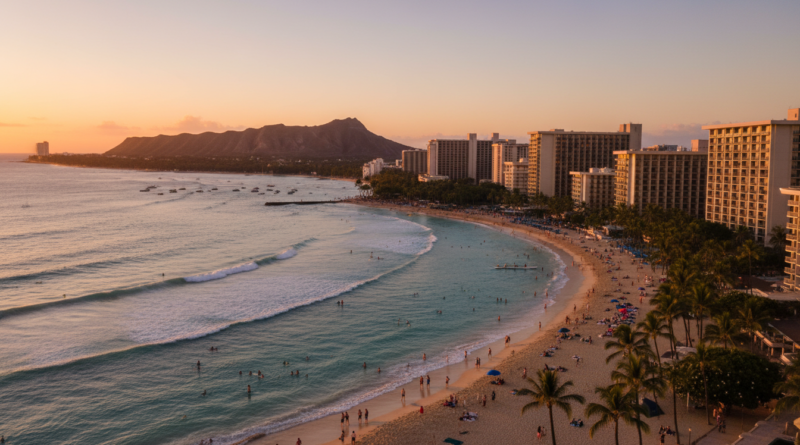
Waikiki Hotels Report Strongest Q1 Occupancy Rates Since 2019
Waikiki’s hotel industry delivered its strongest first-quarter performance in five years, with occupancy rates reaching 82.3% according to data released this week by the Hawaii Tourism Authority and STR Global.
The figure represents a significant milestone for the iconic beachfront destination, marking the first time since 2019 that Q1 occupancy has exceeded 80%. The recovery signals renewed confidence among travelers as the tourism sector continues to rebound from pandemic-era lows.
Revenue per available room (RevPAR) climbed to $287 during the quarter, up 15.2% from the same period last year. Average daily rates held steady at $348, indicating that hotels are successfully balancing occupancy growth with pricing power.
“We’re seeing a really healthy mix of leisure and business travelers returning to Waikiki,” said Maria Santos, general manager of the Moana Surfrider. “The spring break period was particularly strong, and we’re optimistic about the momentum carrying into summer.”
The occupancy surge was driven primarily by increased visitor arrivals from the mainland U.S. and a gradual return of international travelers, particularly from Japan and Canada. Domestic visitors accounted for roughly 75% of bookings, while international guests made up the remainder.
Neighbor Island Competition Heats Up
While Waikiki celebrated strong numbers, the performance comes as neighbor island destinations continue to challenge Oahu’s dominance in Hawaii’s tourism landscape. Maui’s resort areas posted 79.1% occupancy during Q1, while the Big Island’s Kona coast reached 76.8%.
The competitive pressure has pushed Waikiki hotels to enhance their offerings and guest experiences. Several properties completed major renovations during the slower pandemic years, including the Royal Hawaiian’s $90 million refresh and the Hilton Hawaiian Village’s updated Rainbow Tower.
Hotel operators credit the occupancy gains to strategic marketing campaigns targeting specific demographics and improved collaboration with airlines on package deals. Hawaiian Airlines’ expanded mainland route network has made Honolulu more accessible to travelers from secondary U.S. markets.
Challenges Remain
Despite the positive trends, industry leaders acknowledge ongoing challenges. Labor shortages continue to impact hotel operations, with many properties still operating at reduced housekeeping and food service capacity compared to pre-pandemic levels.
Rising construction and maintenance costs have also pressured profit margins, even as room rates remain elevated. Some hoteliers worry about the sustainability of current pricing levels if economic conditions shift.
The vacation rental market presents another competitive dynamic. Short-term rental properties in residential areas around Waikiki have captured market share, particularly among longer-stay visitors and multi-generational families seeking more space and kitchen facilities.
Economic Ripple Effects
The hotel occupancy rebound is generating positive economic impacts throughout the Waikiki corridor. Retail establishments along Kalakaua Avenue and the Royal Hawaiian Center report increased foot traffic and sales volumes during the quarter.
Restaurant bookings have similarly strengthened, with several high-profile dining establishments expanding hours and staff to meet demand. The improved hotel performance has also supported local tour operators and activity providers who depend heavily on visitor referrals.
City officials view the tourism recovery as critical for Honolulu’s broader economic health. Hotel tax revenues contribute significantly to municipal budgets, helping fund infrastructure projects and public services across the island.
Looking Ahead
Industry analysts project continued occupancy growth through the summer peak season, though they caution that year-over-year comparisons may become more challenging as 2019 baseline levels are reached.
Several factors could influence future performance, including airline capacity decisions, global economic conditions, and potential changes to Hawaii’s tourism policies. The state’s ongoing efforts to promote regenerative tourism may also shift visitor patterns and spending behaviors.
For now, Waikiki hotel operators are focused on maximizing the current momentum while investing in long-term sustainability initiatives. The strong Q1 performance provides a foundation for optimism as Hawaii’s signature destination continues its post-pandemic evolution.
The occupancy recovery represents more than just hotel statistics — it signals renewed vitality for Waikiki’s economy and the thousands of local residents whose livelihoods depend on tourism’s success.