
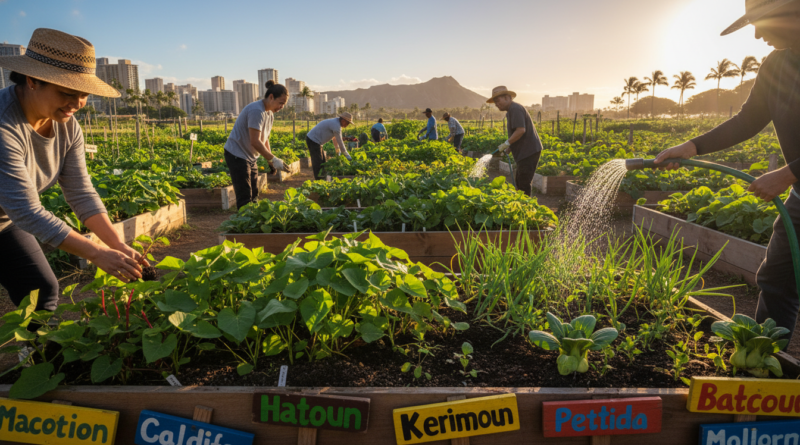
Community Garden Network Expands to 30 Locations Across Urban Honolulu
Urban Honolulu’s community garden movement has reached a milestone with 30 active sites now sprouting across neighborhoods from Kalihi to Hawaii Kai, marking a 50% increase from just two years ago. The expansion reflects growing demand for local food production and green spaces in the city’s densest areas.
The newest additions include plots in Kaimuki, Salt Lake, and Moiliili, with each location serving 15-25 families who tend everything from traditional Hawaiian crops like taro and sweet potato to Asian vegetables and herbs that reflect the islands’ diverse culinary heritage. The gardens operate through partnerships between neighborhood associations, schools, and the City and County of Honolulu.
“We’re seeing families reconnect with growing their own food, especially after the pandemic showed us how important food security is,” said Jennifer Nakamura, coordinator for the Honolulu Urban Garden Alliance. “These spaces become community hubs where neighbors who might never have met are sharing gardening tips and recipes.”
The network’s growth comes as Honolulu grapples with limited green space and rising food costs. Hawaii imports roughly 90% of its food, making locally grown produce particularly valuable for families looking to stretch their grocery budgets while eating fresh, healthy meals.
From Vacant Lots to Thriving Gardens
Many of the new gardens have transformed underutilized urban spaces. The Kalihi location sits on a former vacant lot near Farrington Highway, while the Moiliili garden occupies space behind University Avenue that had been overgrown with invasive plants.
Each garden follows sustainable practices including composting, rainwater collection, and integrated pest management. Plot holders pay modest monthly fees ranging from $20 to $40, with reduced rates available for seniors and low-income families.
The gardens showcase Hawaii’s agricultural diversity. Walk through any location and you’ll find traditional Polynesian staples growing alongside Filipino bitter melon, Japanese daikon, and Portuguese kale – a living reflection of the islands’ multicultural food traditions.
Building Community Connections
Beyond food production, the gardens serve as gathering spaces where cultural knowledge passes between generations. Elderly Filipino gardeners teach younger families how to grow kangkong, while Native Hawaiian participants share traditional planting practices aligned with lunar cycles.
The Kaimuki garden hosts monthly potluck dinners where families bring dishes made from their harvests. The Salt Lake location includes a children’s section where elementary students learn about plant life cycles and nutrition through hands-on experience.
Several gardens have also become sites for cultural events. The Moiliili location recently hosted a traditional Hawaiian blessing ceremony for its new medicinal plant section, while the Kalihi garden holds quarterly workshops on traditional food preservation methods.
Challenges and Solutions
The network faces ongoing challenges including water access, soil contamination testing, and waitlists at popular locations. Some sites struggle with vandalism or theft, leading to the installation of security cameras and community watches.
Climate change poses additional hurdles. Increased rainfall during certain seasons has caused flooding at lower-elevation gardens, while extended dry periods strain water resources. Garden coordinators are exploring drought-resistant crops and improved drainage systems.
The city has responded by streamlining permits for new garden sites and providing technical assistance for soil testing. The parks department now includes community gardens in long-term planning for underutilized public spaces.
Looking Ahead
Organizers hope to reach 40 gardens by 2025, with particular focus on food-desert areas where residents have limited access to fresh produce. Proposed locations include sites in Keeaumoku and Iwilei, pending community input and environmental assessments.
The expansion reflects broader trends toward local resilience and sustainable living that resonate with island values. For participating families, the gardens offer more than fresh vegetables – they provide connections to the land, neighbors, and cultural practices that make Honolulu home.
As food costs continue rising and climate concerns grow, these community gardens represent a grassroots response that strengthens both food security and social bonds across urban Honolulu’s diverse neighborhoods.