
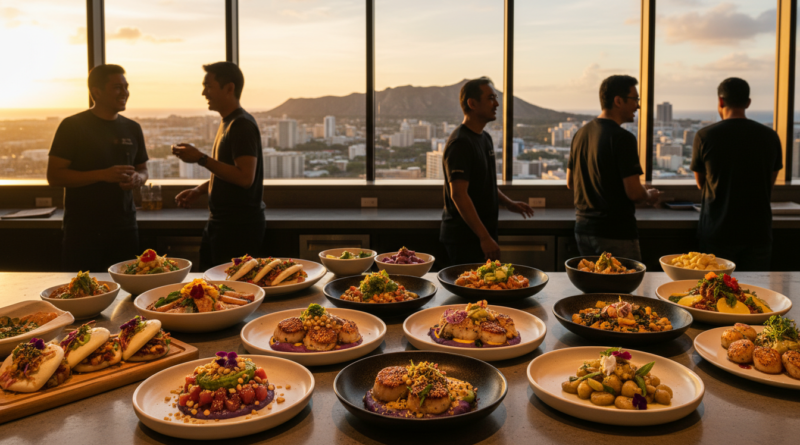
New Food Hall in Ward Village Brings Together 15 Local Chefs Under One Roof
A sprawling new food hall opened its doors in Ward Village this week, bringing together 15 of Oahu’s most celebrated chefs under a single 12,000-square-foot roof. The Ward Kitchen Collective, located in the former Nordstrom Rack space at Ward Centers, represents the largest gathering of local culinary talent the island has seen in decades.
The ambitious project transforms what was once retail space into a vibrant marketplace featuring everything from James Beard-nominated chef Ed Kenney’s modern Hawaiian cuisine to third-generation saimin master Glenn Chu’s family recipes. Each chef operates their own stall, creating a diverse dining destination that mirrors Hawaii’s multicultural food landscape.
“This isn’t just about putting restaurants next to each other,” said project developer Sarah Kim, who spent three years assembling the chef roster. “We wanted to create a space that tells the story of Hawaii through food, where visitors can experience our entire culinary ecosystem in one visit.”
The food hall’s opening comes at a crucial time for Honolulu’s restaurant industry, which has struggled with rising rents and post-pandemic challenges. Several participating chefs said the shared-space model allows them to experiment with new concepts without the overhead costs of a full restaurant.
Local Favorites Meet Rising Stars
The lineup includes established names like Rainbow Drive-In’s third-generation owner Seeva Nakamura, who’s bringing her family’s famous plate lunch recipes to a new generation. Alongside veteran operators, the hall features emerging talent like 28-year-old pastry chef Kaila Hoopii, whose Portuguese malasadas have earned a cult following at farmers markets.
Each stall reflects its chef’s unique perspective on local food traditions. Kenney’s Native Provisions focuses on indigenous Hawaiian ingredients, while Chu’s Golden Palace serves traditional Cantonese dishes his grandfather brought to Hawaii in the 1940s. Vietnamese-American chef Linh Nguyen offers modern takes on pho and banh mi, drawing from both her family’s recipes and her culinary school training.
The hall’s central seating area accommodates 200 diners, with additional lanai-style seating that opens to Auahi Street. Local artist Kaleo Griffith created a series of murals celebrating Hawaii’s agricultural heritage, while reclaimed koa wood from Big Island forests lines the ordering counters.
Community-Focused Approach
Beyond serving food, the Ward Kitchen Collective plans to host cooking classes, cultural events, and farmers market-style vendors on weekends. The space includes a community kitchen where local nonprofits can hold fundraising events and cooking demonstrations.
“Food is how we connect with each other in Hawaii,” said participating chef Marcus Williams, whose soul food-Hawaiian fusion has drawn lines at weekend pop-ups. “Having all of us together creates opportunities for collaboration we’ve never had before.”
The food hall operates from 7 a.m. to 10 p.m. daily, with breakfast vendors opening early and dinner options extending into the evening. Prices range from $8 plate lunches to $25 chef’s specials, maintaining accessibility while supporting premium local ingredients.
Several stalls feature ingredients sourced directly from Oahu farms, including produce from Waiahole Valley and grass-fed beef from Big Island ranches. The hall’s central bar, operated by award-winning mixologist Kai Nakamura, serves cocktails made with locally distilled spirits and fresh tropical fruits.
Impact on Local Food Scene
Food industry observers say the Ward Kitchen Collective could reshape how locals and visitors experience Honolulu dining. The concentration of talent in one location offers tourists an efficient way to sample diverse local flavors, while providing residents with convenient access to multiple favorite chefs.
“This could be a game-changer for our food tourism,” said Hawaii Restaurant Association president Lisa Chang. “Instead of visitors having to drive all over the island to find authentic local food, they can experience the breadth of our culinary culture in one stop.”
The project also addresses practical challenges facing local chefs, including high commercial rents and staffing difficulties. The shared model allows for cross-training of employees and bulk purchasing of ingredients, potentially improving profit margins for small operators.
Ward Kitchen Collective represents a significant investment in Honolulu’s culinary future, offering both established and emerging chefs a platform to reach new audiences while preserving the diverse food traditions that make Hawaii’s dining scene unique. As the food hall settles into its neighborhood rhythm, it may well become the template for how local food culture evolves in urban Honolulu.