City Spends $350K to Fight Hitachi in Court Over Rail Project Disputes
The Honolulu City Council has approved spending $350,000 for outside legal representation as the city squares off against Hitachi Rail Honolulu JV in what could be costly litigation over the troubled rail project.
Council members voted Wednesday to hire Starn O’Toole Marcus & Fisher to defend the city against lawsuits filed by Hitachi, the Japanese company contracted to operate Honolulu’s elevated rail system. The legal fees represent yet another expense for a project that has already ballooned from an initial $5.1 billion estimate to more than $12 billion.
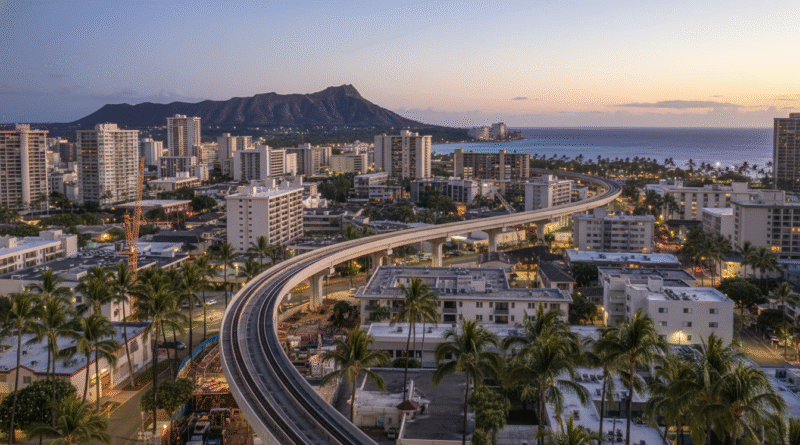
The dispute centers on operational issues and contract disagreements that have plagued the Skyline rail system since it began limited service in June 2023. While the first segment connecting East Kapolei to Halawa operates daily, extensions to Kalihi-Palama, downtown, and eventually Ala Moana Center remain mired in delays and cost overruns.
Legal Battle Over System Operations
Hitachi Rail Honolulu JV holds a $1.4 billion contract to maintain and operate the 20-mile rail system for 30 years. But tensions between the city and the contractor have escalated over technical problems, schedule delays, and disagreements about responsibility for various issues.
The company has filed multiple claims against the Honolulu Authority for Rapid Transportation (HART), the city agency overseeing the project. Sources familiar with the litigation say the disputes involve everything from software glitches in the driverless train system to infrastructure defects that Hitachi claims were not its responsibility.
“This is an unfortunate but necessary expense to protect the city’s interests,” said Council Chair Tommy Waters during Wednesday’s meeting. “We need experienced counsel to navigate these complex contractual disputes and ensure taxpayers aren’t left holding the bag for problems that aren’t our fault.”
The Starn O’Toole firm brings decades of experience in construction litigation and government contracts. The $350,000 authorization covers legal work through the end of 2026, though the actual cost could vary depending on how the litigation unfolds.
Adding to Rail’s Mounting Costs
The legal fees represent a fraction of rail’s overall budget, but they underscore how the project continues generating unexpected expenses years after construction began. Beyond the core construction costs, the city has spent millions on consultants, redesigns, and now legal battles.
HART has faced criticism for poor project management and cost controls throughout the rail’s development. The Federal Transit Administration has withheld funding at various points, citing concerns about the agency’s ability to complete the project on time and on budget.
The current dispute with Hitachi adds another layer of complexity to a project that was supposed to transform transportation across urban Oahu. While the existing East Kapolei to Halawa segment carries thousands of riders daily, many residents remain skeptical about whether the full system will ever operate as promised.
Technical Challenges and Delays
The Skyline system uses automated train technology that eliminates the need for human operators. But the sophisticated software and safety systems have proven challenging to implement, contributing to delays in opening additional segments.
Hitachi has also raised concerns about infrastructure conditions on portions of the guideway not yet in service. The company argues that design flaws and construction defects fall outside its operational responsibilities, setting up potential disputes over who pays for fixes.
These technical disagreements have real-world implications for Honolulu commuters. The segment from Halawa to Middle Street was supposed to open this year but has been pushed back indefinitely as HART and its contractors work through various issues.
What’s Next for Honolulu Taxpayers
The council’s decision to hire outside counsel signals that city officials expect a protracted legal battle with Hitachi. Similar disputes on major infrastructure projects can drag on for years, generating substantial legal bills for all parties involved.
Meanwhile, rail construction continues on downtown segments, though progress remains slower than originally projected. HART recently revised its timeline again, now targeting 2031 for completion of the full system to Ala Moana Center.
For Oahu residents, the Hitachi litigation represents another reminder of rail’s troubled history and uncertain future. While the existing segment provides a glimpse of the system’s potential, ongoing disputes raise questions about whether the project will ever deliver the transformational benefits supporters once promised.
The legal battle also highlights broader concerns about how major public works projects are managed in Hawaii, where complex geology, federal regulations, and contractor disputes have repeatedly driven up costs and delayed timelines across multiple administrations.