
Fort Street Mall Expansion Bill Would Transform Downtown Honolulu Into Pedestrian Hub
Downtown Honolulu could soon see its first major pedestrian expansion in decades if City Council Bill 48 gains traction, with plans to fold a section of Chaplain Lane into the existing Fort Street Mall area.
The proposal, introduced by Councilmember Tyler Dos Santos-Tam, would close the block of Chaplain Lane between Fort Street and Bethel Street to vehicle traffic, creating an extended pedestrian zone that supporters say could breathe new life into Honolulu’s urban core.
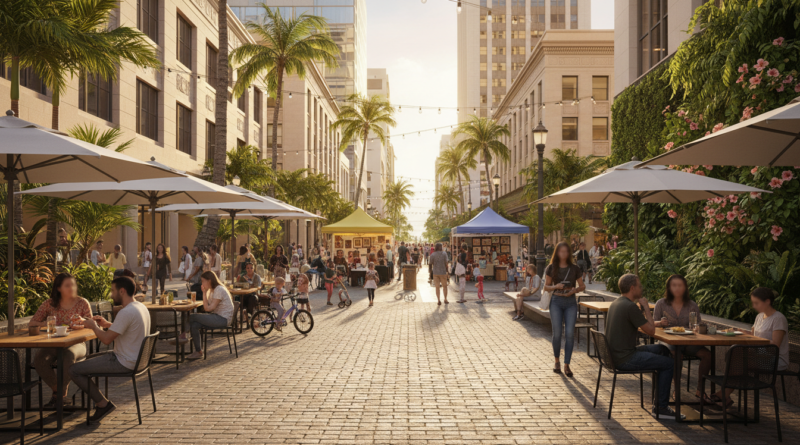
“This isn’t just about closing a street — it’s about reimagining what downtown can be,” Dos Santos-Tam said during Wednesday’s committee meeting. “We’re talking about space for food trucks, outdoor dining, community events, and the kind of street life that makes cities vibrant.”
The expanded mall would connect existing pedestrian areas with new foot traffic zones, potentially creating a continuous walkable corridor from Hotel Street to the harbor. Local business owners along the proposed route have expressed cautious optimism about increased foot traffic, though concerns remain about implementation costs and ongoing security challenges.
Addressing Downtown’s Persistent Issues
The expansion comes as downtown Honolulu grapples with familiar urban challenges. The current Fort Street Mall, while home to local favorites like Murphy’s Bar & Grill and various lunch spots, has struggled with petty crime and cleanliness issues that have deterred both residents and visitors from lingering in the area.
City data shows downtown foot traffic has decreased nearly 30% since 2019, with many office workers continuing hybrid schedules and tourists gravitating toward Waikiki and Ala Moana. The proposed expansion aims to reverse this trend by creating what urban planners call “activation” — more reasons for people to visit and stay.
The bill includes provisions for enhanced lighting, regular cleaning services, and coordination with the Honolulu Police Department for increased patrols. These measures directly address merchant complaints about the current mall’s safety and cleanliness standards.
Melissa Chang, who owns a small restaurant on Bethel Street, sees potential in the proposal but wants details on execution. “More foot traffic sounds great, but we need to make sure this area feels safe for families,” she said. “The current mall has its problems, and we can’t just expand those problems to more blocks.”
Economic Development Potential
Urban planning experts point to successful pedestrian zones in cities like Portland and San Diego as models for what downtown Honolulu could achieve. The expanded Fort Street Mall would allow for outdoor dining permits, weekend farmers markets, and cultural events that currently have limited venue options in the urban core.
The Chinatown-Downtown neighborhood already hosts popular events like First Friday gallery walks, suggesting appetite for more regular programming. An expanded pedestrian zone could host everything from lunch-hour concerts to pau hana food festivals, potentially drawing residents from across Oahu.
Local economic development officials estimate the project could support 15-20 new businesses within two years, particularly food and beverage establishments that benefit from outdoor seating and foot traffic.
Implementation Challenges
Converting Chaplain Lane presents logistical hurdles beyond simple street closure. The city would need to reroute delivery vehicles, modify parking enforcement, and coordinate with building managers who currently use the street for loading and service access.
The bill allocates $2.3 million for initial infrastructure improvements, including new paving, utility adjustments, and the installation of moveable barriers that would allow emergency vehicle access when needed. Additional funding would come from permit fees charged to businesses operating in the expanded pedestrian zone.
Construction would likely take six to eight months, during which surrounding businesses could face access challenges. The city has committed to maintaining pedestrian walkways and working with merchants to minimize disruption during the transition.
What’s Next
The bill moves to full council consideration later this month, with public hearings scheduled for April 15 and 22. Community input sessions will be held at downtown locations including the Hawaii State Art Museum and Tamarind Park.
If approved, the Fort Street Mall expansion could begin construction by fall 2026, with completion targeted for early 2027. The project represents one of the most significant investments in downtown pedestrian infrastructure since the original mall’s creation in the 1960s.
For Honolulu residents, the expansion offers a vision of downtown as more than just an office district — a place where pau hana drinks, weekend markets, and community gatherings could transform Oahu’s urban center into a true neighborhood destination.